Introduction
Premature heating element failure is one of the leading causes of unplanned industrial furnace downtime, resulting in production losses, temperature instability, increased energy consumption, and costly maintenance. A typical silicon wafer production line that relies on low-grade industrial heating element components faces serious operational setbacks: standard resistance wire components in 1100°C diffusion furnaces failed after only six months of continuous operation, resulting in temperature fluctuation of 25°C, excessive energy waste and metal impurity leaching to the silicon substrate. Quality metrics deteriorate—the wafer yield drops to 93%, the conversion efficiency of solar cells fluctuates, and the monthly maintenance, rework and shutdown costs of a single photovoltaic facility exceed 60,000 RMB. For operators who run resistance furnaces and high-precision heat treatment furnace systems across glass, semiconductor, ceramics and metallurgy industries, unreliable heating hardware will erode profit margins, delay the fulfillment of orders and undermine the sustainable development goals related to energy saving.
Many plant managers mistakenly treat premature wire burnout as a routine wear-and-tear issue, assuming all alloy heating materials deliver comparable lifespan at elevated heat loads. This misconception creates a cycle of repeated part replacement, suboptimal thermal performance, and inflated operational overhead. The fundamental solution lies not in frequent maintenance plans, but in specifying high-performance alloys that are designed for extreme thermal stress and match the application. Among the high-quality options, patented HRE Fe-Cr-Al alloy provides superior resistance to oxidation, creep and thermal fatigue. These three main forces will enable ordinary resistance wire and ordinary heating coils to fail long before their expected service life. Choosing a special electric heating alloy like HRE can directly reduce accidental failures and bring long-term cost reduction to the workflow of the high-temperature industry.
Three Primary Causes of Heating Element Failure
1. Excessive Operating Temperature
Each grade of high-temperature-resistant material has a certified maximum continuous working limit, which will irreversibly destroy the stability of the internal metallurgical microstructure. Once the working temperature exceeds 1000 ° C, traditional standard FeCrAl often accelerates grain coarsening, and the increased grain boundaries weaken the tensile integrity, making the flexible heating wire brittle and prone to spontaneous fracture under slight mechanical vibration or thermal shock.
Generic alloys lack the micro-alloyed composition found in premium furnace-grade products. When it is overheated, its thin natural alumina protective layer breaks quickly, allowing continuous oxygen diffusion. For facilities running processes at 1300°C and above—such as silicon wafer diffusion or automotive glass toughening—off-the-shelf alloy wire cannot sustain consistent performance, whereas specialized furnace alloy variants like HRE are formulated to hold structural stability at peak rated temperatures up to 1350 °C long-term. In most industrial furnace environments, even the gradual overheating of 50-100°C will reduce the service life of standard resistance wires by more than half.
2. Atmospheric Corrosion
Industrial furnaces operate under a wide range of atmospheric conditions: oxidizing air environment, reducing hydrogen mixture, inert nitrogen coating and vacuum low-pressure chambers, each of which has a unique interaction with the surface oxide film of the raw materials of heating elements. The complete and dense alumina layer plays a shielding role to prevent the penetration of corrosive gas; Inferior electric heating alloy forms porous and unstable oxide coatings, which will decompose rapidly under non-neutral atmosphere conditions.
In the common reducing atmospheres of powder metallurgy and chip annealing, weak oxide layers dissolve, stripping the main defense mechanism of the metal wire. Low-quality alloy strip and wire also contain high trace impurity, which will become the starting points of pitting corrosion. Even if the furnace gas contains moderate moisture or sulfur pollutants, it will quickly corrode conventional strip heating elements. Different from ordinary heating materials, HRE is smelted with high purity to minimize the defects of inclusions, so that it can form a stable oxide layer in an oxidizing, inert and slightly reducing furnace atmosphere, which is one of the reasons why it is listed as the top industrial high-temperature consumables for cutting-edge heat treatment.
3. Thermal Fatigue and Creep Deformation
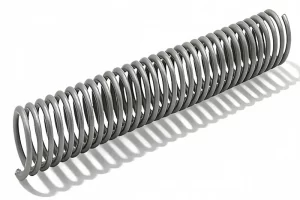
Many production processes involve repeated heating and cooling, which makes the alloy wire undergo mechanical strain called thermal fatigue, which is constantly expanding and contracting. Each temperature swing creates micro-cracks along grain boundaries, which propagate over hundreds or thousands of runs until the wire fractures. Complicating this problem is creep: under the continuous high heat and physical tension caused by coil installation, soft and low-strength heating alloy slowly deforms and sags, and comes into contact with the furnace insulation or support frames, thus generating short-circuit hot spots.
The tensile strength of standard resistance wire is moderate, usually less than 500 MPa, which is easy to sagging and breaking in high-power-density furnaces. Long-duration thermal load amplifies creep damage, shortening maintenance cycles dramatically. This failure mode plagues continuous glass tempering kilns and large ceramic sintering furnaces most severely, where nonstop production leaves no extended cool-down window to relieve accumulated mechanical stress on installed industrial heating element coils.
How to Diagnose Resistance Wire Failure
Early fault intervention depends on tracking resistance drift, which is a measurable warning signal of degenerated resistance wire and assembled heating element coil units. Because oxidation erodes the cross-sectional area of the wire and changes its surface conductivity, the resistance values will rise steadily with the passage of time. Standard furnace PID temperature controllers calibrate the power output according to the baseline resistance readings; The resistance drift disrupts power distribution, which directly leads to uneven heat distribution in the furnace, the same as the temperature fluctuation of 25°C that paralyzes the photovoltaic diffusion furnace mentioned above.
Engineers can implement a simple predictive maintenance protocol to avoid catastrophic burns.
- Log baseline resistance values for all installed high-temperature heating wire coils immediately post-installation, recording wire gauge, length, and operating temperature set points.
- Schedule bi-weekly resistance testing with calibrated ohmmeters, documenting percentage deviation from original benchmarks.
- The establishment of replacement trigger threshold-usually the resistance increases by 15% -20% -indicates advanced oxidation and damaged structural integrity.
This diagnosis method eliminates the speculation in the schedule of part replacement. Instead of responding to sudden wire breakages and unplanned downtime, teams can replace aging heating components between planned production intervals. For facilities that manage dozens of heat treatment furnace units, a centralized resistance log database simplifies the asset life prediction of electric heating alloy supply and bulk material procurement planning.
The Solution: Why HRE Alloy Outperforms Ordinary Elements
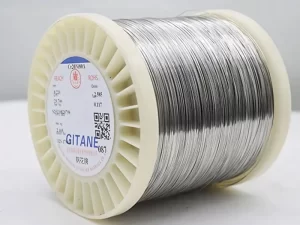
HRE is a proprietary iron chromium aluminum heat-resisting alloy manufactured by Gitane (Shougang Jitai ‘an), engineered exclusively for ultra-high-temperature industrial thermal processing as a premium furnace alloy solution. Its performance advantage comes from two basic production pillars: proprietary micro-alloy formula and strict high-purity smelting process, which can reduce harmful gas inclusions and trace pollutants in general FeCrAl substitutes. Verified lab and field testing deliver quantifiable performance metrics absent from standard-grade heating material stock.
| Performance Parameter | HRE Alloy Spec | Ordinary Standard FeCrAl Alloy |
| Maximum Continuous Operating Temperature | 1350°C | 1200°C |
| Tensile Strength | 680 MPa | 420–500 MPa |
| Continuous Service Life at 1350°C | 85 hours | <30 hours |
| Emissivity (Thermal Radiation Coefficient) | 0.7 | 0.5–0.58 |
| Verified Field Service Lifespan (1100°C PV Furnace) | 10 months | 6 months |
The deployment of photovoltaics in the real world has validated the revolutionary value of HRE. After using the HRE resistance wire heating module to transform the struggling silicon wafer factory, the operation immediately improved: the furnace temperature uniformity increased by 5 ° C, the overall equipment energy consumption decreased by 26%, metal pollution was greatly reduced, the output jumped from 93% to 99.2%, and the solar conversion efficiency increased by 0.4 percentage points. By eliminating rework, reducing maintenance labor, lowering electricity costs, and extending component lifespan, the cumulative annual cost savings exceed RMB 800000.
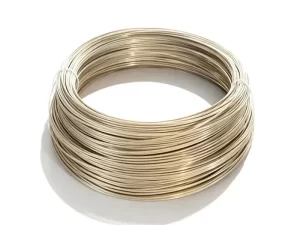
HRE supports complete customization to meet the design requirements of the furnace. It can provide φ0.1-10.0mm round alloy wire and 0.5-2.5mm thick polished flat electric heating alloy, making it a flexible customized electric heating alloy, which is suitable for semiconductor diffusion kilns, automobile glass melting furnaces, high-power ceramic sintering equipment and laboratory muffle furnaces. As a leading high-performance alloy option, it claims that the three major industrial application fields of ultra-high temperature heating hardware are photovoltaic/semiconductor heat treatment, high-quality glass processing, and sintering and heat treatment in heavy industrial furnaces.
Call to action: browse our official product page, download the complete HRE product manual, check the complete size specifications, and request a technical data sheet customized according to your unique industrial electric heating elements requirements. Our engineering team provides free consultation on furnace load and atmosphere matching for the construction or renovation of new heating elements.
Best Practices for Industrial Furnace Maintenance
Even the highest-grade electric heating alloy like HRE requires proper installation and ongoing care to realize its full rated lifespan. These industry-standard maintenance agreements are adopted to maximize the return on investment of alloys.
1. Optimize the installation and insulation support
Install non-conductive ceramic brackets to prevent direct metal contact between the heating element coil and furnace frames. Uneven supports produce local tension hot spots and accelerate creep deformation, even for high-tension HRE lines. It is necessary to calculate the coil expansion gaps to adapt to the thermal growth during the thermal cycle without sticking or sagging.
2. Regulate Furnace Atmosphere Consistency
Stabilize oxygen, moisture and active gas levels according to the alloy manufacturer’s guidelines. For reducing atmosphere operations, accurate gas flow rates should be maintained to limit oxide layer erosion on the surface of the heat-resistant alloy. With the passage of time, regular cleaning can remove the moisture and particulate pollutants remaining on the surface of the wire.
3. Match the Alloy Grade to the Power Density Requirement
Avoid cost-cutting substitutions of Nichrome for FeCrAl in temperatures exceeding 1000°C; Nickel-chromium alloys will degrade rapidly above this threshold. For high-wattage, fast-ramp furnaces requiring robust high-temperature resistant material, upgrade from generic FeCrAl directly to HRE rather than mid-tier alloy grades to minimize total cost of ownership.
FAQ
Q 1: What certification standards for global industrial deployment does HRE alloy meet?
A 1: HRE carries out a comprehensive ISO quality management system certification, and according to the CE mark of the EU Industrial Equipment Directive, plus SGS certified REACH, RoHS and SVHC compliance, it can be transported and facilitating deployment in many industrial markets across Europe, North America and Asia..
Q 2: Can HRE heating wire run reliably under the condition of a vacuum furnace?
A 2: Yes. The high-purity smelting process reduces volatile trace elements to the maximum extent and limits the degassing of impurity in vacuum. It is the preferred high-temperature heating wire for monocrystalline and polycrystalline silicon thermal processing and semiconductor wafer sintering applications.
Q 3: Is HRE suitable for small batch laboratory muffle furnaces, or only for large-scale production furnaces?
A 3: HRE provides φ 0.1 mm ultra-fine alloy wire gauges, which are very suitable for muffle furnaces in small laboratories, as well as coarse gauge wire and wide flat strip used in multi-ton industrial glass and ceramic production lines. As a multi-functional melting furnace alloy, it is also suitable for small batch research and development and large-scale continuous production.
Q 4: How much energy efficiency can be improved by using HRE to transform existing heating systems?
A 4: the verified photovoltaic case study recorded a 26% drop in energy consumption post-retrofit, driven by HRE’s high emissivity coefficient of 0.7 and stable resistance output that eliminates wasted power from uneven temperature cycling. According to the original alloy grade and the insulation quality of the furnace, the actual saving amount is slightly different.
Conclusion
Premature oxidation and burning of resistance wire and heating coils are not an inevitable cost in the process of high-temperature manufacturing-it is almost always a symptom of improper material selection or improper maintenance of the furnace. Ordinary heating material can not withstand the combined pressures of extreme heat, cyclic thermal fatigue and variable furnace atmosphere in modern photovoltaic, semiconductor, automobile glass and heavy metallurgical production lines.
HRE patented iron chromium aluminum electric heating alloy delivers lab-verified tensile strength, 1350°C sustained heat tolerance, superior radiation efficiency, and proven multi-month service life extensions compared to commodity furnace alloys. Field data confirms its ability to increase product output, cut energy expenditure, and greatly reduce the maintenance downtime of resistance furnace and precision heat treatment furnace systems. Investing in HRE and other high-quality industrial electric heating materials will change the operating expenses from frequent passive maintenance to stable long-term asset performance, which fully meets the goals of global decarbonization and factory cost reduction.
If you require tailored electric heating solutions calibrated to your furnace temperature range, atmosphere type, power density, and production cycle schedule, reach out to our technical engineering team directly. As an experienced industrial heating elements manufacturer, we support customized alloy wire and strip production for diverse furnace scenarios. Leave your furnace specifications and production challenges in our inquiry form, and we will provide free material size and cost-benefit analysis for the integration of HRE industrial high-temperature consumables.