Introduction
In the high-temperature industrial heating scene, the selection of reliable resistance wire and high-quality electric heating element materials directly determines the life, energy efficiency and production stability of the equipment. As the second generation of high-performance Fe-Cr-Al alloy, HRE stands out from the traditional FeCrAl material, which has ultra-high temperature, excellent oxidation resistance and stable mechanical properties. It has become the first choice material for high-end industrial heating equipment in the world, and also the core product of professional industrial heating elements manufacturers. In this paper, the definition, unique advantages, product specifications, performance parameters, application scenarios, operation steps, comparison data and answers to common questions of HRE alloy are comprehensively introduced, providing authoritative reference for industrial heating design and material selection.
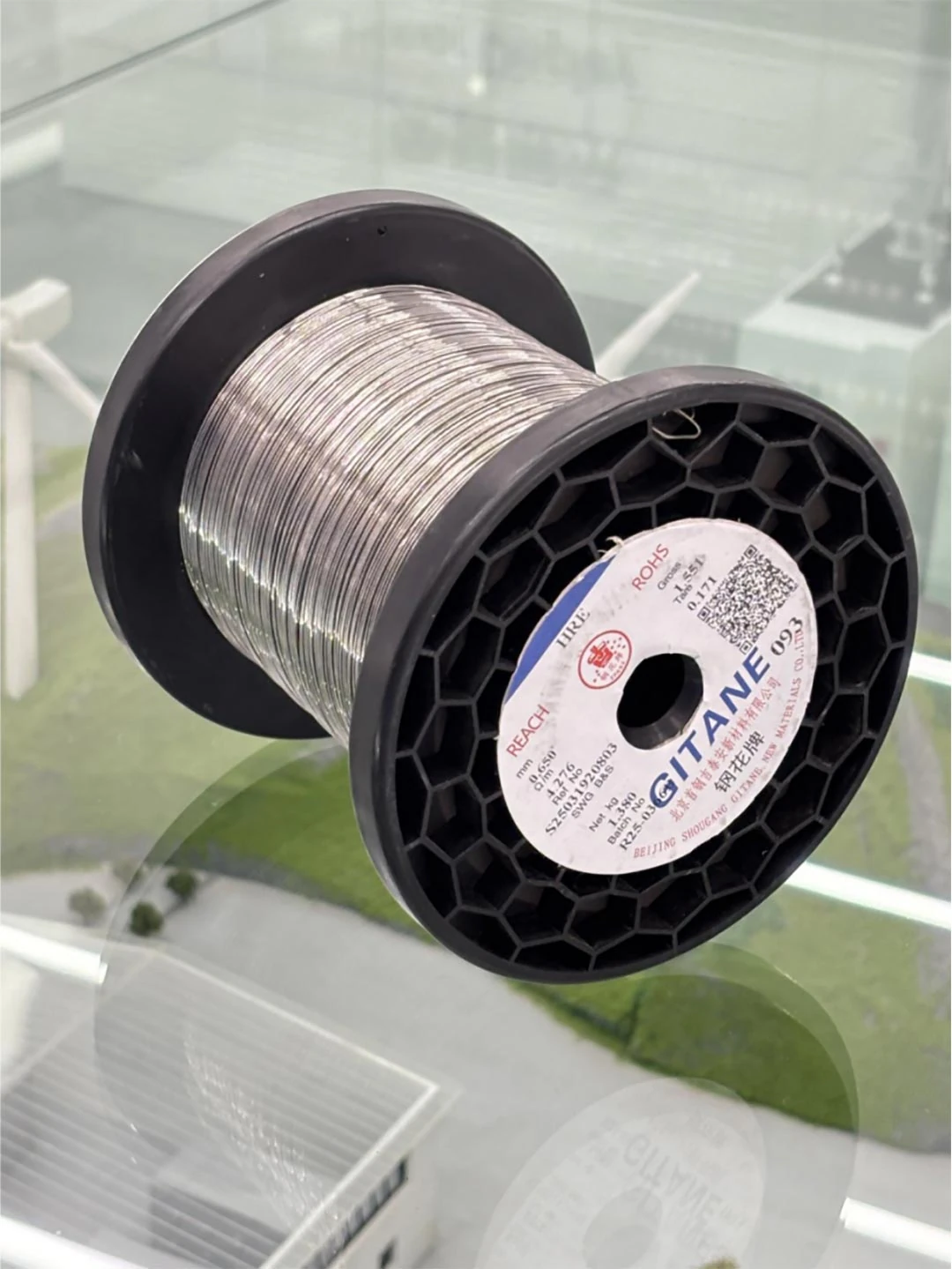
1. What Is HRE Iron Chromium Aluminum Alloy?
1.1 Professional Definition
HRE is a new ferritic Fe-Cr-Al alloy developed by Beijing Shougang Gitane New Materials Corporation, which is optimized on the basis of 0Cr21Al6Nb, and has higher purity and stronger high-temperature oxidation resistance. As a classic high-resistance heating alloy, it conforms to the general definition of FeCrAl alloy: taking iron as the matrix, adding chromium and aluminum as the main alloying elements, supplemented by trace micro alloy elements, it has high resistivity, excellent high-temperature structural stability and self-healing oxidation protection performance.
1.2 Chemical Composition
HRE is characterized by accurate composition ratios to ensure balanced performance. The detailed chemical composition is as follows:
- Carbon (c): ≤ 0.03%
- Silicon (Si): ≤0.3%
- Chromium (Cr): 22-23.5%
- Aluminum (Al): 5.5-6.0%
- Trace elements: Appropriate addition ratio
The scientific collocation of elements makes HRE form a dense and stable Al2O3 protective film at high temperatures, which effectively isolates oxygen corrosion and avoids material aging and fracture.
2. Unique Advantages Of HRE Alloy
As a high-end material for resistance wire and electric heating element, HRE has three core competitive advantages far beyond conventional alloys. There is no false propaganda, and everything is based on actual test data.
2.1 Ultra-High Temperature Resistance and Long Service Life
The maximum continuous working temperature of HRE is 1350℃. It is tested according to GB/T 1234-2012 standard and has a fast service life of more than 85 hours. In comparison, the traditional ordinary FeCrAl alloy only achieves a rapid life of 60 hours under the same 1350°C working condition, while the first-generation 0Cr21Al6Nb product has a rapid life of about 72 hours. Its annealed tensile strength reaches 650-800 N/mm², and its high-temperature strength at 1000°C is 20 MPa. It maintains stable structural strength under long-term high-temperature thermal cycles, which is significantly better than traditional and first-generation FeCrAl materials that are prone to deformation and aging at ultra-high temperatures.
2.2 Excellent Oxidation Resistance And Low Volatility
Compared with the first generation of 0Cr21Al6Nb, HRE has higher material purity and an optimized metallurgical process. The weight gain rate of oxidation at 1050℃ is obviously lower than that of conventional FeCrAl alloys. The radiation coefficient in the completely oxidized state is as high as 0.7, and the heat dissipation is uniform, without impurity precipitation, thus avoiding the pollution of precision workpieces such as semiconductor chips and photovoltaic silicon wafers.
2.3 Superior Mechanical And Thermal Stability
The elongation of HRE is more than 14%, density is 7.1 g/cm³, and the resistivity at 20℃ is 1.45±0.07 μΩ·m. The average coefficient of thermal expansion at different temperature ranges from 11×10⁻⁶/k to 15×10⁻⁶/k, and the thermal deformation is very small. The resistance temperature correction coefficient is stable at 1.02-1.04 from 700℃ to 1300℃, ensuring stable power output of the electric heating element and precise furnace temperature control.
2.4 Certification of Patent and Standard Compliance
HRE smelting and production technology has obtained a national invention patent (Patent No.: ZL201910173874X, Certificate No.: 4051862). At the same time, it has passed the international authoritative certifications such as ISO system certification, CE certification, SGS, REACH-ROHS/SVHC, etc., meeting global industrial production standards. In terms of cost performance, it reduces the comprehensive use cost by about 400 yuan per kilogram compared with imported high-temperature alloys, with higher cost benefits.
2.5 Performance Comparison with Competitive Products
| Performance Index | HRE Alloy (Second-Generation FeCrAl) | Traditional & First-Generation FeCrAl (0Cr21Al6Nb) |
| 1350℃ Rapid Life | 85h | 60h-72h |
| 1000℃ Creep Fracture Strength | 2.20MPa | 1.84MPa |
| 1300℃ Collapse Test Data | 31mm | 35mm |
| Energy Saving Efficiency | Reduce energy consumption by 26% | Conventional energy saving level |
3. HRE Product Complete Specifications
As a professional industrial heating elements manufacturer, SPARK provides HRE products with various specifications, including round wire, flat wire and flat tape and supports customized production.
- Round Wire: the diameter of the wire is 0.05-10.0Ω/m, which is a complete millimeter specification; The range of meter resistance at 20 ℃ is 738- 0.0185 Ω/㎡, and its weight is 0.0139-558 g/m.
- Flat Wire: the thickness is 0.05-0.35 mm, and the width is 0.5-4.5 mm, which is suitable for the layout of compact heating equipment.
- Flat strip: the thickness is 0.5-3.5mm and the width is 5.0-40.0mm; Resistance is 0.0389 Ω/m-0.191 Ω/m, and the weight is 56.8 m -269.8g/ m..
Delivery status standard
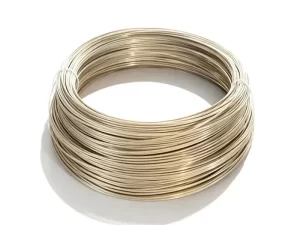
- Wire diameter > φ 5.0: blue disc delivery.
- Diameter φ 1.2-5.0 mm: delivered on a golden disc.
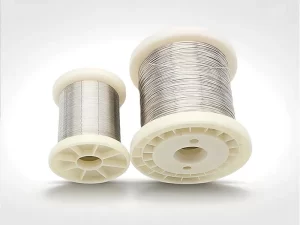
- Wire diameter ≤φ 1.0 mm: open shaft delivery.
- Flat bar: polished and delivered.
- Other states can be produced according to user specifications.
4. Main Application Scenarios of HRE Electric Heating Elements
HRE resistance wire and heating elements are widely used in high-end industrial high-temperature fields. The top three mainstream application scenarios in 2026 are as follows.
4.1 Photovoltaic and Semiconductor High-Temperature Heat Treatment
Core equipment: silicon wafer diffusion furnace, monocrystalline silicon/polycrystalline silicon heat treatment furnace, and chip high-temperature sintering annealing furnace. HRE 1350℃ has the characteristics of long-term stability, high purity and low deformation, which ensures consistent resistance and ultra-low impurity precipitation and perfectly matches the high-precision production requirements of photovoltaic and semiconductor products.
4.2 High-End Glass Heat Treatment
Core equipment: automobile glass furnace, display glass annealing furnace, hot bending furnace and tempering furnace. HRE has the characteristics of high-temperature oxidation resistance, stable thermal radiation and deformation resistance and has become the standard configuration of high-end electrothermal glass production lines, with stable mass production..
4.3 High-temperature Industrial Furnaces
Core equipment: high-temperature ceramic sintering furnace, industrial heat treatment furnace, high-power density industrial furnace, muffle furnace, industrial burner, boiler transformation and high-temperature flue gas treatment equipment. Adapting to various furnace types and atmospheric environments, it is the mainstream material for transforming traditional high-temperature furnaces.
Classic Application Case
A photovoltaic enterprise originally used ordinary electric heating elements in a 1100℃ silicon wafer diffusion furnace, with only a 6-month service life, furnace temperature fluctuation ±25℃, high energy consumption and obvious impurity precipitation. The silicon wafer yield was only 93%, with monthly maintenance and rework loss over 60,000 yuan.
After replacing it with HRE high-performance resistance wire, the thermal field layout is optimized by its ultra-high temperature stability and high oxidation resistance at 1350℃. After modification, the service life of the component is extended to 10 months, furnace temperature uniformity reaches 5℃, energy consumption is reduced by 26%, and there is no impurity pollution. The yield of silicon wafer is increased to 99.2%, conversion efficiency is increased by 0.4 percentage points, and annual comprehensive cost is reduced by over 800,000 yuan.
5. Steps To Select And Use HRE Alloy
In order to maximize the service life and heating efficiency of HRE electrothermal elements, please follow the standard selection and use steps.
- Confirm the working Conditions: define the maximum temperature, working atmosphere, power density and furnace structure of the equipment.
- Selection of product Specification: round wire, flat wire, or flat belt shall be equipped according to equipment size, and the wire diameter and resistance value shall be selected by referring to the HRE resistance/weight reference table.
- Optimize surface load design: the surface load is inversely proportional to service life. High surface load reduces the use of materials but shortens the service life. According to the furnace temperature curve of 700℃-1400℃, the load is reasonably allocated.
- Install and Commission: Follow polished flat strip and disc wire delivery standards for installation, avoid violent bending, and debug power parameters referring to the resistance temperature correction coefficient.
- Daily maintenance: check the state of oxide film on the surface regularly to avoid frequent extreme temperature rise and fall, and extend the service life.
6. FAQ About HRE Iron Chromium Aluminum Alloy
Q1: What is the maximum continuous operating temperature of HRE?
A 1: The maximum long-term service temperature is 1350℃, and the rapid service life at this temperature exceeds the GB/T 1234-2012 standard of 85h, which is much higher than that of the conventional alloy.
Q2: What are the industrial applications of HRE?
A 2: It has passed ISO system certification, CE certification, SGS certification and REACH-ROHS/SVHC environmental protection certification, which meets the global industrial heating equipment access standards.
Q3: How does HRE behave in an extreme temperature environment?
A 3: it maintains stable mechanical strength and oxidation resistance at -20℃ to 1350℃, with small thermal expansion and deformation, and is suitable for high temperature thermal cycle and complex flue gas corrosion environment.
Q4: Can HRE customize specifications?
A 4: Yes, as a professional industrial heating elements manufacturer, we support non-standard customization of wire diameter, thickness, width and delivery state to meet the needs of special equipment.
Q5: What are the advantages of HRE compared with traditional FeCrAl alloy?
A 5: Higher purity, better oxidation resistance, 40% longer quick life, lower energy consumption, less workpiece pollution and more cost-effective long-term use.
Conclusion
As an upgraded iron chromium aluminum alloy, HRE fills the performance gap of traditional heating alloys with ultra-high temperature resistance, excellent oxidation resistance, stable mechanical properties and standardized specifications. Whether it is used as a resistance wire or finished electric heating element, it has shown irreplaceable advantages in the fields of photovoltaic semiconductor, high-end glass, ceramic sintering and industrial furnaces. For global equipment buyers and manufacturers who are looking for a reliable manufacturer of industrial heating elements, HRE is an ideal high-temperature heating material with high cost performance, patent certification and international certification, which can effectively reduce energy consumption, prolong equipment life and increase output.