In modern metal heat treatment, process engineers consistently face a triad of operational pain points: excessive energy consumption, high scrap rates caused by poor temperature uniformity, and prohibitive unplanned downtime. The root cause is often the premature failure of standard, off-the-shelf heating components. Conventional resistance wires operating near their thermal limits are prone to oxidation, creep-induced sagging, and mechanical fracture, which directly disrupt the thermal stability of the furnace chamber. As industries push toward tighter specifications in vacuum, protective-atmosphere, and ultra-high-temperature applications, the limitations of generic elements become a critical bottleneck. The strategic path to overcoming these challenges lies in the systematic application of the custom heating element. By precisely matching the material formulation, geometric profile, and power density to the specific thermal load, a meticulously engineered heating assembly can fundamentally transform kiln efficiency, product quality, and total operational economy.
Beijing Shougang Gitane New Materials Corporation brings over six decades of precision metallurgical expertise to this field. As a high-tech enterprise whose history includes supplying critical alloys for China’s “Two Bombs, One Satellite” project, SPARK now leverages advanced FeCrAl technologies to deliver robust, application-specific thermal solutions to the global heat treatment industry. The company’s HRE, SGHYZ, and SGHT material families are designed to address the most demanding thermal cycles with a focus on longevity and process cleanliness.
1. Thermal Dynamics: How the Heating Element Governs Furnace Efficiency
A furnace’s overall equipment effectiveness is predominantly dictated by the thermodynamic behavior of its heat treatment heating element. The performance of this component directly shapes energy consumption, throughput, and metallurgical outcomes.
Heat transfer efficiency depends on the element’s ability to radiate thermal energy reliably into the workload. Alloys that maintain a stable, high radiation coefficient ensure that electrical power converts into usable heat without wasteful efficiency roll-off. SPARK’s HRE and SGHYZ grades, for instance, exhibit a radiation coefficient of approximately 0.7, a value that remains consistent over time because the protective oxide scale does not spall away and expose fresh, emissivity-degraded metal.
Precision processes, especially those carried out inside a vacuum heat treatment furnace, demand exceptional temperature uniformity—often within ±3°C or better. A generic heating layout can create thermal blind spots where uneven radiant view factors lead to localized overheating or cold zones. By tailoring the pitch, form, and phase spacing of the heating assemblies, engineers can achieve a balanced flux profile across the entire charge, which directly reduces distortion and inconsistent hardness in treated components.
Perhaps the most underappreciated efficiency killer is the physical deformation of the heating element. When an off-the-shelf wire sags or collapses at high temperature, it alters the designed spacing, creating hot spots and electrical shorting risks. Advanced FeCrAl alloys resist this sagging through superior high-temperature creep rupture strength, maintaining the as-built thermal geometry so that the workpiece sees the same thermal profile on its first cycle as it does on its 5,000th.
2. Custom Geometries: Wire, Ribbon, and Seamless Tube Designs
True thermal optimization lies in the geometric tailoring of the heat source. SPARK produces a variety of forms, each addressing a specific heat transfer challenge.
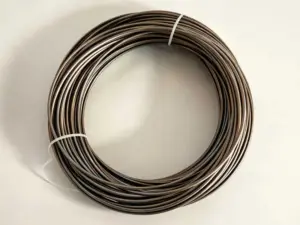
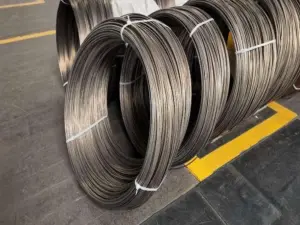
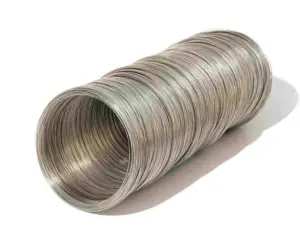
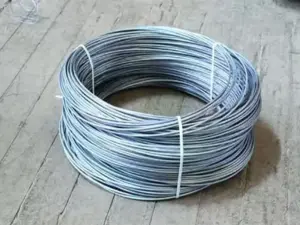
Spiral and serpentine wires made from SGHYZ or HRE can be formed into free-radiating coils. These geometries are the backbone of general industrial box furnaces and semiconductor diffusion equipment, where they provide a large surface area for radiation in a compact space. The alloy’s resistance to high-temperature relaxation ensures that these coils hold their shape over thousands of heating cycles.
For applications demanding high power density over a restricted area, such as glass tempering or rapid-cycling annealing furnaces, a flat ribbon component is ideal. The ribbon’s high surface-area-to-mass ratio provides rapid thermal response and superior heat dissipation. SGHYZ ribbon, hardened with a proprietary rare-earth addition, withstands aggressive thermal shock cycles that would rapidly embrittle standard austenitic or conventional FeCrAl ribbons.
In corrosive environments, high carbon potential, or severe mechanical abuse, tubular heating elements represent the highest level of protective engineering. A milestone achievement in this field is SPARK’s latest development of SGHT, an ultra-high temperature FeCrAl seamless tube that fills a critical gap in domestic manufacturing capabilities.
Fabricated via Powder Metallurgy and high-temperature Hot Isostatic Pressing (HIP), followed by precision hot rolling, the SGHT product exhibits a dense, homogeneous microstructure free of the linear impurities typical of drawn wire. This seamless tube, capable of operating at temperatures up to 1425°C, offers unmatched resistance to carburizing and corrosive gas attack. Its tight dimensional tolerances—the outside diameter and wall thickness are held to ±1.0% for sizes above 50 mm—allow for repeatable installations in ceramic sintering furnaces and high-power vacuum systems where a radiant tube’s mechanical integrity is paramount.
3. Material Science Behind Efficiency: A Performance Comparison
To make an informed selection, engineers must look beyond standard datasheets. The table below presents laboratory-measured comparisons of SPARK’s advanced FeCrAl alloys against a globally recognized industry benchmark, illustrating how targeted metallurgy translates into extended service reliability.
Performance Comparison: SPARK Advanced FeCrAl Alloys vs. Industry Standard
| Technical Metric | SPARK HRE (High-Temp) | SPARK SGHYZ (Rare-Earth Enhanced) | SPARK SGHT (Tubular HIP) | Industry Benchmark (Kanthal A-1) |
| Max. Service Temperature | 1350°C | 1400°C | 1425°C | 1400°C |
| Rapid Life Test (1350°C) | 85 h | >80 h (wire), ≥10,000 h actual service | >80 h (tube) | 60 h |
| Creep Rupture Strength (1000°C) | 2.20 MPa | Excellent (rare-earth fortified) | High (dense HIP structure) | 1.84 MPa |
| Collapse Test (1300°C) | 31 mm deflection | Minimal deformation | Minimal deformation | 35 mm deflection |
| Oxidation Rate (1050°C, 200 h) | Very low | < 10% weight gain | Very low | Higher (typical FeCrAl) |
| Surface Oxide Spalling | Dense, protective, non-spalling | No spalling, no metallic volatilization | No spalling, corrosion-resistant | Prone to flaking over time |
The operating temperature range of HRE is precisely maintained at 1300–1350 °C; this range coincides with the ‘forbidden zone’ for the performance of conventional A-1-type materials—within this range, A-1 materials tend to fail rapidly due to a sharp increase in creep rate. By contrast, HRE exhibits stable creep fracture strength at 2.20 MPa and extremely low deflection during long-term service. This enables furnace heating elements manufactured from HRE to effectively resist sagging at high temperatures, thereby continuously ensuring the reliability of electrical insulation whilst preventing the concentration of localised hot spots caused by element deformation.
The preparation process for SGHYZ is based on high-purity vacuum melting and incorporates a unique rare-earth microalloying process. This process forms a near-dense α-Al₂O₃-type oxide layer on the surface of the material, with both toughness and adhesion significantly superior to those of conventional oxide films. In process stages where atmospheric cleanliness is of the utmost importance—such as semiconductor annealing and the processing of high-end optical glass—this oxide layer effectively prevents flaking, particle release or the escape of metal vapours at source. Consequently, the surfaces of high-value workpieces are effectively protected against quality issues such as pitting, colour variation and contamination, thereby providing customers with a substantial guarantee of yield rates.
Leveraging the unique properties of powder metallurgy, SGHT seamless tubes can reliably withstand extreme temperatures of up to 1425°C in carburising and strongly reducing atmospheres. The isotropic microstructure endows SGHT seamless tubes with excellent resistance to internal corrosion—a form of corrosion that is precisely the main cause of premature failure in drawn wire elements. It is this key performance advantage that sets SGHT seamless tubes apart in custom heating elements, making them more than capable of withstanding the most demanding operating conditions in industrial furnaces.
4. Real-World Case Studies: Verified Efficiency Returns
One tier-one photovoltaic manufacturer faced chronic failures in its 1100°C silicon wafer diffusion furnaces. The incumbent heat treatment heating element oxidized heavily, with flaking oxide scales contaminating wafers and causing a 93% yield rate and color defects. The coils sagged under their own weight, forcing an expensive 3-month replacement cycle. After switching to a SPARK SGHYZ rare-earth-modified element system, thermal field uniformity improved dramatically: temperature fluctuation shrank from ±25°C to ±5°C. Oxide spalling and metal outgassing ceased, enabling a clean processing environment. The yield surged to 99.2% and energy consumption dropped by 26%. The extended replacement cycle combined with reduced scrap delivered an annual operational cost reduction exceeding RMB 800,000, aligning with the sector’s dual-carbon and cost-reduction mandates.
A precision tooling manufacturer operating a high-load vacuum furnace battled conventional metallic radiant tubes that suffered from cyclic creep-fatigue. The original equipment’s efficiency decayed monthly as the elements developed micro-cracks and volatile outgassing, contaminating the hot zone. A composite system was engineered, integrating HRE high-temperature ribbon assemblies for broad radiation with a custom SGHT seamless tube array in the high-velocity convection zone. The vacuum integrity remained pristine due to the near-zero volatility characteristic, while the HIP-formed tubes eliminated the creep-buckling failure mode. Long-term resistance drift was negligible, ensuring stable process temperatures, and the composite element system ultimately achieved a service life exceeding twice that of the previous competitive design.
5. How to Specify Your Heating Element System
Designing a high-efficiency thermal system requires careful evaluation of three variables. The first is the operating temperature band: for applications under 1100°C, cost-optimized variants are available; for 1100–1350°C, HRE and SGHYZ deliver maximum creep and oxidation resistance; for extreme peaks up to 1425°C or aggressive carburizing conditions, the SGHT seamless tube is the appropriate choice. The second variable is furnace atmosphere—a high-vacuum environment demands materials with near-zero outgassing rates, while reducing or endothermic atmospheres require the dense, corrosion-proof structure of HIP-formed tubes. The third is geometric compatibility and integration: efficiency is maximized not just by material, but by a seamless one-stop solution. SPARK’s service model spans material R&D, element forming, high-purity alumina insulation assembly, and furnace system integration to ensure that the final heating assembly functions as a properly optimized subsystem.
6. Frequently Asked Questions
Q1: What are the main failure modes of standard heating elements? How do advanced alloys reduce the risk of failure?
In high-temperature environments, standard heating elements typically fail due to two factors: oxidation, which causes the protective oxide layer to peel and exposes the material to further corrosion, and high-temperature creep, which leads to element sagging and potential short circuits or heating failure. SPARK’s SGHYZ alloy addresses both issues by forming a dense, adherent Al₂O₃ protective layer that resists oxidation, while its excellent creep resistance maintains dimensional stability under long-term heat exposure. This reduces thermal field distortion and electrical safety risks, significantly improving heating system reliability and service life.
Q2: When is it necessary to upgrade from a wire to a seamless tube design?
Upgrading is recommended when the process atmosphere is corrosive (e.g., high carbon potential or halide gases), when mechanical impact is a risk, or when a flame-heated radiant tube is being converted to electric. The SGHT seamless tube provides a physical barrier against gas attack, protecting the resistive core and ensuring long service life at up to 1425°C.
Q3: How does a high-purity element improve the performance of a vacuum heat treatment furnace?
In vacuum environments, vapor pressure matters. Traditional alloys can volatilize trace metallic impurities that contaminate the furnace hot zone and the workload. A dedicated vacuum heat treatment furnace element made from SGHYZ is formulated for ultra-low volatility and high purity, preserving the vacuum integrity and eliminating unwanted metallization on part surfaces.
Conclusion
The pathway to maximizing efficiency in metal heat treatment is not found in simply swapping one standard wire for another; it lies in partnering with a manufacturer capable of engineering a fully customized thermal assembly. A properly specified custom heating element directly reduces energy consumption, eliminates contamination-related scrap, and dramatically extends maintenance intervals. From the creep-resistant stability of HRE and the ultra-clean processing enabled by SGHYZ, to the groundbreaking corrosion protection of the SGHT seamless tube, the application of precision FeCrAl metallurgy ensures consistent, cost-effective furnace operation. For projects involving furnace retrofitting, diffusion equipment upgrades, or high-volume glass tempering lines in need of a reliable domestic alternative to imported brands, SPARK offers high-performance solutions backed by over 60 years of material science heritage.