Key Takeaways
- A glass tempering furnace heats glass to a controlled temperature before rapid cooling increases its strength.
- Electric resistance heating is widely used in the heating section, where a heating wire or other heating element converts electrical energy into heat.
- FeCrAl wire and NiCr are common resistance-heating materials. The right choice depends on temperature, electrical requirements, element design, and service conditions.
- A suitable high temperature heating wire should provide stable electrical performance, good oxidation resistance, and sufficient strength at high temperatures.
- SG140 is a low-nickel alloy developed for glass tempering furnaces. It offers a stable black oxide scale, high-temperature strength, and low creep.
Introduction
Glass tempering improves the strength and thermal resistance of processed glass. Before rapid cooling, the glass must be heated evenly to a controlled temperature.
The heating section is therefore a key part of the tempering process. Its heating elements must provide stable heat during repeated high-temperature cycles. The choice of heating wire can also affect element life, maintenance, and furnace cleanliness.
This guide explains how a glass tempering furnace works, how its heating elements are used, and what buyers should consider when selecting heating wire.
What Is a Glass Tempering Furnace?
A glass tempering furnace is industrial equipment used to heat glass before rapid cooling. During the process, the glass is heated and then quickly cooled. This creates compressive stress on its surface, which gives tempered glass greater mechanical strength than untreated glass.
For example, modern flat-glass tempering furnaces may use forced convection to improve heat transfer. Rollers are also used to move the glass through the heating and cooling sections.
What Are the Main Components of a Glass Tempering Furnace?
The main components normally include:
- Heating chamber: Heats the glass under controlled conditions.
- Heating element: Converts electrical energy into heat.
- Temperature control: Monitors and adjusts the furnace temperature.
- Roller system: Moves the glass through the furnace.
- Insulation: Helps reduce heat loss.
- Quenching section: Rapidly cools the heated glass.
The exact configuration varies according to furnace design and the type of glass being processed.
How Does the Heating Process Work?
The heating section supplies thermal energy to the glass. Many furnaces use electrical resistance heating because the heat output can be adjusted through electrical power.
The heating elements are arranged around the glass. Their position and spacing are important because the glass needs to be heated as evenly as possible.
Some furnaces also use forced convection. In this design, heated air is circulated to improve heat transfer. This approach can be useful when certain coated or Low-E glass products are processed.
Why Is Heating Wire Important in a Glass Tempering Furnace?
The heating element is one of the key parts of the heating section. It converts electrical energy into heat and provides the thermal energy needed before quenching.
However, stable heating depends on more than electrical power. The heating element also needs to maintain its shape and performance during repeated heating cycles. Its material, size, shape, and operating temperature can all affect how heat is delivered to the glass.
A heating wire is often formed into a coil to make a resistance heating element. Wire diameter, length, resistance, and alloy composition all affect the final heating performance.
For this reason, the heating wire should be selected together with the furnace design rather than by temperature rating alone.
What Should a Heating Element Provide?
A suitable heating element should meet several basic requirements.
- Stable heat output: The element should provide consistent heat during the heating cycle so that the glass can be heated evenly.
- Oxidation resistance: The element operates in a hot environment. Good oxidation resistance can help extend its service life.
- High-temperature strength: The wire needs to retain sufficient strength at operating temperature. This helps reduce deformation during long-term use.
- Low creep: When an element stays hot for long periods, it can gradually deform under its own weight. Low creep helps it retain its original shape.
- Suitable electrical properties: Resistance, wire diameter, and element length must match the furnace’s electrical design.
What Type of Heating Wire Is Used in a Glass Tempering Furnace?
The material should be selected according to the furnace’s operating conditions. FeCrAl wire and NiCr are commonly used for resistance heating. Specialized alloys can also be considered when a specific combination of performance and cost is required.
FeCrAl Wire
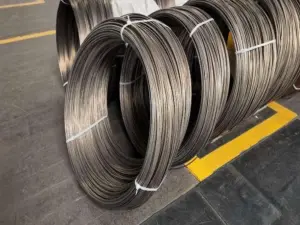
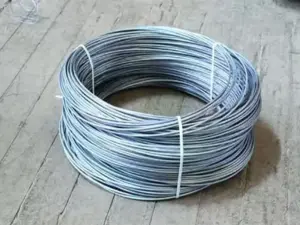
FeCrAl wire is an iron-chromium-aluminum resistance alloy. It is widely used in high-temperature heating because it offers good oxidation resistance and suitable electrical properties.
An FeCrAl heating element can be used in many industrial heating applications. However, the most suitable grade still depends on the actual element temperature, electrical requirements, and furnace conditions.
NiCr Heating Wire
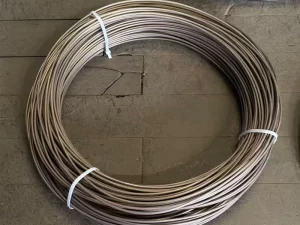
NiCr is another common resistance-heating alloy. It is mainly composed of nickel and chromium.
NiCr alloys are known for their oxidation resistance and high-temperature strength. They can be considered when their electrical and mechanical properties meet the requirements of the furnace.
How to Choose Heating Wire for a Glass Tempering Furnace?
The alloy should be selected together with the furnace’s electrical and mechanical requirements.
Check the Operating Temperature
First, confirm the actual furnace temperature and estimated element temperature. The element temperature can be higher than the chamber temperature.
The selected high temperature heating wire should have a suitable operating range for the intended conditions.
Check the Electrical Requirements
Voltage, power, resistance, wire length, and wire diameter need to match the heating circuit.
Because wire resistance changes with temperature, temperature-dependent electrical data should be considered when the element is designed.
Consider Wire Size and Element Shape
Wire diameter affects resistance, surface area, and mechanical strength. The final element may be supplied as straight wire, strip, or spiral coil.
For replacement applications, the original element dimensions should be checked carefully. Even when the alloy has suitable properties, the element may not work correctly if its resistance or geometry does not match the furnace.
Consider Service Life and Maintenance
Heating elements are exposed to repeated heating and cooling cycles. Over time, oxidation, creep, deformation, and mechanical stress can affect their performance.
A suitable high temperature heating wire should retain sufficient strength during long-term operation. Low creep is also important because it helps reduce element sagging and deformation.
Provide Complete Specifications for Custom Elements
Custom elements can be supplied when standard dimensions do not match the furnace. Buyers should provide:
- Voltage and power
- Required resistance
- Wire diameter
- Coil diameter and pitch
- Furnace operating temperature
- Installation dimensions
- Existing element specifications
With this information, the supplier can evaluate both the alloy and the element design.
Why Is SG140 Heating Wire Suitable for Glass Tempering Furnaces?
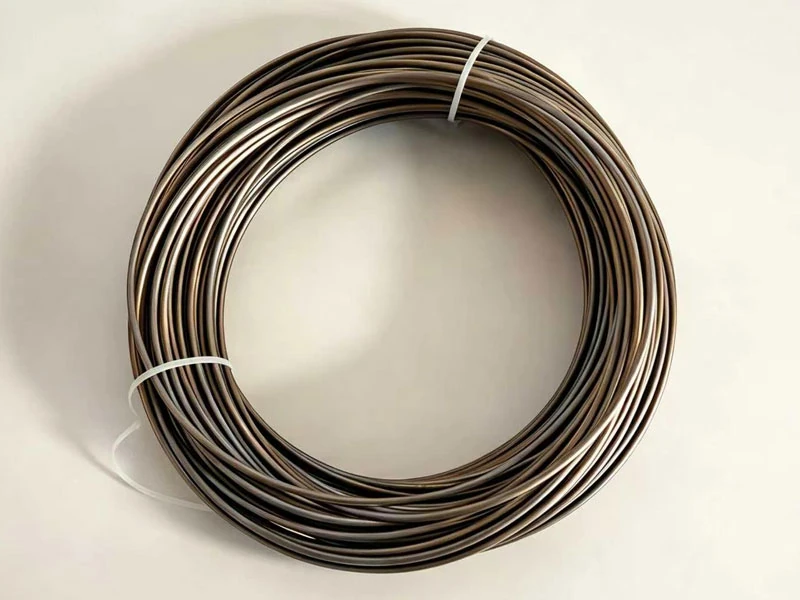
SG140 is a proprietary heating alloy developed by GITANE for glass tempering furnace applications. It was designed for applications where stable heating performance and furnace cleanliness are important.
Compared with conventional FeCrAl wire, SG140 provides a different balance of oxidation resistance, high-temperature strength, low creep, and material cost.
Stable Oxide Scale for a Cleaner Furnace
SG140 forms a stable black oxide scale during operation. The scale is less likely to peel during medium- and low-temperature use.
This helps keep the heating chamber cleaner. It also reduces the risk of loose oxide particles reaching the glass surface, which is important during glass processing.
High-Temperature Strength with Low Creep
Heating elements must remain stable during long periods of high-temperature operation. SG140 is designed to provide high-temperature strength and low creep, which helps the element retain its shape during service.
GITANE specifies a resistivity of 1.09 μΩ·m at 20°C for SG140. Temperature correction data are also available for higher operating temperatures. These values can help engineers calculate the required resistance when designing or replacing heating elements.
Flexible Options for Furnace Applications
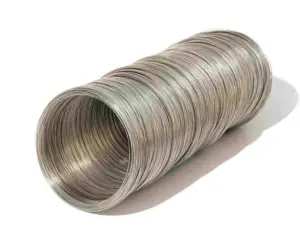
SG140 is available from GITANE in wire, strip, and spiral heating element forms. Custom dimensions can also be developed according to the furnace’s electrical requirements and available installation space.
With its balance of performance and material cost, SG140 provides an alternative to conventional FeCrAl wire for glass tempering furnace applications.
FAQ
Q1. What is the best heating wire for a glass tempering furnace?
There is no single best heating wire for every furnace. FeCrAl, NiCr, and specialized alloys such as SG140 should be selected according to temperature, electrical requirements, element design, and service conditions.
Q2. How long can a glass tempering furnace heating element last?
Service life depends on operating temperature, heating cycles, element design, and furnace conditions. Proper alloy selection and regular inspection can help extend element life.
Q3. Why does oxide scale matter in a glass tempering furnace?
Loose oxide particles can create contamination concerns inside the heating chamber. A stable oxide scale can help reduce peeling and keep the furnace cleaner.
Q4. Can heating wire be customized for an existing furnace?
Yes. Wire, strip, and spiral heating elements can be customized according to electrical and dimensional requirements. Buyers should provide the furnace voltage, power, resistance, wire size, and coil dimensions before production.
Conclusion
A glass tempering furnace needs stable and controlled heating before the glass enters the quenching stage. The heating wire is therefore an important part of furnace performance.
FeCrAl wire and NiCr are widely used for resistance heating. However, the right choice depends on actual furnace conditions, electrical requirements, element design, and service needs.
SG140 provides another option for glass tempering applications. Its stable black oxide scale, high-temperature strength, low creep, and stable electrical properties make it suitable for applications where element stability and furnace cleanliness are important.
If you are selecting or replacing heating elements for a glass tempering furnace, contact GITANE to discuss your operating temperature, electrical requirements, element dimensions, and customization needs.