Introduction
The growing demand for electric vehicles and energy storage has increased the need for advanced battery materials. During battery production, these materials must go through carefully controlled thermal treatment to achieve the required structure and performance.
Processes such as calcination and sintering require accurate temperature control. If the heating process is not stable, material quality may be affected during production.
A high temperature sintering furnace provides the controlled heating conditions needed for battery material processing. Its performance depends on factors such as temperature accuracy, atmosphere control, and heating element selection.
This article explains the role of sintering furnaces in battery manufacturing and how suitable resistance heating elements support stable high-temperature operation.
Why Battery Materials Require Controlled Thermal Processing
The development of electric vehicles and energy storage has increased demand for advanced battery materials. As battery technology improves, manufacturers need better control over material production to achieve stable performance.
The quality of battery materials is closely related to their internal structure and chemical properties. During manufacturing, thermal treatment is used to help materials reach the required characteristics.
For example, cathode materials need specific heating conditions during processes such as calcination and sintering. The temperature profile must be carefully controlled because improper heating may affect the final material quality.
To meet these production requirements, a high temperature sintering furnace is used to provide stable thermal conditions for battery material processing.
Why Battery Materials Need a Reliable Sintering Process
Sintering and calcination are important thermal processes used in battery material production. During these processes, materials are heated under controlled conditions to develop the required structure and properties.
Different battery materials require different heating conditions. For example, LFP and NMC cathode materials need specific temperature profiles during production. Therefore, a furnace should be selected based on the material requirements rather than only its maximum temperature.
Temperature control is also critical during sintering. When the temperature is too low, the required reaction may not be completed. If excessive heat is applied, unwanted changes may occur in the material structure. A stable heating process helps maintain consistent quality between production batches.
What Is a High Temperature Sintering Furnace?
A high temperature sintering furnace is an industrial furnace used to heat materials under controlled temperature conditions. According to the U.S. Department of Energy, industrial furnaces use heat to process materials through controlled thermal cycles. In battery manufacturing, these furnaces are mainly used for processes such as cathode material sintering and calcination.
Battery materials require specific heating conditions to achieve the desired structure and performance. Therefore, a furnace is designed according to the material characteristics and production requirements rather than only its maximum temperature rating.
How a Battery Sintering Furnace Works
In a sintering furnace, materials are placed in a heating chamber where electric heating elements provide the required heat. The temperature is measured by sensors, and the power output is adjusted to follow the programmed heating profile.
For battery material production, the process may also require a controlled atmosphere. Gas can be introduced into the chamber when the material needs protection from unwanted reactions during heating.
This design allows an electric resistance furnace to provide stable and repeatable heating for industrial applications.
Main Components of a Sintering Furnace
A typical battery material sintering furnace includes the following key components:
| Component | Function |
| Heating chamber | Provides the heating space |
| Thermal insulation | Reduces heat loss |
| Resistance heating elements | Generate heat for processing |
| Temperature sensors | Monitor furnace temperature |
| Power control unit | Controls heating output |
| Gas supply system | Provides a controlled atmosphere |
| Material trays or setters | Hold materials during heating |
Battery Materials Processed in Sintering Furnaces
Different battery chemistries require different thermal treatment conditions. Common materials processed in sintering furnaces include lithium iron phosphate (LFP), nickel-manganese-cobalt (NMC), and other cathode materials.
Because each material has different requirements, furnace temperature, atmosphere, and heating profile need to be matched with the specific production process.
What Determines the Performance of a Sintering Furnace?
A reliable sintering furnace should provide stable heating conditions throughout the production process. Its performance depends on whether the furnace design matches the material requirements.
Temperature Control and Heat Distribution
Accurate temperature control is important for battery material processing. Sensors are used to monitor the furnace temperature, while the heating power is adjusted according to the required heating profile.
Heat distribution inside the chamber also affects processing consistency. A suitable furnace design helps maintain more uniform temperatures across the working area.
The Role of Heating Elements in Furnace Performance
Heating elements are a key part of an electric sintering furnace because they provide the heat required for the process. Their material and design affect heating stability, service life, and operating performance.
Since the actual temperature of a heating element can be higher than the furnace chamber temperature, alloy selection should be based on the element working conditions rather than the furnace temperature alone.
Selecting Heating Elements for Battery Material Sintering
How Resistance Heating Elements Work
In an electric sintering furnace, resistance heating elements convert electrical energy into heat. When current passes through the element, heat is generated according to its electrical resistance.
The relationship can be described as:
P = I²R
Here, P represents electrical power, I represents current, and R represents resistance.
The element design is selected according to the required power output and installation conditions. Its shape and position also influence how heat is transferred inside the furnace chamber.
Requirements for Battery Material Heating Elements
Battery material furnaces often operate through repeated heating cycles. Therefore, heating elements need to maintain stable performance during long-term use.
The selection should consider the actual furnace conditions, including operating temperature, atmosphere, electrical requirements, and element design.
A suitable alloy can help maintain reliable heating performance while reducing the risk of early element failure.
FeCrAl and Nichrome Heating Alloys for Furnace Applications
FeCrAl and Nichrome are two commonly used resistance-heating alloy families.
FeCrAl alloys contain iron, chromium, and aluminum. They are widely used in high-temperature applications because they can form a protective oxide layer that improves oxidation resistance.
Nichrome alloys are mainly based on nickel and chromium. They are often selected when good high-temperature stability and mechanical strength are required.
The suitable alloy depends on the furnace design and operating conditions. A higher temperature rating does not always mean better performance if it does not match the actual application.
GITANE Heating Alloys for High Temperature Sintering Furnaces
High temperature sintering furnaces require heating materials that can maintain stable performance during repeated operation. Based on different furnace conditions, the heating alloy needs to match the required temperature range and service environment.
GITANE provides FeCrAl and NiCr electric heating alloys for industrial furnace applications. Its product range includes high-temperature FeCrAl alloys such as SGHYZ and SGHT, which are designed for demanding heating environments.
SGHYZ and SGHT FeCrAl Heating Alloys for High-Temperature Applications
FeCrAl alloys are commonly selected for high-temperature furnace elements because they can form a protective oxide layer during operation. This helps improve oxidation resistance and maintain stable heating performance.
GITANE’s SGHYZ and SGHT FeCrAl alloys are developed for high-temperature electric heating applications. According to the product information, selected grades can support continuous furnace temperatures up to around 1,400–1,425°C.
Cr20Ni80 NiCr Alloy for Specific Furnace Requirements
For applications where mechanical strength and resistance to thermal cycling are important, NiCr alloys can also be considered.
GITANE supplies NiCr alloys such as Cr20Ni80 for electric heating applications. The suitable alloy depends on the furnace temperature, heating cycle, and element design.
Customized Heating Wire Solutions
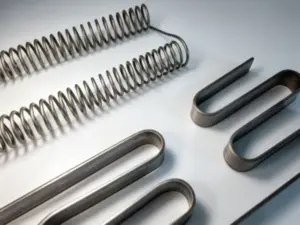
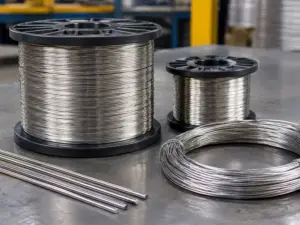
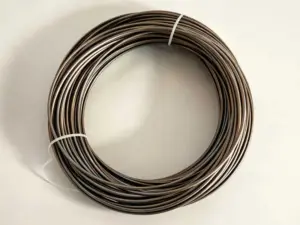
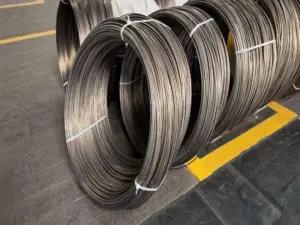
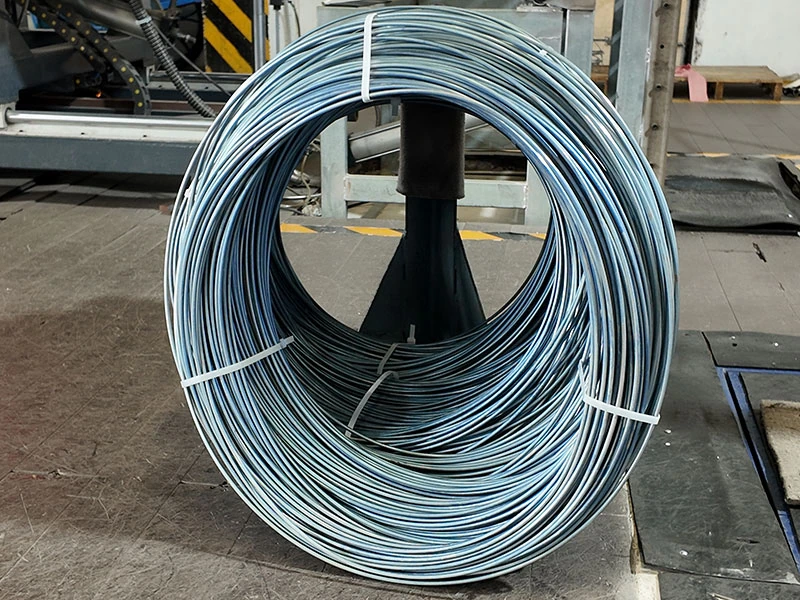
Different furnace designs require different element shapes and electrical specifications. Heating alloys can be supplied as wires, ribbons, or processed into customized heating elements according to production requirements.
For battery material sintering applications, the heating alloy should be selected according to the required temperature profile and furnace conditions.
FAQ
What is a high temperature sintering furnace?
A high temperature sintering furnace is used to heat materials under controlled conditions. In battery manufacturing, it can be used for processes such as cathode material synthesis and calcination.
Why is sintering important in battery manufacturing?
Thermal treatment affects the structure and properties of battery materials. Temperature and holding time must be controlled so that the required material characteristics can be achieved.
What factors affect the performance of a battery material sintering furnace?
Temperature uniformity, heating rate, atmosphere, insulation, heating-element design, and temperature control all affect furnace performance.
Why are heating elements important in a sintering furnace?
Heating elements convert electrical energy into heat. Their material and design affect heating stability, temperature control, and service life.
What heating materials are used in high temperature sintering furnaces?
FeCrAl and Nichrome are common resistance-heating alloys. The suitable material depends on temperature, atmosphere, heating cycle, and furnace design.
How do you choose heating elements for a battery material sintering furnace?
Start with the required furnace temperature, atmosphere, power, heating cycle, and available installation space. The alloy and element shape can then be selected according to these conditions.
Conclusion
A high temperature sintering furnace provides the controlled heating conditions required for battery material processing. To achieve stable results, the furnace and heating elements should be selected according to the material requirements and production conditions.
The right resistance heating element helps maintain reliable heating during repeated furnace cycles. FeCrAl and NiCr alloys can be selected for different high-temperature applications based on their operating conditions.
GITANE supplies high-temperature heating alloys and customized heating elements for industrial furnace applications. Contact GITANE to find a suitable heating solution for your battery material sintering process.