For industrial furnaces, nichrome vs kanthal is best treated as a comparison between a specified nickel-chromium grade and a specified FeCrAl grade, such as Kanthal A-1. Choose against the required element temperature, atmosphere, support, and electrical design rather than a family name alone.
Choosing the right resistance wire affects more than heating performance. It also influences how a furnace can be maintained and how a replacement must be checked. This guide keeps those practical questions together: what the material data mean, what the assembly needs, and which evidence supports a change.
Key Takeaways
- Nichrome names an alloy family; Kanthal is also a brand with several material ranges.
- Compare named grades under stated conditions, not universal family temperature limits.
- Furnace setpoint, wire temperature, and melting point describe different quantities.
- A resistance match does not prove a replacement has suitable support or thermal behavior.
- Treat material upgrades as candidates for review until the application evidence is complete.
Nichrome vs Kanthal: Define the Materials First
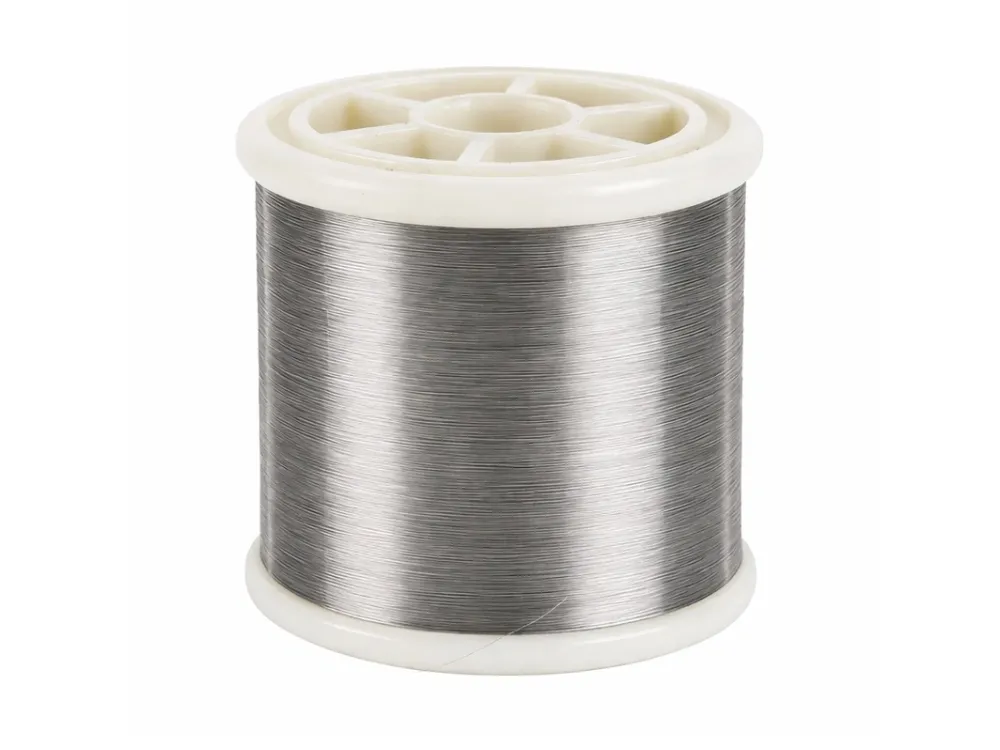
A useful nichrome vs kanthal comparison begins with the drawing and material designation. “Nichrome” covers nickel-chromium alloys with different compositions, including grades that contain iron. “Kanthal” must also be read in context: a brand name alone does not identify one chemical composition.
Separate the Brand From the Alloy Family
Kanthal A-1 is a named iron-chromium-aluminum, or FeCrAl, grade. The same manufacturer also offers nickel-chromium materials under its Nikrothal range. Comparing “nichrome” with every product sold under the Kanthal brand would therefore mix different questions.
For a clear industrial comparison, name both candidates. For example, assess Kanthal A-1 against Nikrothal 80 using their respective data sheets, or assess a proposed SPARK grade against the material on the existing specification. These are separate comparisons and need their own sources.
The nickel-chromium alloy wire guide explains the wider NiCr family. Keep the present nichrome vs kanthal decision focused on the furnace and its element.
Illustrative Scenario: A Name Without a Grade
A maintenance request calls for a “Kanthal replacement,” but the drawing lists only wire diameter. The reviewer asks for the old material designation, resistance target, and operating record before comparing candidates.
The next step is to resolve the missing inputs, not choose a winner by name. This example describes a review problem, not a real customer or a successful replacement test.
For an initial nichrome vs kanthal review, send GITANE the existing specification and furnace conditions. Include what is known about the old wire and identify any missing grade information.
Nichrome vs Kanthal: Compare Named Grade Data
The table below uses two products from the same manufacturer’s published data sheets. It provides a defined reference comparison. It does not certify another manufacturer’s wire or approve a finished heating element.
| Published property | Kanthal A-1 wire | Nikrothal 80 wire |
|---|---|---|
| Alloy family | FeCrAl | NiCr |
| Maximum continuous temperature in air | 1400°C | 1200°C |
| Resistivity at 20°C | 1.45 Ω·mm²/m | 1.09 Ω·mm²/m |
| Temperature factor Ct at 1000°C | 1.04 | 1.05 |
| Listed melting point | 1500°C | 1400°C |
Read Each Number With Its Conditions
For nichrome vs kanthal, the higher listed continuous temperature of A-1 can be relevant to screening. It is not a prediction of the wire temperature in a particular furnace. Nor does it mean every FeCrAl grade has the same rating.
Melting point is not an operating target. The difference between melting point and a service rating is not a validated allowance for hot spots or control faults. Use the applicable service data and assembly requirements instead.
Ct is a resistance ratio at a stated temperature: R(T) = Ct × R20. It is not a constant temperature coefficient for unrestricted extrapolation. Keep the factor attached to its grade and source.
Keep SPARK Product Data Separate
SPARK lists Cr20Ni80 resistance wire within its NiCr range. Use that product’s own current data when reviewing it, rather than transferring every Nikrothal value to it.
Likewise, SPARK FeCrAl materials require their own grade selection. HRE, SGHYZ, and SGHT should not be treated as identical or ranked through broad claims such as “ultimate performance.” Request the relevant material data and test conditions before comparing them.
The same rule applies throughout nichrome vs kanthal selection: a familiar family name starts the search, while a specified product and its evidence support the decision.
Check Element Temperature, Atmosphere, and Surface Load
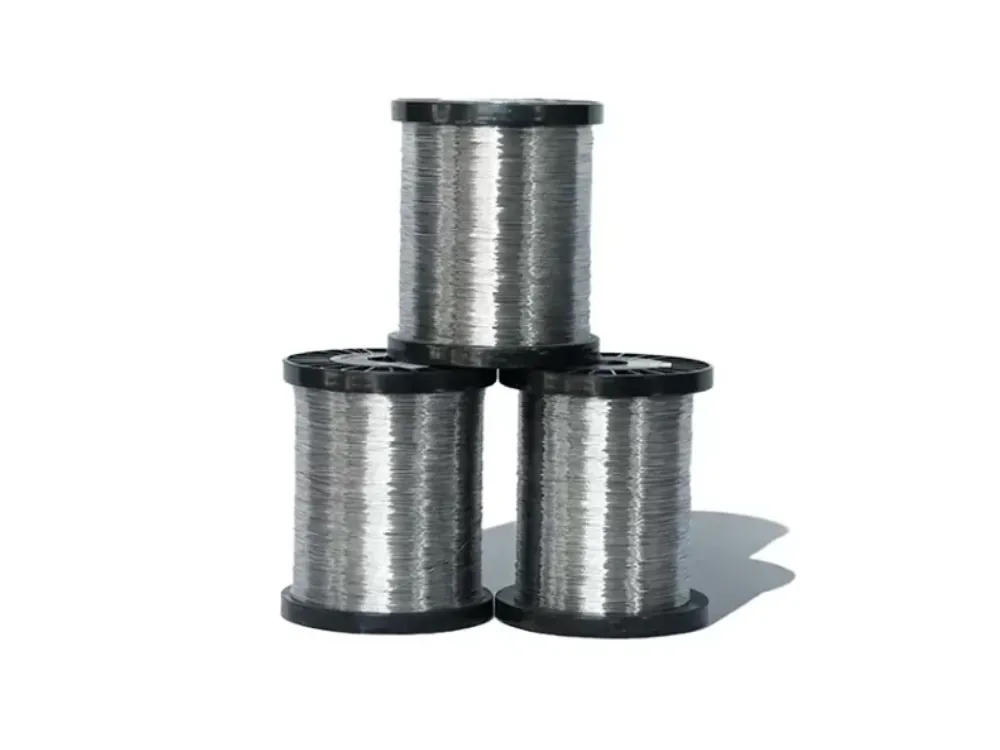
The furnace setpoint is not the element temperature. A powered wire transfers heat to its surroundings, so its temperature can exceed that of the chamber sensor or load. Its hottest region also may not sit near the process sensor.
Define the Temperature Requirement
Record the required wire temperature, measurement location, operating stage, and duration. Include startup, settled operation, and process changes where relevant. Do not use the controller display as proof of peak wire temperature.
The nichrome wire temperature guide explains the distinction between ratings and measurements. In a nichrome vs kanthal review, define the same thermal task for both candidates before comparing service limits.
Specify the Atmosphere and Contamination
Kanthal’s furnace-specific design guidance shows why atmosphere, contamination, and support materials matter. Air ratings cannot simply be extended to every controlled gas mixture or vacuum condition.
State gas composition, pressure, expected contaminants, and changes during the cycle. Process residues and support materials belong in that description too. A label such as “reducing atmosphere” leaves details that can change the material review.
Oxide protection is part of the nichrome vs kanthal comparison. FeCrAl materials rely on an aluminum-oxide surface layer, while NiCr materials form a chromium-oxide layer. The surrounding gas and contaminants can affect that protection. The presence of an oxide layer does not prove suitability for every process atmosphere.
For nichrome vs kanthal under unusual conditions, seek a response tied to the actual environment. Do not turn another product’s pre-oxidation guidance into a universal treatment for all heating wires. Follow the furnace and element suppliers’ approved operating procedures.
Calculate Surface Load on a Defined Basis
Surface load is electrical power divided by the effective heated surface area. With power P in watts and area S in square centimetres, surface load = P/S in W/cm². State which wire length and surface are included.
For a round straight-wire calculation, lateral area is πdL, with diameter and heated length expressed in consistent units. Exclude unheated sections when defining the effective area. Coil surroundings and nearby turns still affect heat exchange, so area alone does not settle the thermal design.
A lower calculated surface load does not establish a fixed life improvement. The nichrome vs kanthal decision must also consider atmosphere, geometry, and actual element temperature. Use a condition-specific design basis rather than a universal life multiplier.
Review Supports, Form, and Thermal Cycling
Material choice and element layout belong in the same review. Unsupported spans, coil spacing, terminal transitions, and expansion provisions can change how the assembly behaves. A material rating cannot replace those checks.
Distinguish Tensile Strength From Creep Evidence
Tensile strength and creep describe different test questions. A short tensile test does not by itself establish how much a wire will sag under load over a long period. Compare results only with their temperature, stress, duration, dimensions, and test method.
For nichrome vs kanthal, avoid ranking all NiCr, standard FeCrAl, and advanced FeCrAl through one strength adjective. If resistance to sagging is decisive, request applicable creep or assembly evidence. A claimed improvement needs a stated comparison basis.
Match the Physical Form to the Assembly
Round wire, strip, and coils create different design options. Their area, resistance, and mounting requirements must be checked together. Changing to ribbon does not automatically prove lower surface load or a more uniform furnace.
The original furnace task remains important: choose a material and form that fit the heating zones, supports, and connections. If nichrome vs kanthal leads to a different cross-section or heated length, revisit the whole drawing.
The official Kanthal workshop video below discusses forming a coiled heating element and distinguishing material families. It demonstrates a Kanthal APM element; it is not a test of SPARK grades or a universal forming instruction.
Record the Operating Cycle
Specify starts and stops, holding periods, loading changes, and any required handling after use. Those details help define the mechanical review. Do not infer a replacement interval from the alloy name alone.
Inspect elements under the approved maintenance procedure. Avoid adding a generic air-purging or ramp-rate recipe to a controlled-atmosphere furnace. The nichrome vs kanthal material comparison does not authorize changes to furnace operation.
Recalculate Electrical Requirements Before Replacement
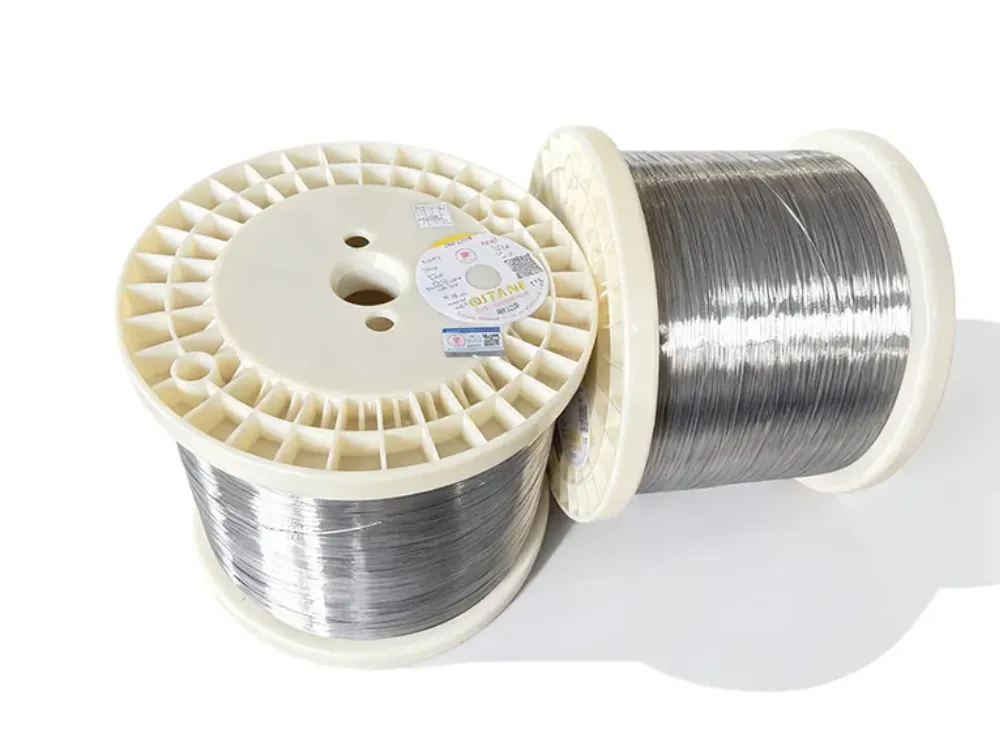
A replacement that fits can still have a different resistance. A replacement with the same cold resistance can still behave differently when hot. Both checks belong in nichrome vs kanthal selection.
Compare Cold and Hot Resistance
For uniform wire, R = ρL/A. Specify the temperature, heated length, and cross-sectional area before using a resistivity value. Values in Ω·mm²/m are not resistance per metre until the area is known.
Calculated comparison: at 20°C, using the named data-sheet values above, equal lengths and cross-sections give RA-1/RNi80 = 1.45/1.09 = 1.3303. The A-1 sample has about 33.03% higher nominal cold resistance under those assumptions.
At equal fixed voltage, P = V²/R, so the power ratio is reversed. At equal fixed current, P = I²R, so power follows resistance. Neither comparison predicts warm-up time or final wire temperature.
At a stated hot temperature, apply each grade’s own Ct. Use the cold and hot resistance calculation guide for the method and unit checks. Keep this nichrome vs kanthal comparison tied to the actual supply and control mode.
Illustrative Scenario: Matching Cold Ohms
A replacement proposal meets the existing cold-resistance target by changing wire length. The reviewer then checks the hot resistance, resulting coil dimensions, support spacing, and heated area.
Matching the first electrical target closes only that part of the review. The proposal remains a candidate until the other requirements are checked. No successful test or performance gain is implied by this scenario.
Separate a Candidate From an Approved Equivalent
An alternative SPARK grade may be considered for an existing element, but approval needs a defined application basis. Similar service ratings do not prove equal creep, oxidation, dimensions, or hot resistance. Record which requirements have evidence and which remain open.
Use a staged review so that a useful calculation does not close an unrelated question:
| Review stage | Evidence that can close the stage | What still needs checking |
|---|---|---|
| Material screening | Applicable grade data and stated service conditions | The actual element layout and electrical target |
| Electrical check | Cold and hot resistance calculations with agreed test results | Temperature, support, and process conditions |
| Assembly review | Drawing checks and the required application tests | Any changed operating or maintenance instructions |
For a nichrome vs kanthal review, assign each open item to the person who can check it. Keep the test method and acceptance limits with the result. A note that a sample was tested is less useful than a record of what was tested and why it met the requirement.
If the evidence does not cover the proposed duty, leave the item open. This is especially useful when a nichrome vs kanthal substitution starts as a purchase request but changes the element design. The review record should make that change clear to both engineering and purchasing.
For a nichrome vs kanthal substitution, retain the original material specification and proposed changes together. If a change affects the controller, connections, or operating procedure, include the relevant equipment reviewer. Do not use a material comparison table as the entire approval record.
Compare Cost and Prepare a Furnace RFQ
Compare quotes against the same technical scope. Unit price, material quantity, test requirements, and supply condition all matter. A nichrome vs kanthal cost comparison without those inputs can give a misleading result.
Use Evidence for Running-Cost Claims
Do not assign either candidate a fixed life advantage, downtime saving, or energy saving without operating evidence. A material property is not a measured furnace outcome. Keep predicted results separate from actual service records.
If you review advanced FeCrAl candidates, use the HRE, SGHYZ, and SGHT comparison as a route to further grade questions. Confirm current data and the proposed application before adopting a performance claim.
Illustrative Scenario: Two Different Quotes
A buyer receives a price for bare wire and another for a formed element with different test documents. Before choosing, the buyer aligns the supply form, dimensions, quantity, and acceptance requirements.
The example does not imply that one grade or supplier saves money. It shows why nichrome vs kanthal procurement needs a common comparison basis.
Keep a Reviewable Selection Record
| RFQ field | Information to provide |
|---|---|
| Existing material | Grade, supplier, drawing revision, and reason for change |
| Electrical requirement | Supply/control mode, cold resistance, test temperature, and hot-resistance basis |
| Thermal task | Process setpoint, wire-temperature evidence, duration, and heating cycle |
| Environment | Gas mixture, pressure, contaminants, load, and support materials |
| Physical design | Heated length, cross-section, coil dimensions, supports, and terminals |
| Purchase and acceptance | Quantity, supply condition, test documents, agreed limits, and delivery terms |
For a focused discussion, send GITANE the furnace RFQ and element drawing. Identify unresolved conditions so the material discussion can address them directly.
Keep the nichrome vs kanthal review record with the drawing. Update it when a dimension, operating condition, or supplier data sheet changes. A completed checklist should point to evidence, not just a series of approval ticks.
Frequently Asked Questions and Next Steps
Which Is Better for a Furnace: Nichrome or Kanthal?
Nichrome vs kanthal has no universal winner. Compare named products against the element temperature, atmosphere, electrical target, and support requirements. The higher air rating of one grade does not settle all those questions.
Is Kanthal Always a FeCrAl Material?
Kanthal A-1 is FeCrAl, but the manufacturer also offers NiCr products such as Nikrothal. State the grade when comparing materials. The brand name alone is not a complete specification.
Can SPARK SGHYZ Replace Kanthal A-1?
Treat it as a proposed alternative that needs review. Confirm material data, hot resistance, dimensions, atmosphere, and applicable mechanical evidence. Do not assume that a similar maximum service rating establishes equivalence.
Does Matching Cold Resistance Approve the Replacement?
No. Check hot resistance and the supply/control mode, then review the complete element. Geometry, supports, and operating conditions remain part of the nichrome vs kanthal decision.
How Do I Calculate Element Surface Load?
Divide power by the effective heated surface area using consistent units. Define the included heated length and area before comparing designs. The result is a design input, not a direct prediction of life or wire temperature.
What Should I Send Before Requesting a Quote?
Provide the grade or existing material record, drawing, electrical target, atmosphere, temperature requirement, and cycle. Add the supply form, quantity, and acceptance documents you need. Mark unknown inputs clearly.
To move your nichrome vs kanthal assessment forward, contact GITANE with the furnace conditions and proposed element specification. Keep the decision grounded in the actual wire, the complete assembly, and evidence for the intended service.