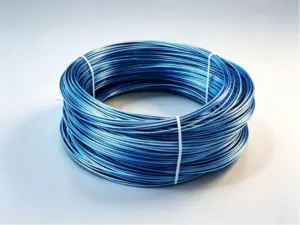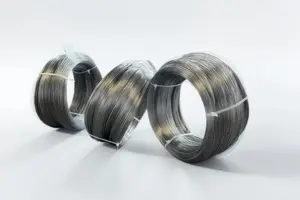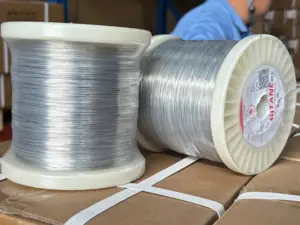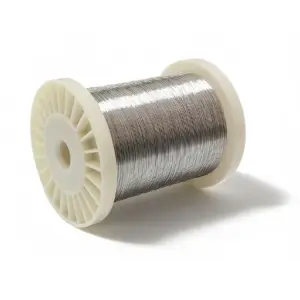
Nichrome wire is nickel-chromium resistance wire used to turn electrical energy into heat. Choose it by matching the alloy grade, electrical resistance, wire dimensions, operating conditions, and finished element design.
A material name alone is not a complete heater specification. Two coils can have similar dimensions yet draw different power, while two wires with the same cold resistance may have different operating limits. A useful selection process connects the material data to the equipment drawing and the purchase requirements.
This guide explains those connections for engineers, furnace builders, maintenance teams, and technical buyers. It provides a grade comparison, a short calculation, application questions, and an RFQ checklist. Detailed size and coil topics link to their own guides so you can follow the decision that matters to your project.
Key Takeaways
- Specify an exact grade, not just a generic nichrome wire designation.
- Resistance depends on alloy, length, cross-sectional area, and temperature.
- A published material temperature limit is not the furnace setpoint or a guaranteed element life.
- Review atmosphere, surface load, support, and connections alongside the electrical calculation.
- Include cold resistance, test temperature, dimensions, and a drawing in the purchase specification.
What Nichrome Wire Is and How It Produces Heat
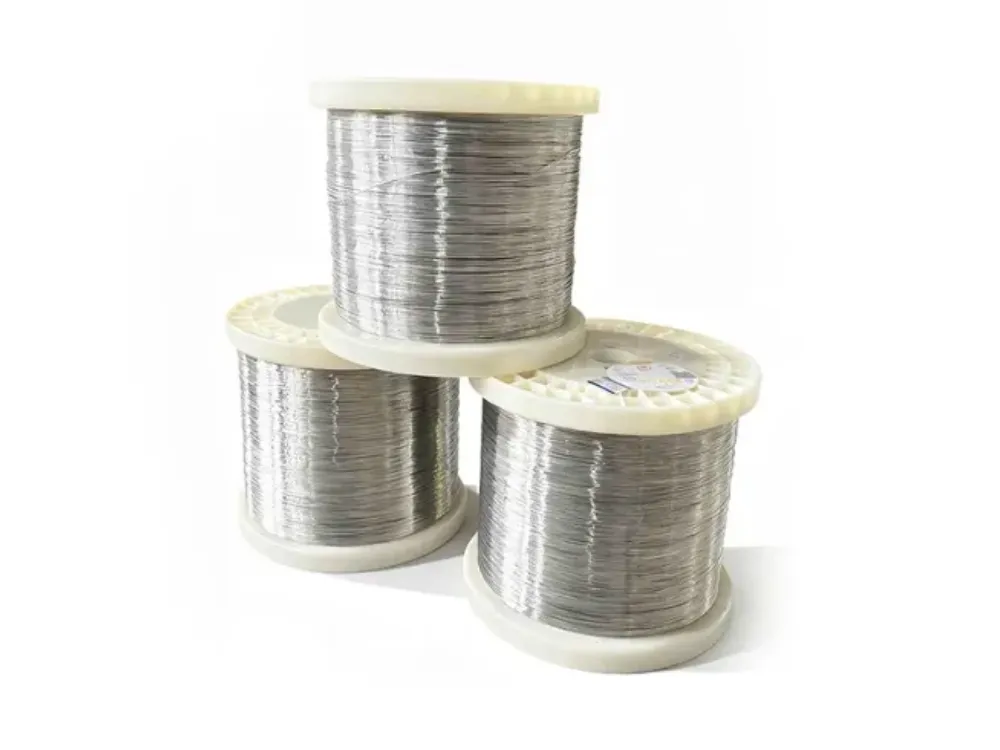
Nickel-chromium alloys form a family of resistance heating materials. Depending on the grade, iron and other elements can also be present. The exact chemistry matters, so the word Nichrome should not be treated as a single fixed composition.
In an electrical heating element, current passes through the material’s resistance. The resulting electrical power becomes heat. The nichrome wire then transfers heat to its surroundings through the element’s actual arrangement and operating conditions.
The basic power relationships are P = I²R and P = V²/R. P is electrical power, I is current, V is voltage across the element, and R is resistance at the operating condition. These equations describe electrical input; they do not, by themselves, determine wire temperature.
Resistance Is a Design Property
Nichrome wire needs a resistance that suits the supply and the intended power. Diameter and length give the designer ways to adjust that resistance. The grade provides the material properties within which those dimensions are chosen.
For the same material and temperature, longer wire has greater resistance. A larger cross-sectional area has lower resistance for the same length. These relationships explain why the purchase order must connect material, dimensions, and the target resistance.
Avoid describing nichrome wire as having resistance that never changes. A grade can provide useful electrical behavior while its resistance still varies with temperature. The appropriate temperature factor belongs in the design calculation.
Keep Material, Wire, and Assembly Separate
The alloy designation identifies the material. Round wire diameter or ribbon dimensions identify its section. A finished element drawing adds the coil shape, active length, terminals, support, and installed envelope.
Confusing these levels can leave an order incomplete. A buyer requesting a coil needs more than a spool diameter, while a buyer requesting straight wire may not need a finished assembly specification. Define the deliverable before comparing suppliers.
Illustrative Scenario: Similar Coils, Different Electrical Loads
An equipment builder receives two proposals for coils that fit the same housing. One proposal specifies the grade and cold resistance; the other lists only wire diameter and coil dimensions. The drawings look similar, but the information does not establish electrical equivalence.
The builder should ask for the missing material and resistance data before choosing. This illustrative scenario shows why nichrome wire selection starts with measurable requirements. It is a teaching example, not a customer testimonial or a reported equipment result.
If your requirement currently consists of a sample or incomplete drawing, send SPARK the available specifications and operating conditions. Identify the unknowns so the quotation can address them rather than silently assume them.
Nichrome Wire Grades: Compare the Data That Matters
An exact nichrome wire grade is the starting point for comparing nickel chromium alloy wire. Composition, room-temperature resistivity, temperature factor, and published operating limits should be read together. A single temperature number cannot establish which material is preferable for a particular element.
SPARK’s NiCr alloy category is the procurement path for its grade range. The table below summarizes selected values from the individual product pages, checked on October 13, 2026. It is a comparison aid, not a batch inspection certificate.
| SPARK Grade | Resistivity at 20°C, Ω·mm²/m | Ct at 800°C | Published Maximum Continuous Temperature, °C |
|---|---|---|---|
| Cr20Ni80 | 1.09 | 1.04 | 1200 |
| Cr20Ni80S | 1.09 | 1.04 | 1200 |
| Cr15Ni60 | 1.11 | 1.08 | 1150 |
| Cr20Ni40 | 1.04 | 1.16 | 1100 |
| Cr30Ni70 | 1.18 | 1.05 | 1250 |
Ct is the factor used to relate resistance at the stated temperature to resistance at 20°C. The comparison uses each product page’s technical table. Confirm the relevant data, atmosphere, dimensions, and service conditions for your application before specifying a limit.
Read Grade Names Alongside Composition
Grade names are useful identifiers, but they should not replace the actual composition specification. For example, SPARK’s Cr20Ni40 page lists nickel at 38%, chromium at 20%, and iron as the balance. An order should reference the agreed grade and its current technical requirements, not infer every percentage from the name.
Trade names and nominal alloy descriptions can also differ between manufacturers. Matching names or resistivity values do not prove that grades are equivalent. Compare the full nichrome wire specification when substituting a grade or changing supplier.
Resolve Conflicting Temperature Statements
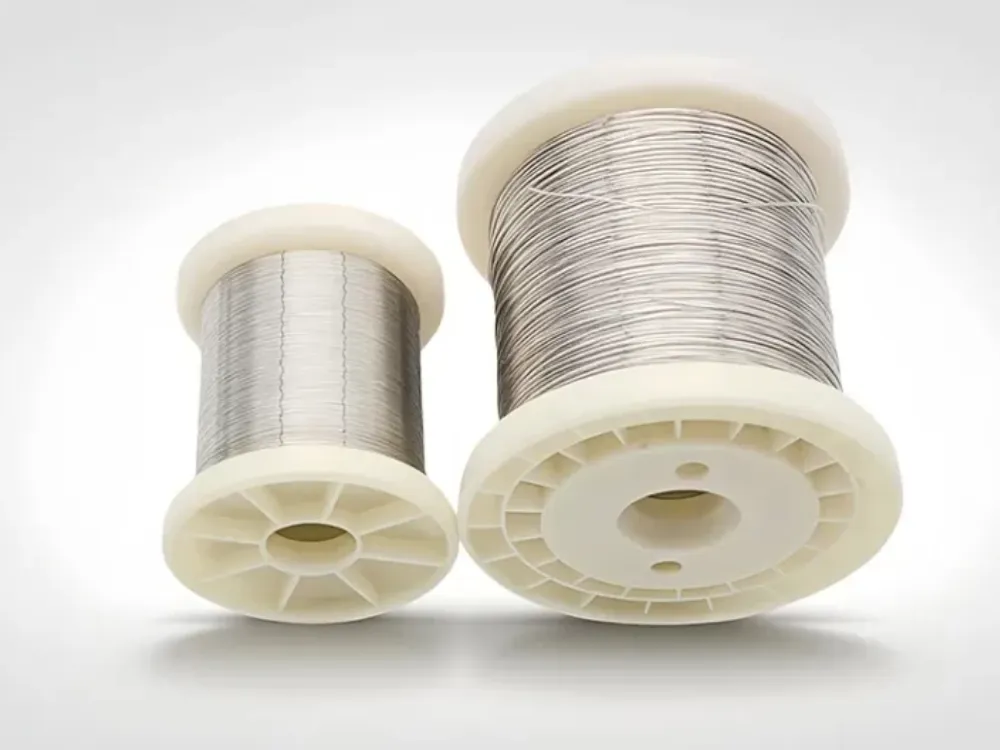
The Cr15Ni60 technical table publishes a maximum continuous temperature of 1150°C. Some descriptive text on that page refers to a wider 1150–1250°C range. This guide uses the specific technical-table value for comparison rather than presenting the wider range as an unconditional continuous rating.
For a nichrome wire order involving that grade, request confirmation of the applicable service limit and conditions. Do not resolve a source conflict by selecting whichever number better fits the intended application. The material recommendation should follow the verified technical requirement.
Similar Values Do Not Establish Equal Performance
Cr20Ni80 and Cr20Ni80S share several published values in the comparison table. That does not establish that they are interchangeable in every element or that one guarantees better precision. Ask which composition, processing, or acceptance requirements distinguish the grades for your purchase.
Likewise, a lower nickel content does not automatically determine total operating cost. The quoted price, element geometry, fabrication, maintenance requirements, and verified suitability all affect the decision. Compare price using the actual quotation. Ask for evidence of life claims.
How to Select Nichrome Wire for the Operating Conditions
Start with the conditions the element will experience, not the highest temperature printed in a table. Record the atmosphere, intended element temperature, heating cycle, mounting arrangement, and expected maintenance access. Then compare the candidate grades against those requirements.
The selected nichrome wire must work within the complete element design. A grade suitable for one arrangement should not be assumed suitable for another simply because the furnace setpoint is unchanged.
Distinguish the Temperatures in the Specification
A furnace process temperature, wire surface temperature, material service limit, and melting point describe different things. The process temperature concerns the load or chamber. The element can operate at a different temperature as it transfers heat to that load.
A maximum continuous material temperature describes a published operating limit under applicable conditions. A melting point does not provide a normal design target. Neither number, taken alone, establishes the allowable surface load or service life of a finished coil.
For nichrome wire selection, write the intended element temperature separately from the process setpoint. If it is unknown, identify the thermal analysis or measurements needed to establish it. This prevents a material table from being used as a substitute for equipment design.
Specify the Atmosphere and Contamination
Describe whether the nichrome wire is exposed to air, a protective gas, vacuum, process vapors, or other conditions. Include likely contamination from the load, insulation, cleaning products, and nearby materials. A broad phrase such as “industrial atmosphere” is not enough for material review.
Do not assume that a grade’s oxidation resistance in one environment establishes resistance to every chemical exposure. Request application-specific guidance when conditions differ from the published data. The same applies when equipment changes its process gas or load material.
Keep atmosphere requirements in the RFQ and on the drawing notes. A supplier can then identify the information used for the recommendation. The record is also useful when comparing a replacement element with the original purchase.
Review Surface Load, Support, and Cycling
Surface load relates electrical power to the relevant element surface area. It helps describe how much power the design puts through that area, but it is not a universal temperature setting. The acceptable value depends on material guidance and the actual heat-transfer arrangement.
Support spacing, orientation, and thermal expansion matter to the finished element. Check them against the coil shape and the space around it. A resistance calculation cannot establish that the wire will remain in its intended position throughout operation.
Kanthal’s resistance-wire overview identifies temperature, cycling, contamination, dimensions, atmosphere, mechanical stress, and regulation among the factors affecting wire life. That list is a useful review framework; it does not provide a lifetime prediction for SPARK material.
Use a Decision Record Instead of a Single Ranking
| Decision | Information Needed | Result to Record |
|---|---|---|
| Grade | Service conditions and material data | Candidate grade with stated assumptions |
| Electrical sizing | Voltage, power, resistance, and Ct | Cold and operating resistance targets |
| Wire dimensions | Length, section, and available space | Diameter or ribbon dimensions |
| Element arrangement | Support, connections, and heat transfer | Reviewed assembly drawing |
| Purchase acceptance | Tolerances and measurement method | Agreed inspection requirements |
For a broader NiCr versus iron-chromium-aluminum (FeCrAl) decision, use SPARK’s resistance-wire selection guide for heat treatment furnaces. This nichrome wire guide focuses on the information needed within the NiCr selection process.
Calculate Resistance and Choose the Physical Form
The basic relationship for a uniform wire is R = ρL/A. R is resistance, ρ is resistivity, L is length, and A is cross-sectional area. Resistivity describes the material; resistance describes the particular piece of wire at a stated temperature.
When ρ is expressed in Ω·mm²/m, use length in metres and area in mm². For round wire, A = πd²/4. For rectangular ribbon, A = width × thickness, with both dimensions in mm.
Apply the Temperature Factor
For nichrome wire with a published resistance factor Ct, use Rhot = Ct × R20. R20 is resistance at 20°C. The hot resistance must match the electrical target. The cold resistance gives inspection a value to check.
This is why nichrome wire should not be described as having unchanged resistance at all temperatures. Select the factor for the actual grade and relevant temperature. Do not borrow a nearby grade’s factor merely because its room-temperature resistivity is similar.
Illustrative Scenario: A Short Electrical Comparison
Consider a teaching example with 24 V across an element and a target operating power of 24 W. The operating resistance target is 24²/24 = 24 Ω. Assume an intended wire temperature of 800°C for the purpose of applying the published factors.
Using Cr20Ni80’s Ct of 1.04, the cold target is 24/1.04 = 23.077 Ω. Using Cr15Ni60’s Ct of 1.08, it would be 24/1.08 = 22.222 Ω. The grades therefore require different cold targets even when the operating resistance target is the same.
These results are calculations from stated assumptions, not predictions that either element will reach 800°C. The example demonstrates a material-selection question that would be missed by comparing diameter alone. It is an illustrative scenario, not a reported customer design.
Choose Dimensions Without Duplicating the Whole Design
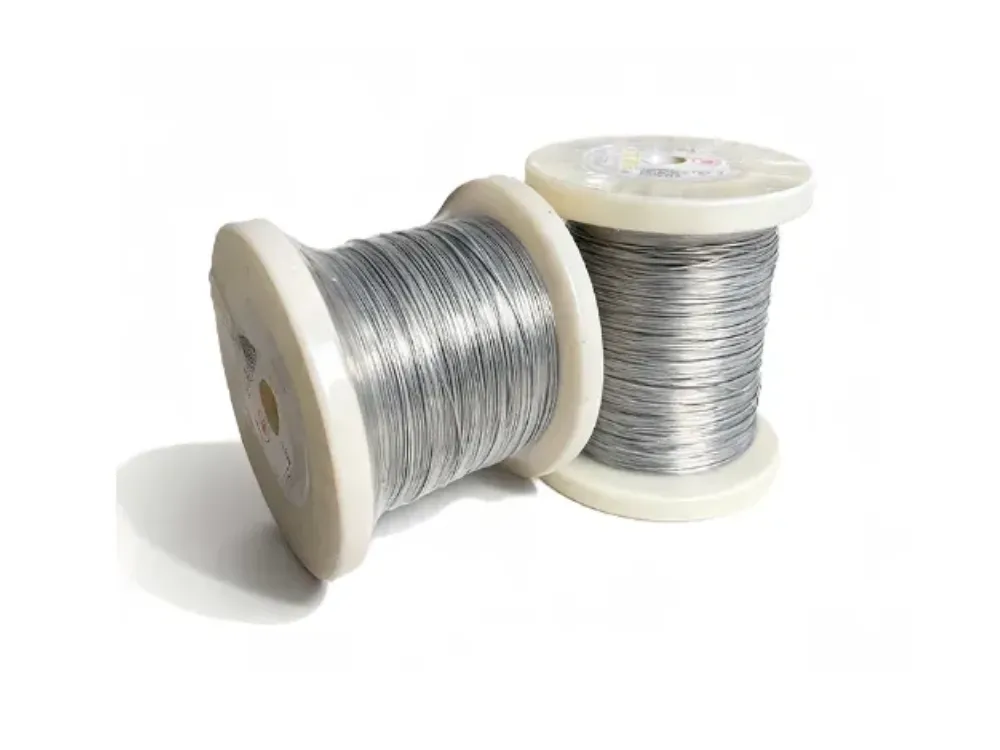
After calculating the cold target, calculate resistance per metre for each practical wire section. Divide the target resistance by that value to obtain an initial active length. Review whether that length fits the installation and support arrangement.
For example, 0.5 mm round Cr20Ni80 wire has a calculated area of about 0.19635 mm². With ρ20 = 1.09 Ω·mm²/m, calculated resistance is about 5.551 Ω/m. The example’s 23.077 Ω cold target requires about 4.157 m of active wire.
That is a sizing starting point. Connections, inactive sections, tolerances, and the finished assembly’s measurement conditions still need review. Use SPARK’s nichrome wire size guide for the detailed diameter-selection workflow.
Round Wire, Ribbon, and Finished Coils
Round nichrome wire is specified by diameter, sometimes accompanied by American Wire Gauge (AWG). Ribbon requires width and thickness. A finished coil also requires coil diameter, pitch, active length, tails, and installation dimensions.
Two sections can have the same area and calculated resistance per metre while having different exposed perimeters and mounting requirements. Keep electrical and geometric comparisons separate. A ribbon is not defined adequately by an AWG number.
SPARK’s Cr20Ni80 page lists nichrome wire and flat-product forms, but a public range does not confirm stock or a particular order tolerance. Ask for the dimensions and form that your drawing requires. State whether the request concerns raw nichrome wire, formed wire, or a complete assembly.
For a nichrome wire coil, consult the furnace heating coil selection guide when reviewing pitch, support, and the available envelope. Do not treat the outer coil diameter as the wire diameter.
Connect the Selection to the Application
Nichrome wire appears in industrial furnaces, appliance elements, and laboratory heating equipment. Those application labels describe a broad starting point. They do not establish a complete specification or a universal grade choice.
The useful question is what the wire must do within the particular equipment. Review how it transfers heat, how it is supported, and what happens during starting, stopping, and maintenance. Those details connect the material choice to the service conditions.
Industrial Furnaces and Heat Treatment Equipment
For furnace elements, record the process atmosphere, intended wire temperature, load arrangement, and heating cycle. The nichrome wire is part of the furnace system rather than a standalone temperature source. Its material limit must be assessed in that system.
A chamber setpoint does not establish the peak temperature of each wire section. Shielded areas, connections, and the support arrangement can require separate review. If measurements or thermal calculations are available, include them when requesting a material recommendation.
SPARK’s industrial furnace category is the equipment path for requests extending beyond material supply. Define whether you need wire, a heating element, or an equipment solution so the technical review matches the request.
Appliance and Tubular Heating Elements
For an appliance element, the electrical target, available space, insulation arrangement, and connection details belong together on the drawing. A compact installation may constrain the amount of wire and the form that can be used. The grade and dimensions should be reviewed against that envelope.
For a tubular or enclosed design, the nichrome wire’s surroundings differ from an exposed coil. Avoid applying a current-versus-temperature chart without checking the arrangement it describes. The same nominal nichrome wire can experience different thermal conditions in different assemblies.
Use the electric heating elements category when the purchase concerns a finished element. A component quotation should address the assembly specification as well as the material designation.
Laboratory and Testing Equipment
Laboratory heaters may have requirements beyond temperature and power. Record any limits concerning contamination, geometry, cycling, or surrounding materials. List the conditions that matter to the test. The phrase “laboratory grade” does not define them.
A material’s resistance behavior does not establish the accuracy of the complete temperature-control system. Sensors, control settings, geometry, and heat transfer also affect the result. Keep claims about wire properties separate from claims about equipment precision.
For additional application explanations, use SPARK’s nichrome wire uses guide. The purpose here is to connect the application to a selection record, while the supporting page covers uses in more detail.
Compare Alternatives at the Same Conditions
When considering NiCr, FeCrAl, or another resistance material, compare specific grades under the same design assumptions. A nominal temperature rating or similar diameter does not establish an equivalent replacement. Check electrical resistance, temperature factors, form, and installation requirements.
Keep verified material data separate from projected operating benefits. A lower purchase price is not proof of lower lifetime cost, and a different emissivity value is not proof of equipment energy savings. Such conclusions need a defined comparison and actual operating evidence.
Specify, Inspect, and Source the Material
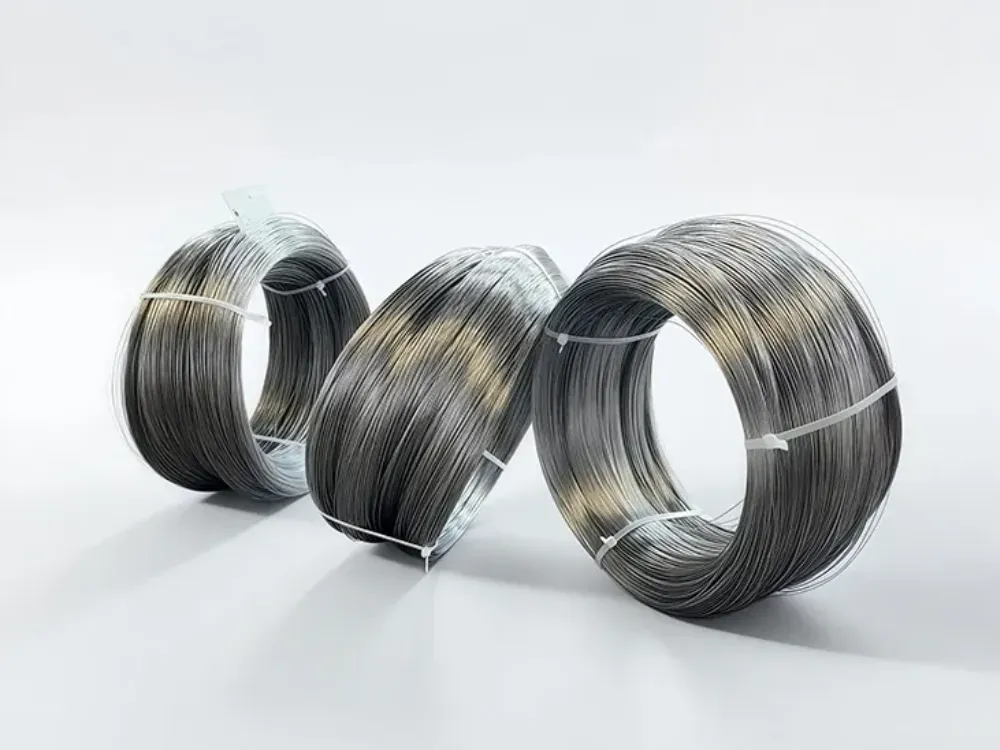
A useful purchase specification turns the chosen nichrome wire into something that engineering, procurement, and inspection can all evaluate. Record the grade, physical dimensions, electrical target, and measurement conditions. Keep the drawing revision attached to the RFQ.
Separate requested values from confirmed supplier terms. A catalog page can identify a material and its published data, but it does not establish the stock position, agreed tolerance, inspection method, or delivery date for a particular order.
Write the Electrical Acceptance Requirements
State whether resistance applies to a metre of wire, a cut length, or a finished assembly. Specify the reference temperature and the allowed range. An unlabeled resistance number invites different interpretations at quotation and inspection.
If the calculation uses operating resistance, include the corresponding cold target and the factor used to obtain it. The test method should match the agreed acceptance requirement. For a finished nichrome wire element, state whether terminals and connecting sections are included.
For lower resistance values, discuss the contribution of test leads and contact resistance to the measurement. Let the inspection method address those effects rather than assuming every handheld reading is equivalent. Record the actual test conditions with the result.
Prepare the RFQ Checklist
| Specification Area | Information to Include |
|---|---|
| Material | Exact grade and required technical documentation |
| Dimensions | Diameter or width × thickness, with tolerances |
| Electrical target | Cold resistance, tolerance, and reference temperature |
| Element geometry | Active length, coil dimensions, tails, and connections |
| Operating conditions | Voltage, power, atmosphere, and intended wire temperature |
| Duty | Continuous or intermittent operation and relevant cycle information |
| Inspection | Measurement method and required material or dimensional records |
| Commercial request | Quantity, packaging requirements, and requested delivery schedule |
Mark unknown values clearly. If you need nichrome wire selection help, provide the available equipment data rather than guessing missing parameters. A nichrome wire RFQ is more useful when assumptions are visible.
Illustrative Scenario: A Replacement Purchase With a New Process
A maintenance buyer requests the previous coil specification for equipment that now uses a different process atmosphere. The old drawing still identifies the grade and dimensions, but it does not describe the new exposure. Reordering from the old part number alone could overlook the changed condition.
The buyer should attach the process change to the RFQ and ask for a fresh material review. This illustrative scenario concerns the information needed for a replacement decision. It does not claim that a particular alloy will fail or that a change guarantees longer life.
Check Documents and Traceability Without Inventing Proof
Ask which nichrome wire identification, dimensional inspection, and resistance records can accompany the order. If a certificate or traceability record is required, define it before purchase. Ask for a record you can check.
The GITANE company profile identifies the manufacturer behind SPARK. Evaluate the specific quotation and agreed documentation for the actual supply. Do not replace order-level requirements with a broad company description.
Keep a Reviewable Selection Record
Before approval, collect the material data version, calculation sheet, drawing, operating assumptions, and inspection criteria in one record. This helps a later replacement purchase identify what changed. It also makes differences between supplier proposals easier to understand.
Review the nichrome wire selection record when voltage, duty cycle, atmosphere, geometry, or grade changes. The original nichrome wire choice may have depended on conditions that no longer apply. A clear change record is more useful than a general assertion that the replacement is equivalent.
Frequently Asked Questions and Next Steps
Is Nichrome Wire Always an 80/20 Alloy?
No. NiCr resistance alloys include different compositions, and some contain substantial iron. Cr20Ni80 is one grade in the family, not a definition of every material called Nichrome. Specify the exact grade and current material requirements on the order.
Does a Higher Temperature Rating Make a Grade Better?
Not automatically. The rating is one selection input alongside electrical properties, atmosphere, geometry, support, and duty. A grade must match the actual service conditions. Avoid ranking materials using a single number without defining the application.
Is Cold Resistance the Same as Operating Resistance?
They can differ. Use the selected grade’s temperature factor to relate the two values at the relevant temperatures. Label each resistance target in the calculation and inspection specification so the buyer and supplier compare the same condition.
Can I Replace Another Brand With a Similar SPARK Grade?
A similar name or matching room-temperature resistivity is not enough to approve a substitute. Compare the full material and element requirements, including temperature factor, service conditions, geometry, and inspection. Request confirmation of the proposed replacement against the drawing.
Which Temperature Should I Use for Cr15Ni60?
The SPARK technical table lists a maximum continuous temperature of 1150°C. Descriptive text also contains a wider range, so request clarification of the relevant service conditions. This guide does not treat the upper end of that range as an unconditional continuous rating.
What Should I Send When the Wire Diameter Is Unknown?
Provide the voltage, target power or resistance, available element space, grade if known, and operating conditions. Include a drawing or sample information. Those inputs allow the diameter and length question to be assessed together instead of choosing by appearance.
How Do I Make the Final Selection?
Choose nichrome wire through a documented sequence: define the conditions, compare exact grades, calculate cold and operating resistance, review dimensions and support, and agree the acceptance criteria. Use published data as a starting point, then confirm the specification for the actual equipment and supply.
For a quotation or technical review, send SPARK your grade requirements, electrical targets, and element drawing. Include the operating atmosphere and resistance reference temperature so the next discussion can focus on a defined nichrome wire specification.