Industrial heating often pushes materials close to their operating limits. Kilns, diffusion furnaces, and processing lines require heating elements that can withstand high temperatures without excessive oxidation, softening, or deformation. FeCrAl resistance alloy wire is used in demanding heating applications because it forms a protective alumina layer at high temperatures.
This article explains what makes a FeCrAl heating wire capable of sustained operation at 1400℃, which properties actually matter, and where such alloys are required. It is written for engineers and buyers who need to understand the material before they specify it.
What Is a FeCrAl Heating Wire?
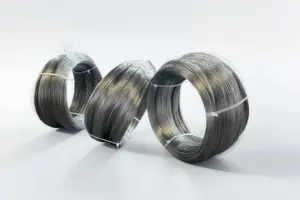
A FeCrAl heating wire is an electric resistance alloy composed primarily of iron, chromium, and aluminum. When current passes through it, the alloy’s resistance converts electrical energy into heat, which is then transferred to the furnace, kiln, or process it serves.
What sets FeCrAl apart from other resistance alloys is the oxide layer it forms. When heated, the aluminum in the alloy reacts with oxygen to create a thin, tightly adherent alumina film on the surface. That film does two things at once: it protects the underlying metal from further oxidation, and it gives the wire a service temperature far higher than alloys that rely on chromium alone.
This is why FeCrAl has become the standard choice where temperatures climb past the point that nickel-chromium alloys can sustain.
Why 1400℃ Matters for High-Temperature Heating Applications
Temperature rating is the single most important number on a heating element datasheet, and 1400℃ is a meaningful threshold. Most standard FeCrAl alloys are rated for service in the 1200℃ to 1300℃ range. Beyond that, several failure mechanisms begin to compound.
The oxide layer starts to thin under repeated cycling. The alloy loses strength as it approaches its softening point. Sagging becomes visible, and elements deform under their own weight. A wire that works perfectly at 1250℃ can fail within weeks at 1350℃ if it was not designed for that range.
An alloy designed for continuous service at 1400℃ requires careful control of its composition and manufacturing process. Aluminum content, impurity levels, oxidation resistance, and mechanical strength all influence performance at elevated temperatures.
Key Properties of High-Temperature FeCrAl Alloy
When engineers compare a high temperature heating wire, they look past the headline temperature at three underlying properties.
Oxidation Resistance and Purity
Oxidation resistance is what determines service life. In a high-grade alloy, rare-earth microalloying elements refine the oxide layer, making it denser and more stable across thermal cycles. Purity matters because even small amounts of impurity elements create weak points where oxidation attacks first.
The practical result is a wire that forms a protective layer quickly and holds it, rather than one that flakes and loses material over time.
Creep Resistance and High-Temperature Strength
At elevated temperature, a resistance wire is under constant load — if only the load of its own weight across a coil or span. Creep is the slow deformation that follows. Alloys with strong creep resistance hold their shape, keeping element spacing even and preventing hot spots or short circuits.
High-temperature strength is the companion property. A wire that retains meaningful tensile strength at 1000℃ and above resists sagging and distortion, which translates directly into longer element life in heavy-duty cycles.
Resistivity and Electrical Stability
A resistance heating wire must deliver predictable power over its entire life. That depends on resistivity — the alloy’s specific electrical resistance — and on how tightly that value is controlled. Precise resistivity means the element draws the designed current and reaches the designed temperature, without drifting as the material ages or oxidizes.
For furnace designers, a narrow resistivity tolerance is what makes power output repeatable from one element to the next.
Applications of High-Temperature Heating Wire
The applications that demand a 1400℃ alloy are rarely ordinary. They are processes where temperature directly determines product quality, and where an element failure means a scrapped batch or an unplanned shutdown.
The most demanding examples cluster in a few sectors. Semiconductor manufacturing uses high-temperature diffusion furnaces in chip fabrication. Photovoltaic production relies on controlled thermal processing for crystal growth and silicon treatment. Ceramics and glass depend on sintering and annealing at sustained high temperatures. Industrial kilns, burners, and flue-gas treatment systems all require elements that hold up under continuous high-power operation.
In every one of these cases, the heating element is not a consumable to be swapped casually — it is a critical part of process control.
How to Select the Right High-Temperature Heating Wire
Choosing an alloy is a balance of temperature, atmosphere, and service life. A few questions narrow the field quickly.
Confirm the true operating temperature, not just the furnace setpoint. Element surface temperature often runs above the furnace atmosphere temperature, and it is the element temperature that governs alloy selection.
Consider the atmosphere. FeCrAl excels in oxidizing environments because its alumina layer depends on oxygen. In reducing or vacuum conditions, the behavior changes, and this must be evaluated case by case.
Look at the datasheet beyond the headline number. Oxidation life, creep resistance, high-temperature strength, and resistivity tolerance matter as much as the maximum temperature.
Think about service life and maintenance. An element that lasts twice as long justifies its cost even at a higher initial price, because replacement downtime is almost always more expensive than the wire itself.
SGHYZ 1400℃ FeCrAl Alloy Wire: Properties and Specifications
The SGHYZ alloy is designed for demanding high-temperature heating applications where oxidation resistance, high-temperature strength, and electrical stability are important.
SGHYZ is a third-generation FeCrAl alloy developed by Shougang Gitane. Building on the earlier HRE series, it is designed to provide improved purity and oxidation resistance for high-temperature heating applications. With a maximum service temperature of 1400℃, SGHYZ is suitable for demanding industrial heating processes where oxidation resistance, high-temperature strength, and electrical stability are important.
The alloy is produced using a specialized metallurgical process and a combination of rare-earth microalloying elements. These features support its oxidation resistance, creep resistance, and high-temperature strength. Its suitability for a specific application should be assessed against the operating conditions and the technical requirements of the heating element.
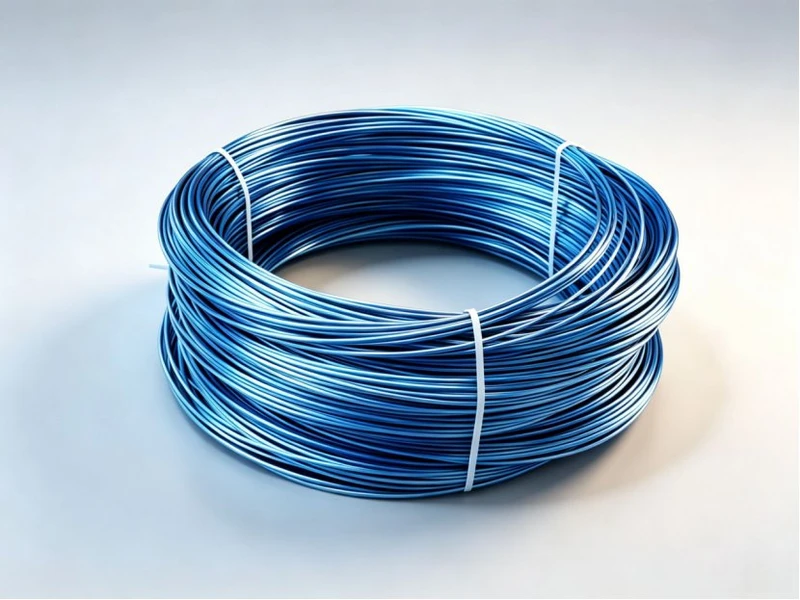
SGHYZ Key Technical Parameters
| Property | Value |
| Maximum Service Temperature | 1400℃ |
| Resistivity (20℃) | 1.45 ± 0.07 μΩ·m |
| Annealed Tensile Strength | 650–800 N/mm² |
| High-Temperature Strength (1000℃) | 20 MPa |
| Elongation | > 14% |
| Density | 7.1 g/cm³ |
| Rapid Life (1350℃, GB/T13300-91) | > 80 h |
| Radiation Coefficient (Fully Oxidized) | 0.7 |
| Melting Point | Approx. 1500℃ |
Chemical Composition
| Element | Content |
| Carbon (C) | ≤ 0.04% |
| Silicon (Si) | ≤ 0.4% |
| Chromium (Cr) | 20.0 – 23.0% |
| Aluminum (Al) | 5.8% |
| Iron (Fe) | Balance |
| Trace Elements (Rare Earth) | Added |
Available Specifications
| Specification | Parameters | Dimensions |
| Round Wire | Diameter (Φ) | 0.1 – 9.0 mm |
| Flat Wire | Thickness × Width | (0.1 – 0.4) × (0.5 – 4.5) mm |
| Flat Strip | Thickness × Width | (0.5 – 2.5) × (5 – 48) mm |
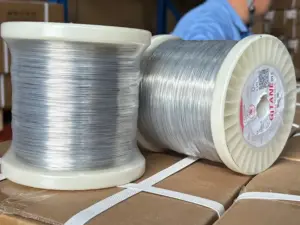
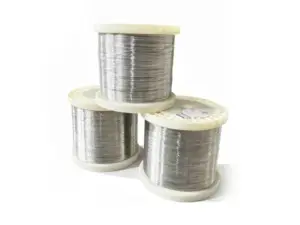
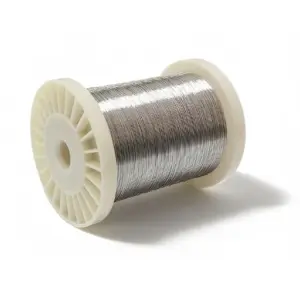
| Supply Form | Spools, Coils, or Precision-Wound Spirals | Customizable |
These figures help explain the alloy’s potential performance in service. The 20 MPa strength at 1000℃ can help limit element sagging under load; the resistivity tolerance of ±0.07 μΩ·m supports consistent power output between elements; and the rapid-life test result of more than 80 hours at 1350℃ provides a reference for evaluating the alloy under sustained high-temperature conditions.
That service life is backed by engineering support rather than left to chance. We run rapid-life analysis, custom surface-load calculations, collapse-resistance verification at 1400℃, and oxidation weight-gain monitoring at 1050℃. Each of these tests answers the same question: how long will the element actually last in your furnace, not in a generic benchmark.
Behind the product is a company built for this specific work. Shougang Gitane brings more than 70 years of R&D in high-end electric heating alloys and over 70 patents. Our alloys hold 80% of the domestic high-end market share and rank second globally. Production is ISO9001 certified, with an emphasis on minimal output-power error and stable resistance.
Conclusion
A heating wire designed for service at 1400℃ must be evaluated by more than its maximum temperature rating. Oxidation resistance, creep resistance, high-temperature strength, and resistivity control all affect how an element performs over time.
For semiconductor manufacturing, photovoltaic processing, ceramics, and industrial kilns, these properties can influence production consistency and maintenance requirements. Selecting an alloy means assessing its technical data against the actual operating temperature, atmosphere, and service conditions.
Contact Shougang Gitane to learn more about SGHYZ 1400℃ FeCrAl alloy wire and discuss the specifications for your high-temperature heating applications.
FAQs
Why is oxidation resistance important in a heating wire?
The alumina oxide layer protects the wire from further oxidation and sets its maximum service temperature. A denser, more stable layer directly extends element life.
What does creep resistance mean for a heating element?
Creep is slow deformation under high-temperature load. Strong creep resistance keeps the element from sagging or deforming, which prevents hot spots and premature failure.
How is the service life of a high-temperature alloy measured?
One common method is rapid-life testing at elevated temperature, measuring hours to failure under sustained load. Oxidation monitoring and collapse testing provide additional confidence.
Where are 1400℃ FeCrAl heating wires typically used?
In semiconductor diffusion furnaces, photovoltaic processing, ceramic sintering, glass annealing, and high-power industrial kilns — processes where temperature directly determines product quality.