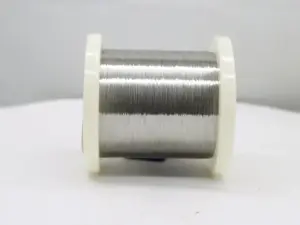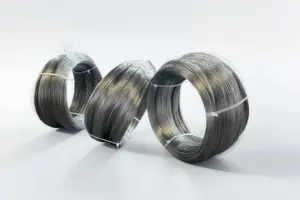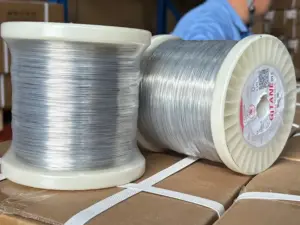
The main difference in nichrome 80 vs 60 is composition: the 80 family is commonly described as about 80% nickel and 20% chromium, while the 60 family contains less nickel and includes iron. For a heating element, the better choice depends on the exact grade, hot resistance, and service conditions.
A replacement can fit the old drawing yet draw different power. That makes a simple material ranking a poor purchase specification. This guide compares published grade data, shows how a substitution changes the electrical check, and gives you a practical review record.
Key Takeaways
- Check the supplier’s grade and composition, not just the numbers 80 or 60.
- The SPARK tables list 1200°C for Cr20Ni80 and 1150°C for Cr15Ni60 as maximum continuous temperatures; confirm the applicable conditions.
- Their listed resistivities at 20°C are close, but their hot resistance factors differ.
- Matching cold resistance does not approve a replacement coil for service.
- Compare quotes against the same drawing, test requirements, and operating conditions.
Nichrome 80 vs 60: What the Names Mean
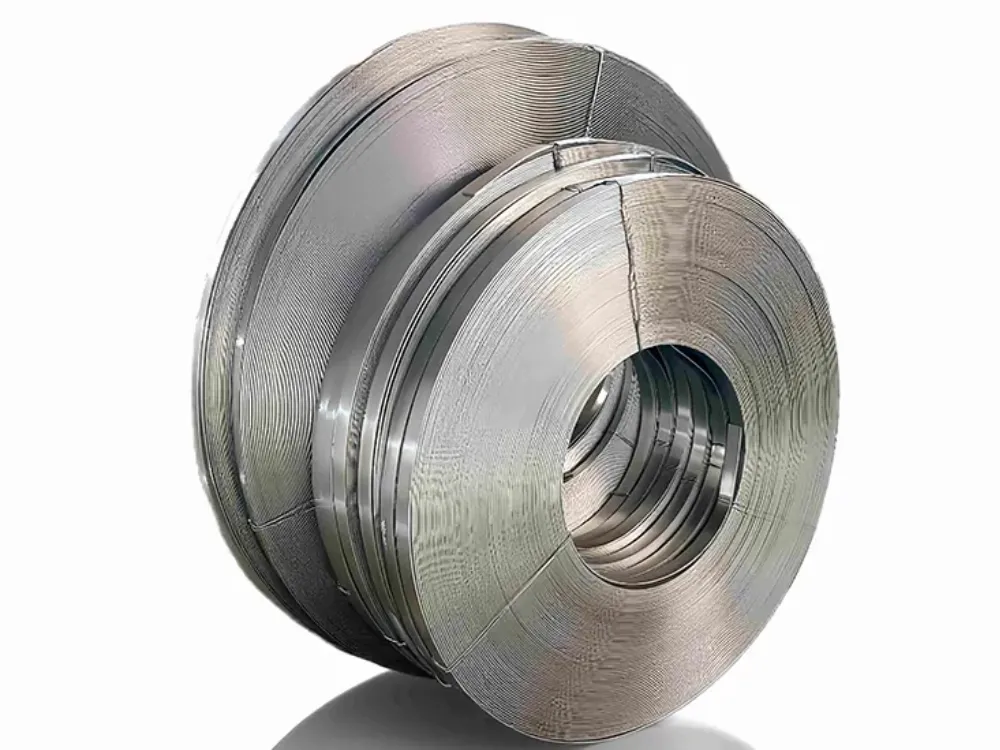
Nichrome is a family of nickel-chromium resistance alloys. The number in a common name helps identify that family, but it doesn’t provide a complete chemical specification. Minor elements and permitted ranges still matter.
Read Nickel, Chromium, and Iron Together
For this nichrome 80 vs 60 comparison, the SPARK grades are Cr20Ni80 and Cr15Ni60. Their technical tables list chromium at 20% with nickel as balance for the first grade, and chromium at 15%, nickel at 60%, and iron as balance for the second.
You may also encounter a 60/16 label in another supplier’s range. Don’t change a drawing from 60/15 to 60/16 based on the family name alone. Compare the named product’s composition requirements and applicable specification before accepting it.
“Balance” means the remaining composition after the listed elements. It does not mean a guaranteed absence of all other elements. Likewise, an 80/20 description is not proof that a batch contains absolutely no iron.
The nickel-chromium alloy wire guide explains the wider grade family. Here, the task is narrower: deciding which of two candidate materials meets a particular element specification.
Illustrative Scenario: A Misread Grade Name
A buyer reads “Nichrome 60” as 60% nickel and 40% chromium. Before issuing the order, a reviewer asks for the composition table and finds that the proposed grade also contains iron.
The team corrects the material description before comparing prices. This teaching example shows why nichrome 80 vs 60 starts with grade identity. It does not describe a real customer or a tested material batch.
For an initial comparison, send GITANE the existing grade designation and element drawing. Include the supplier’s data you are using, rather than requesting an unspecified “equivalent nichrome.”
Nichrome 80 vs 60: Compare the Published Data
The nichrome 80 vs 60 table below uses published SPARK product data. These values support a first review; they are not a batch certificate or approval of a finished heater.
| Property | Cr20Ni80 | Cr15Ni60 |
|---|---|---|
| Listed Cr / Ni / Fe | 20% / balance / not specified numerically | 15% / 60% / balance |
| Maximum continuous temperature | 1200°C | 1150°C |
| Melting point | 1400°C | 1390°C |
| Resistivity at 20°C | 1.09 Ω·mm²/m | 1.11 Ω·mm²/m |
| Resistance factor Ct at 800°C | 1.04 | 1.08 |
| Resistance factor Ct at 1000°C | 1.05 | 1.10 |
| Magnetism entry | No | Slight |
Sources: Cr20Ni80 published parameters and Cr15Ni60 technical table, checked October 19, 2026. Confirm the temperature rating against the proposed atmosphere, wire dimensions, and element design.
Cold Resistivity and Temperature Factors
Resistivity describes the material. Resistance also depends on the wire’s length and cross-sectional area. A value in Ω·mm²/m is therefore not a resistance-per-metre value until you specify the cross-section.
Ct expresses resistance at a given temperature relative to resistance at 20°C. For example, Ct = 1.08 means R(T) = 1.08 × R20. It is a ratio at a stated temperature, not a constant temperature coefficient to extend across every temperature range.
In a nichrome 80 vs 60 review, keep each factor attached to its named grade. That small step prevents a plausible-looking calculation built from mismatched data.
Keep Supplier Data Sets Separate
Kanthal’s Nikrothal 80 wire datasheet lists a maximum continuous temperature in air of 1200°C and Ct at 800°C of 1.04. Its Nikrothal 60 wire datasheet lists 1150°C in air and Ct at 800°C of 1.10.
The latter factor differs from SPARK’s listed Cr15Ni60 value of 1.08. Both numbers must stay with their sources. Similar family names do not establish identical temperature behavior or cross-brand interchangeability.
The SPARK Cr15Ni60 page also has conflicting wording. Its prose mentions 1150–1250°C, while its technical table states 1150°C; this comparison uses the table. The table says “Slight” for magnetism despite broader non-magnetic wording elsewhere on that page.
Obtain written clarification where the requirement depends on those details. A nichrome 80 vs 60 table should expose an unresolved condition, not conceal it by choosing the more attractive claim.
What Changes When You Replace One Grade With the Other?
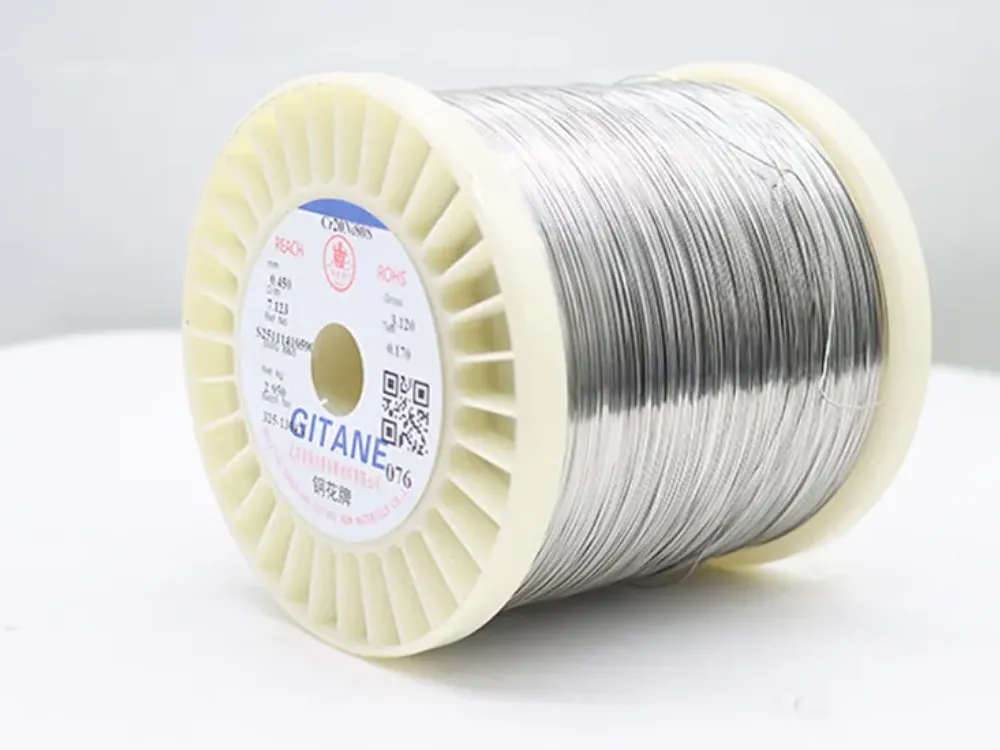
A substitution changes a material input in the element design. It may also change the dimensions needed to meet the electrical target. Check those effects before treating either grade as a drop-in replacement.
Same Size Does Not Mean the Same Resistance
For a uniform wire, R = ρL/A. At the same temperature, equal lengths and cross-sections let you compare resistance using the ratio of resistivities. This is a useful first step in nichrome 80 vs 60 selection.
Calculated example: using the SPARK nominal values at 20°C, R60/R80 = 1.11/1.09 = 1.01835. The Cr15Ni60 candidate has about 1.83% higher cold resistance at the same length and cross-section.
That result assumes the same actual dimensions. It doesn’t include manufacturing tolerances, terminal resistance, or a change in test temperature. It is a design calculation, not a measured acceptance result.
Fixed Voltage, Fixed Current, and Hot Resistance
At fixed voltage, P = V²/R. Under the same cold-state assumptions, P60/P80 = 1.09/1.11 = 0.98198, so power is about 1.80% lower for the Cr15Ni60 candidate. At fixed current, P = I²R, and the power change goes in the opposite direction.
Neither result predicts final wire temperature or warm-up time. Heat loss, geometry, supports, and the power controller also matter. Record the control mode when comparing nichrome 80 vs 60.
For a hot nichrome 80 vs 60 comparison, apply each grade’s own Ct. If both samples are evaluated at 800°C, the SPARK data give R60/R80 = (1.11 × 1.08)/(1.09 × 1.04) = 1.05752. The calculated resistance difference is then about 5.75%, under equal-length and equal-cross-section assumptions.
This does not mean two powered coils will naturally settle at 800°C. Temperature is an input to that comparison. Use the cold and hot resistance calculation guide for detailed calculations and unit checks.
| Electrical comparison | Held equal | Calculated Cr15Ni60 result relative to Cr20Ni80 |
|---|---|---|
| Cold resistance | Length, cross-section, 20°C | About 1.83% higher |
| Cold power at fixed voltage | Voltage, length, cross-section, 20°C | About 1.80% lower |
| Cold power at fixed current | Current, length, cross-section, 20°C | About 1.83% higher |
These rows describe separate electrical conditions. They are not a temperature chart or results from powered-coil tests.
Illustrative Scenario: The Replacement Fits
An engineer compares two coils with the same wire size and heated length. The cold-resistance check looks close, so the next review uses the hot resistance factors and the actual controller mode.
If the design changes wire length to meet a resistance target, the coil layout needs another check. Turn spacing, exposed surface, and support locations may change too. This nichrome 80 vs 60 scenario illustrates review steps; it does not claim a validated replacement or operating result.
Keep the old drawing and proposed drawing together. A material substitution is easier to assess when the reviewer can see every changed input.
Compare Temperature, Atmosphere, and Support
Temperature screening in nichrome 80 vs 60 starts with the listed limits. Cr20Ni80 has the higher value in the SPARK table. That does not prove it will last longer in every heater. Check the working conditions behind the number.
Continuous Rating Is Not Melting Point
Do not use a melting point as a normal operating target. Nor should you subtract the continuous rating from the melting point and call the difference a safety margin. That gap is not a validated allowance for hot spots or control faults.
Measure or otherwise establish the wire temperature separately from the process setpoint. An element transferring heat can be hotter than the load it heats. The wire temperature and service-limit guide covers those distinctions and measurement questions.
A useful nichrome 80 vs 60 decision names the required wire temperature, its location, and its duration. “A furnace running at this setpoint” leaves too much unsaid.
Ask About Gas and Contamination
Kanthal’s furnace-specific design guidance explains how atmosphere, contaminants, and support conditions affect heating materials. It identifies sulfur as harmful to nickel-based alloys. Do not assume that an air rating also covers a contaminated or controlled atmosphere.
The SPARK Cr15Ni60 page contains broad claims about sulfur-containing environments. Those claims need application-specific clarification before use in a specification. State the gas mixture, contaminants, pressure, temperature, and duty rather than treating that wording as approval.
For nichrome 80 vs 60 in an unusual atmosphere, retain the supplier’s written response with the design. Don’t adopt another brand’s treatment recipe without confirming its scope.
Recheck the Coil and Its Supports
Record unsupported spans, coil diameter, turn spacing, support materials, and thermal cycles. These details affect the element review even if the cold resistance matches. A change of grade alone cannot settle all mechanical questions.
The official Kanthal workshop video below discusses forming a coiled element and identifying material families. It demonstrates a Kanthal APM element; it is not an 80/60 comparison test or a forming specification for SPARK wire.
Use such demonstrations to identify questions for the forming review. Obtain instructions for the actual material and dimensions before adopting a workshop process.
Is Nichrome 60 Always the Lower-Cost Choice?
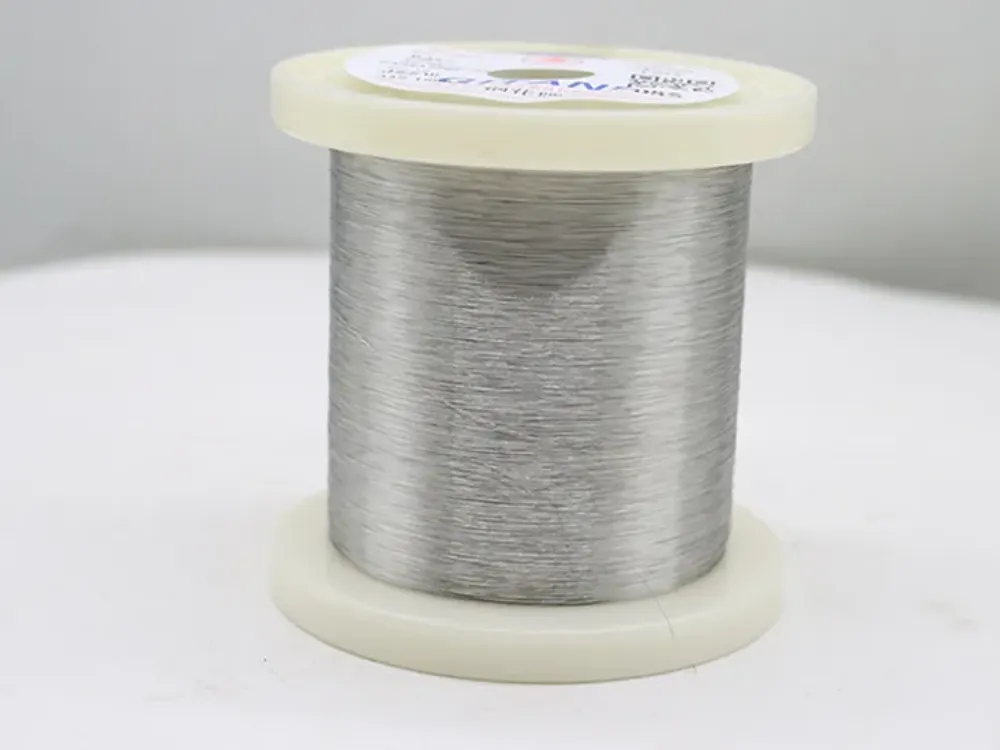
Lower nickel content can make the 60 family worth considering in a cost review. It does not establish the price of a finished wire order. For nichrome 80 vs 60, compare actual quotes against the same purchase requirements.
Compare Quotes on the Same Basis
Check the grade, dimensions, supply condition, quantity, test documents, packaging, delivery terms, and quote validity. Ask whether price is per unit length or mass. Make sure the quoted quantity meets the same design need.
A lower price per kilogram may not mean a lower cost for an element. A proposed change in length or cross-section changes how much material the design uses. Include that change before making a purchase comparison.
Illustrative Scenario: A Quote Without a Test Basis
A buyer receives two wire quotes and starts with the unit prices. One request includes a specified cold-resistance test; the other does not. The buyer aligns the test requirement and supply condition before deciding which quote meets the order.
No savings figure follows from this example. It shows how nichrome 80 vs 60 procurement needs a common basis, just as the engineering comparison does.
For nichrome 80 vs 60 cost reviews, keep running cost and material price separate until you have operating evidence. Don’t assign either grade a life advantage, replacement interval, or downtime saving without data from the relevant service conditions.
Nichrome 80 vs 60: A Selection and RFQ Checklist
Use the following record to organize a selection or substitution review. It tells you what to verify; it does not automatically approve a material.
| Review item | Evidence to collect | Question left for approval |
|---|---|---|
| Grade identity | Named material, supplier data, composition requirement | Does the proposed material meet the specified grade? |
| Cold electrical target | Length, cross-section, R20 requirement, test method | Do calculated and measured values meet the agreed limits? |
| Hot electrical behavior | Grade-specific Ct and stated wire temperature | Does the operating resistance suit the controller and supply? |
| Thermal conditions | Wire temperature, atmosphere, cycle, load | Are the published material limits applicable? |
| Element layout | Coil drawing, supports, terminals, expansion provision | Does the proposed assembly meet its design requirements? |
| Purchase scope | Quantity, condition, documents, terms | Are the quotes for the same requirement? |
Document the Replacement Review
Start a nichrome 80 vs 60 record with the existing grade and the reason for considering a change. Distinguish a supply substitution from a deliberate redesign. Record which inputs are fixed and which may change.
For the electrical check, specify the reference temperature and whether the measured resistance includes connections. Define the heated length and actual cross-section. Avoid comparing a nominal catalogue value with an assembly reading without noting the difference.
Before ordering, agree on:
- The resistance limits and test temperature.
- Whether the test covers bare wire or the complete assembly.
- The dimensions, supply condition, and documents required.
- How an out-of-limit result or unresolved data conflict will be handled.
If wire size changes, use the nichrome wire size selection guide to revisit the dimensional choice. Then check physical fit and the thermal implications of the revised layout.
For a focused material discussion, send GITANE the grade comparison, drawing, and operating record. Include the open questions so that a reply can address the proposed application.
Keep Approval Separate From a Calculation
A calculated resistance ratio answers one part of nichrome 80 vs 60 selection. Approval also needs the applicable material information and the required assembly checks. State who reviews each part and what evidence closes it.
Keep predicted values, measured values, and supplier declarations in separate fields. If a result is unresolved, retain that status. A clear record is more useful than a table in which every box appears complete without supporting evidence.
Frequently Asked Questions and Next Steps
What Is the Main Difference Between Nichrome 80 and 60?
Composition is the starting point in nichrome 80 vs 60. The 80 family has more nickel; the 60 family contains iron as part of its balance. Use the exact grade table to compare service limits and resistance behavior.
Which Has Higher Resistance at the Same Size?
Using the SPARK values at 20°C, Cr15Ni60 has higher nominal resistance at equal length and cross-section. The calculated difference is about 1.83%. At another temperature, apply each grade’s own resistance factor.
Can Nichrome 60 Replace 80 Without Changing the Coil?
A nichrome 80 vs 60 substitution needs more than a family name. Check cold and hot resistance, power control, temperature, atmosphere, and the assembly drawing. Some inputs may need revision or validation before the proposed material is accepted.
Does Nichrome 80 Always Get Hotter or Heat Faster?
No universal result follows from nichrome 80 vs 60 alone. Current, voltage, resistance, mass, heat loss, and the control system all affect behavior. A resistivity comparison is not a warm-up test.
Is Nichrome 60 Magnetic?
The SPARK Cr15Ni60 technical table lists slight magnetism, despite broader wording elsewhere on its product page. Clarify a magnetic requirement with the supplier and define how it will be checked. Don’t assume that all states or grades are identical.
Is Nichrome 60 Always Cheaper?
Use a current quote for the exact supply requirement. Lower nickel content alone doesn’t establish the cost per accepted element or its service life. Compare dimensions, test requirements, quantities, and terms together.
To take your nichrome 80 vs 60 review forward, contact GITANE with the two candidate grades and the element specification. A sound choice starts with clear operating conditions and data that belong to the material you intend to buy.