Nichrome wire temperature has no single maximum for every grade or heating element. A material’s continuous service rating, its melting point, and the actual temperature of an energized wire describe different things.
That distinction matters when a furnace reaches its setpoint but an element still fails early. A grade label alone cannot explain the local heat balance. This guide separates the ratings, shows what a current chart must disclose, and gives you a practical measurement and selection record.
Key Takeaways
- Identify the exact grade before using a temperature limit.
- Continuous service ratings are lower than melting points and depend on stated conditions.
- Current produces heat, but geometry and heat loss determine the resulting wire temperature.
- Furnace temperature and element temperature need separate measurements or justified estimates.
- Keep the measurement method, atmosphere, and operating cycle with every temperature result.
What Does Nichrome Wire Temperature Mean?
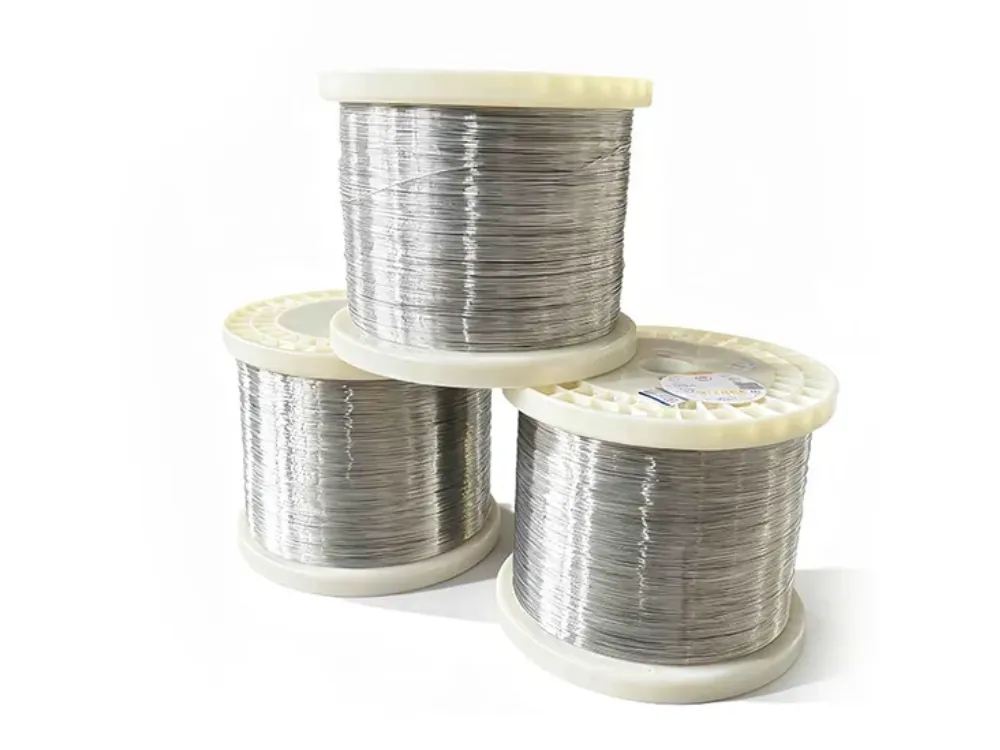
A useful nichrome wire temperature specification names both the object and the condition. Is it a material rating, a measured spot on the wire, or the air inside the furnace? Without that detail, two engineers may use the same number for different purposes.
| Temperature term | What it describes | What it does not establish |
|---|---|---|
| Maximum continuous service temperature | A stated material operating limit under the supplier’s conditions | An automatic approval for every element design |
| Melting point | The listed material melting temperature | A safe operating target or service-life prediction |
| Actual wire temperature | Temperature at a defined location and operating state | Uniform temperature along the whole element |
| Furnace or process temperature | Chamber, atmosphere, load, or product temperature | The hottest point of the heating wire |
A powered element must transfer heat to its surroundings. Its surface can therefore be hotter than the load or the chamber sensor. The difference changes with the load, airflow, mounting, and heating stage.
Illustrative Scenario: One setpoint, two elements
Two replacement coils operate in furnaces with the same controller setpoint. One has open turns and clear airflow; the other sits near insulation with a tighter coil. The setpoint does not prove that both wires reach the same temperature.
An engineer records coil geometry and measures the hot regions before comparing the two designs. No particular temperature difference follows from this example. Its lesson is to compare conditions before comparing numbers.
For an initial material discussion, send the grade, target process temperature, atmosphere, and element drawing. State whether the requested nichrome wire temperature refers to the wire itself or the process it heats.
Nichrome Wire Temperature Limits by Grade
Start with the exact product datasheet. Similar nickel-chromium names do not make different grades, brands, or product forms interchangeable. The following values are published reference points, not approvals for a finished heater.
| GITANE grade | Listed maximum continuous temperature | Listed melting point | Selection condition to confirm |
|---|---|---|---|
| Cr20Ni80 | 1200°C | 1400°C | Atmosphere, wire dimensions, support, and duty |
| Cr15Ni60 | 1150°C | 1390°C | Confirm the technical table and intended service |
| Cr30Ni70 | 1250°C | 1380°C | Confirm that the stated limit covers the proposed element |
These are the product pages’ listed values at the fact-check date. The Cr15Ni60 page contains broader temperature wording in its prose, including a higher value than its technical table. This guide uses the table’s 1150°C figure; obtain written clarification before selecting against the conflicting wording.
For comparison, Kanthal’s Nikrothal 80 datasheet states a maximum continuous operating temperature of 1200°C in air and a melting point of 1400°C. Those conditions belong to that named product. They do not certify a different supplier’s wire.
Why melting point is the wrong design target
An element can lose useful mechanical strength, change shape, or suffer surface damage before it melts. A nichrome wire temperature below the melting point can still be unsuitable for sustained use. The design must also meet electrical, support, and process requirements.
Do not subtract the continuous rating from the melting point and call the difference a safety margin. That arithmetic does not account for hot spots, temperature cycling, or the service environment. A published maximum also does not state how long a particular coil will last.
When documenting a nichrome wire temperature limit, retain the source, grade, and conditions beside the number. Ask the supplier which value applies if tables and sales text disagree. Never resolve that conflict by choosing the larger number.
For a wider comparison of composition and material selection, use the nickel-chromium alloy wire guide. Keep this temperature assessment tied to the specific element under review.
Why Current Alone Cannot Predict Wire Temperature
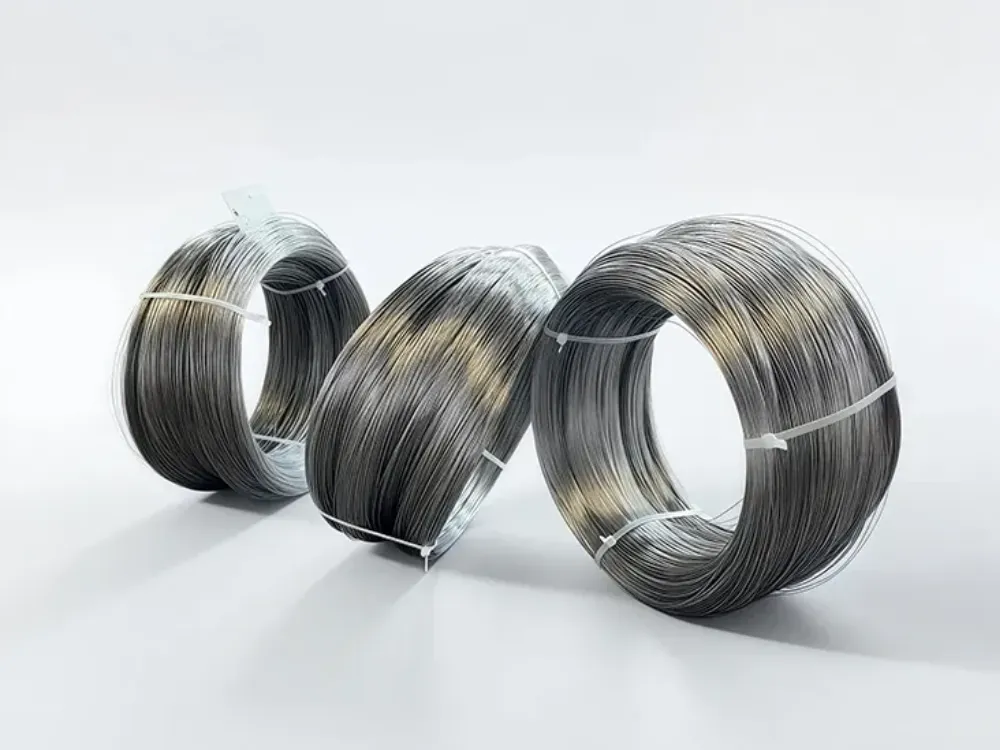
Electrical power supplies heat. In a resistive element, power can be expressed as P = I²R, using the resistance at the operating condition. Temperature then depends on how quickly that heat leaves the wire.
If resistance were fixed, doubling current would multiply electrical power by four. It would not multiply nichrome wire temperature by four. Resistance can also change as the wire heats, so even the fixed-resistance example is only an electrical comparison.
Heat leaves through radiation, convection, and conduction into supports or connections. Each path changes with the assembly. A bare straight wire in moving air does not lose heat in the same way as a close-wound coil inside a hot enclosure.
Inputs that change the result
- Diameter and exposed length: They affect resistance and the surface available to exchange heat.
- Coil geometry: Turn spacing and nearby turns alter the thermal surroundings.
- Airflow and surrounding temperature: They affect how readily the wire can lose heat.
- Mounting: Supports and terminals create additional heat paths.
- Surface condition: Oxidation and other surface changes affect radiative behavior.
- Time: A warming element and a settled element can have different temperatures at the same indicated current.
Use a nichrome wire temperature calculator only when its assumptions describe your assembly. A calculator that accepts current and diameter may be built around a particular straight-wire arrangement. Its output does not automatically cover coils, enclosed elements, or forced airflow.
An electrical resistance calculation answers another question: what resistance or length is needed for a specified electrical operating point? The cold and hot resistance calculation guide covers that task. It does not replace a heat-transfer model or temperature measurement.
Check the operating stage
Record whether the temperature was taken during startup, steady running, or a process change. A changing load or airflow can shift nichrome wire temperature even while the controller maintains the chamber setpoint. Record the control mode and measured electrical values at the same time.
A heat-transfer model can help explore these effects. Its inputs must match the real heater. Check the model against the actual assembly before using its output to set a limit. Label each value as predicted or measured in the design record.
How to Read a Nichrome Wire Temperature Chart
A nichrome wire temperature chart is useful when its test conditions travel with it. A curve without a grade, geometry, or environment can suggest a relationship while still being unsuitable for selecting an industrial element.
Check the axes first. A resistance-versus-temperature chart describes electrical behavior; a current-versus-temperature chart describes a thermal result under particular conditions. A maximum-temperature table provides a material limit. None of these charts can substitute for all the others.
| Chart detail | Question to ask before using the curve |
|---|---|
| Grade and product | Which exact alloy and source were tested? |
| Wire dimensions | What diameter, heated length, and cross-section apply? |
| Arrangement | Is the wire straight, coiled, supported, or enclosed? |
| Environment | What atmosphere, airflow, and surrounding temperature apply? |
| Operating state | Is the result transient or settled, and how was that decided? |
| Measurement | Where was temperature measured, and with which method? |
Illustrative Scenario: The wrong upper boundary
A buyer receives a chart marked with a melting point and treats that number as the permitted wire temperature. The proposed application requires continuous operation, so the reviewer asks for the grade’s service rating and its conditions instead.
The review does not establish a universal derating percentage. It corrects the type of limit being used. The team then checks the hottest element region against a condition-specific operating requirement.
When comparing charts, match the conditions before matching the curve. Do not interpolate between grades simply because their names sound similar. Do not extrapolate beyond a chart’s stated range without an appropriate engineering basis.
For each chart you retain, save its source and revision with the design. Mark any unresolved assumption beside the proposed nichrome wire temperature, rather than burying it in a separate email. That makes later replacement decisions easier to audit.
If a chart lacks the needed conditions, use it to frame questions instead of declaring a validated operating point. A measured nichrome wire temperature from a documented trial provides stronger application evidence than an unlabeled curve copied into a purchasing specification.
Match the Grade to Atmosphere and Element Design
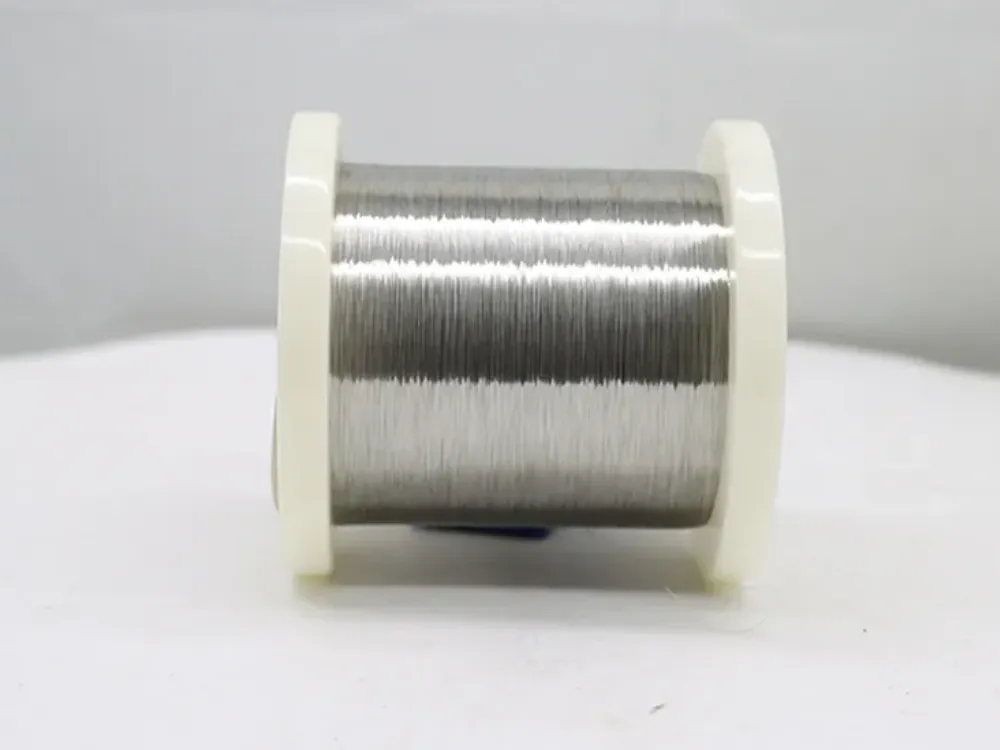
Temperature is one selection input. Atmosphere, contamination, mechanical support, and heating cycles can change whether a grade is appropriate. A limit stated for air should not be extended to another environment without confirmation.
Kanthal’s furnace design guidance explains why furnace atmosphere and operating conditions matter to heating materials. Use those design principles to ask better questions. Apply any brand-specific treatment or operating instruction only within its stated scope.
Describe the atmosphere precisely
“Inside a furnace” is not an atmosphere specification. State the gas composition or process description, pressure where relevant, expected contamination, and changes during startup or shutdown. Include cleaning agents or process residues that could reach the element.
If those conditions are unknown, record the gap. Don’t carry a nichrome wire temperature limit for air into a different process without checking it. Ask for material guidance for that process before you approve the design.
Support and wire size belong in the review
The element must hold its intended shape while hot. Identify unsupported spans, coil dimensions, support materials, terminal transitions, and expansion allowances. Check how these features affect both local heat loss and mechanical behavior.
The nichrome wire size selection guide addresses dimensional choices. Here, the important point is that changing diameter or coil shape can change nichrome wire temperature and the support requirement together. Recheck the thermal assessment after a dimensional substitution.
For a grade review, share the drawing and operating cycle with GITANE. Include the required wire temperature, its measurement basis, and the atmosphere. Request confirmation of applicable material data instead of treating a generic maximum as a finished-element guarantee.
Record operating hours per cycle, starts and stops, and unusual process stages. These details make the nichrome wire temperature requirement useful to the person reviewing the material. A peak value without duration or location leaves key questions unanswered.
Measure and Record the Actual Wire Temperature
Choose a method that can resolve the wire and survive the application. Contact and infrared methods each introduce practical limits. The best measurement plan makes those limits explicit before the first reading is used to approve a design.
Infrared measurement: check the target and settings
An infrared instrument measures radiation and uses assumptions to report temperature. Optris’s measurement FAQs explain the roles of emissivity, wavelength, reflections, and measurement spot size. These details are especially important when the target is a thin wire against a different background.
Make sure the wire fills the instrument’s required measurement area at the chosen distance. Otherwise, surrounding objects may contribute to the reading. A visually sharp image alone does not prove that an instrument resolves the intended target.
Check the surface state, selected emissivity, wavelength suitability, and reflected surroundings. Do not assume one setting works for every oxidized or newly installed wire. Do not add paint, tape, or another coating unless its use is appropriate for the temperature and process.
The following official Optris product overview introduces short-wave infrared sensing for metals. It is useful measurement context, not evidence that this model is suitable for every thin nichrome wire or element geometry.
Contact measurement: assess the disturbance
A contact sensor needs a sound mount and a suitable circuit. The sensor may change local heat flow. Its junction may also miss the hottest part of the wire. Ask the test specialist to check its range, insulation, mount, response time, and isolation from the live circuit.
Do not use a chamber thermocouple as proof of peak nichrome wire temperature. It measures its own location. If a reference measurement is required, define why its placement and method represent the quantity being compared.
Illustrative Scenario: Two methods disagree
During an element review, an infrared reading and a contact reading do not agree. The reviewer checks spot size, reflections, sensor attachment, and whether both readings describe the same location and operating stage.
Neither instrument becomes correct merely because it reports the higher number. The team records the unresolved difference and checks the methods before accepting a nichrome wire temperature result. No specific readings or successful test outcome are implied here.
| Test record field | What to retain |
|---|---|
| Material and element | Grade, supplier, wire dimensions, coil drawing, and supports |
| Environment | Atmosphere, airflow, surrounding temperature, and load |
| Electrical state | Measured voltage/current, control mode, and operating stage |
| Temperature method | Instrument, settings, location, distance or attachment |
| Result and limits | Hottest observed region, repeatability, uncertainty, unresolved issues |
Repeat observations at relevant operating stages and inspect likely hot regions. Retain the raw readings with the test conditions. A nichrome wire temperature record should let another engineer understand what was measured and what remains uncertain.
Frequently Asked Questions and Next Steps
How hot does nichrome wire get?
Actual nichrome wire temperature depends on power input and heat loss. A grade rating sets a limit under stated conditions. It can’t predict how hot every powered wire will get. Check the assembly, then measure it or use a model that fits it.
Is the nichrome wire melting point its maximum working temperature?
No. Melting point and maximum continuous service temperature describe different limits. Use the service data for the exact grade and confirm its conditions. Keep melting-point values out of normal operating targets.
Can I find nichrome wire temperature from current alone?
No universal current-to-temperature conversion applies. You also need the wire geometry, hot resistance, surroundings, heat-transfer conditions, and operating stage. A current chart is transferable only when its assumptions fit the application.
Can wire color tell me the temperature?
Visible glow can help locate a hot region, but it is not a precise thermometer. Lighting, surface state, and viewing conditions affect appearance. Use a suitable measurement method for an acceptance decision.
What should a temperature specification include?
Name the grade, required nichrome wire temperature, gas or air conditions, run time, shape, and test method. Record the process setpoint and wire temperature as separate values. Keep open questions and the supplier’s data with the drawing.
To review your nichrome wire temperature requirement, contact GITANE with the element drawing and operating record. A clear specification starts with the actual heated wire, the conditions around it, and the evidence behind the proposed limit.