Introduction: The Shutdown Cost is High in a Glass Tempering Furnace
Global automobile and display glass manufacturers are faced with continuous operational losses caused by unplanned downtime in continuous glass tempering production lines and automobile glass annealing furnaces, which is a common industry pain point and directly erodes gross profit margins of each production cycle. For most mid-to-large glass processing plants, routine maintenance shutdowns triggered by broken, deformed, or rapidly oxidized heating components often halt entire production lines for several hours up to multiple working days. Every unplanned shutdown will bring cumulative losses, including wasting preheating furnace energy, semi-finished glass waste, overtime labor costs, and late delivery fines for large customer orders. According to the field production statistics collected from more than 40 glass thermal processing plants in Asia and Europe, the failure of conventional heating components accounts for nearly 62% of all unplanned shutdown time in modern heat treatment furnace production workshops, which creates an urgent market demand for upgrading high-temperature resistant heating materials.
As a professional and experienced manufacturer of heating elements, Spark Heating focuses on developing and supplying high-performance industrial thermal solutions with proprietary HRE alloy heating elements as the core. This is a second-generation high-quality Fe-Cr-Al electric heating alloy, which was originally patented and developed by Beijing Shougang Gitane New Materials Corporation in China, with national invention patent ZL201910173874X. Our core product, HRE alloy, has been precisely designed, which has solved the core defects of traditional electric heating wires used in long-term continuous glass tempering furnaces. After years of field verification across automotive windshield glass, smartphone display glass, and architectural tempered glass production lines worldwide, HRE alloy heating elements have become a preferred upgrade alternative, replacing outdated nichrome and standard FeCrAl heating raw materials for medium-to-high-end glass heat treatment projects.
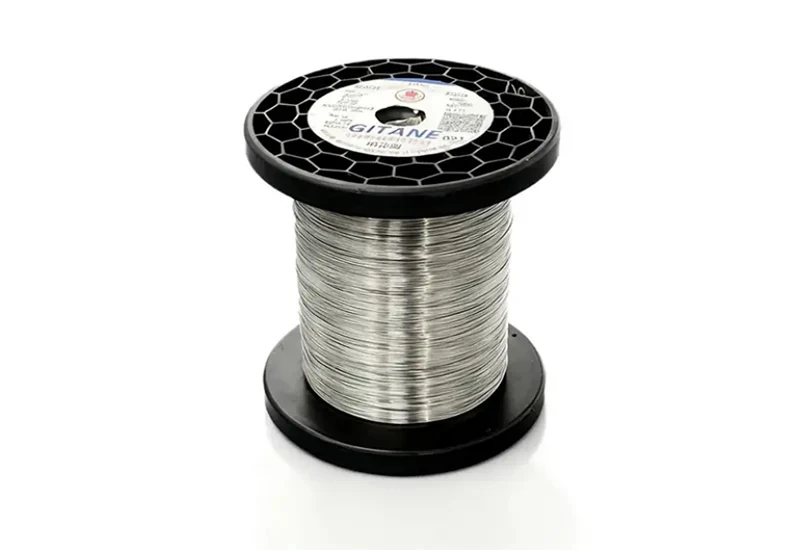
Why Traditional Heating Elements Fail in Glass Tempering Furnaces
Continuous glass tempering, bending and annealing processes impose harsh working conditions on the heating components in the furnace: furnaces run continuously for weeks or months under the thermal cycle of alternating cold and hot, and the internal working temperature often hovers around 1200°C to 1300°C to ensure the stable glass forming quality, which makes the traditional ordinary FeCrAl resistance wire and Nichrome heating wire far exceed their stable long-term service thresholds. In the past decades, the standard Nichrome alloy and the common FeCrAl grades such as 0Cr25Al5 represent the most widely used raw materials for traditional furnace heating elements. However, the inherent material performance limitations lead to gradual deterioration of the performance in long-term continuous glass furnace operation.
Under the continuous ultra-high temperature and repeated thermal expansion and contraction cycles in the glass tempering equipment, the surface oxidation of the conventional nickel-chromium based heating wire is accelerated, the thickness of the oxide layer is peeled off, and the high temperature creep is obvious; Deformed heating coils change the preset heating distance in the furnaces, which leads to uneven heat distribution and inconsistent local furnace temperature, which directly leads to the defects of glass products such as curved surface distortion, optical aberration, and fluctuation of tempering strength. At the same time, mainstream common FeCrAl resistance wire cannot maintain stable resistance under long-term high-temperature exposure, resulting in significant electrical resistance drift, destroying the pre-calibrated furnace power output, and further deteriorating the thermal field uniformity across the whole heat treatment furnace. Most conventional furnace heating components made from these two mainstream alloys show obvious performance degradation within 5 to 7 months of continuous glass production line operation, and need to be completely replaced, forcing the furnace to close for maintenance, which is the fundamental reason for repeated production stagnation for countless glass manufacturers around the world.
HRE Alloy Advantages: Designed for Extreme Durability
HRE alloy is an upgraded version of the second-generation high-quality FeCrAl alloy developed after optimizing the micro-alloy formula and high-purity smelting production technology. It is superior to the traditional nickel-chromium alloy and standard FeCrAl alloy in core high-temperature performance index, which fully meets the demanding long-term operation requirements of continuous glass tempering production lines. Spark heating strictly purchases the certified original HRE alloy raw material, which conforms to the official production specifications of Gitane of Shougang and GB/T1234-2012 China electrothermal alloy industry test standard, so as to ensure that the finished products of heating elements ordered by all glass heat treatment furnace customers have the same quality.
Table: Core Physical and High-Temperature Performance Parameters of HRE alloy
| Performance Item | Tested Quantitative Index | Test Standard & Remark |
| Max sustainable working temperature | 1350°C | Lab & on-site industrial verification |
| Annealed room-temperature tensile strength | 650–800 MPa | Standard tensile specimen testing |
| 1000°C high-temperature tensile strength | 220MPa | High-temp mechanical property test |
| Full oxidation radiation emissivity | 0.7 | Industry standard thermal radiation detection |
| 1350°C rapid service lifespan | ≥85h | GB/T1234-2012, 0.8mm specimen, 2min power-on /2min power-off cycle |
| Room temperature resistivity | 1.45±0.07 μΩ·m | Raw alloy material batch inspection |
| Elongation at room temperature | >14% | Metallic ductility testing |
Firstly, the stable emissivity of 0.7 enables HRE alloy heating elements to provide excellent radiative heat transfer efficiency in a sealed glass high-temperature furnace cavity. Compared with the traditional electrothermal alloys whose average radiation coefficient is lower than 0.55, HRE’s excellent radiation heat transfer ability shortens the preheating duration of the whole kiln, stabilizes the distribution of the internal thermal field, and helps glass manufacturers reduce the energy consumption of the whole kiln by 26%, which has been verified in several finished product production and transformation projects. Secondly, the creep resistance of HRE is greatly improved by optimized trace element blending and low-impurity smelting process; Even after months of uninterrupted high-temperature running inside a sealed industrial electric furnace for glass tempering, finished HRE alloy resistance wire strip, flat resistance wire, and customized heating wire coil maintain original geometric dimensions without sagging or structural distortion, eliminating uneven heating triggered by deformed heating components.
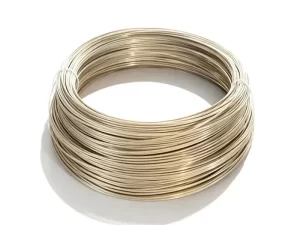
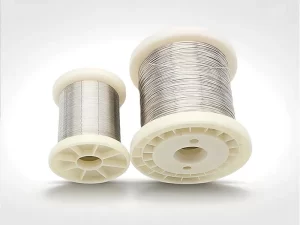
Thirdly, the precise control of chemical composition ensures the excellent resistance consistency for bulk HRE products; Its fixed resistance temperature correction coefficient under different high-temperature grades (1.02 at700°C,1.03 at900°C,1.04 from1100°C to1300°C) minimizes resistance fluctuation amid frequent temperature swings, securing stable, uniform heating across the whole furnace chamber and lifting finished glass yield rate noticeably. Spark heating supplies diversified finished product specifications, including φ0.1mm-9.0mm circular heating wire, thin flat wire (0.1-0.4mm thickness ×0.5-4.5mm width), and thick resistive tape (0.5-2.5mm thickness ×5-48mm width), all of which can be customized according to customers’ unique internal structure design of heat treatment furnace of continuous glass tempering production lines. The specific chemical composition of bulk HRE alloy raw material is controlled as follows: C ≤0.03%, Si ≤0.3%, Cr:22-23.5%, Al:5.5-6.0%, plus proprietary micro-alloying additives.
Versatile Applications Across Industrial Heating Solutions
As the main upgrading material of the global continuous glass tempering production lines, Spark Heating’s high-quality HRE alloy heating elements have also been extended to many high-end industrial heat treatment fields other than glass manufacturing, meeting the diversified procurement needs of global industrial furnace manufacturers and end-user factories.
In the semiconductor and powder metallurgy processing industries, high purity and ultra-stable high-temperature properties make HRE the ideal raw material for customized semiconductor heating elements installed inside silicon wafer diffusion furnaces, chip sintering annealing furnaces, and professional powder metallurgy sintering furnaces. The actual transformation case published by a well-known photovoltaic enterprise in China in the industry technical file proves that replacing ordinary electric heating components with HRE-based components inside a 1100°C silicon diffusion furnace can prolong the heating life from 6 months to 10 months, reduce the fluctuation of furnace temperature from ±25°C to ±5°C.
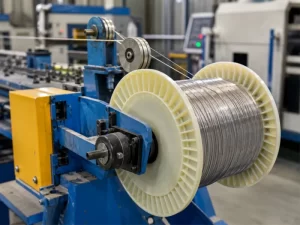
For the general metal thermal processing industry, Spark Heating’s standardized and tailor-made HRE alloy heating elements can fully replace outdated nichrome and ordinary FeCrAl heating parts inside various types of industrial heat treatment furnaces, including box-type resistance furnaces and trolley-type resistance furnaces widely applied in automotive spare part quenching, normalization, and tempering production. Spark Heating has a complete production line covering raw material cutting, wire drawing, coil winding, and finished parts molding. It is a reliable professional industrial heating elements manufacturer and full-service heating element supplier, serving global original equipment manufacturers and end-industry customers of furnace equipment in the fields of glass, semiconductor, metallurgy, and ceramic sintering. Our complete product portfolio covers bulk raw material, alloy inventory, and finished product prefabricated heating components to meet the procurement needs of diversified industrial heating projects.
Why Choose Spark Heating as Your Strategic Partner?
Choosing Spark Heating as your long-term strategic partner of hot parts not only means obtaining high-quality standardized and custom electric heating elements made of truly certified HRE alloy, but also means obtaining professional life-cycle total cost of ownership (TCO) optimization consultation for your unique operating conditions of the heat treatment furnace. Unlike many small traders who only sell finished electric heating wires without industrial application technology support, our internal thermal engineering team has accumulated over ten years of on-site furnace renovation experience in the glass, photovoltaic, and metal heat treatment industries. We can develop targeted HRE material upgrade plans to maximize your long-term cost savings.
As a reliable supplier of China-made electric heating wire, Spark Heating has a long-term and stable cooperative relationship with Beijing Shougang Gitane New Materials Corporation, the patent holder. Spark Heating provides flexible customized heating element development service to meet the special size, power, and installation requirements of non-standard customized industrial furnaces. Our complete supply chain management system enables fast order response and flexible delivery schedules for clients requiring mixed procurement covering standard tubular heating elements and auxiliary band heating elements alongside core HRE-based furnace heating coils, greatly simplifying global buyers’ one-stop component sourcing workflow.
FAQ
Q 1: Does HRE alloy comply with mainstream international environmental and safety certifications for export glass furnace projects?
A 1: All bulk HRE alloy raw materials and finished Spark Heating-made HRE alloy heating elements pass ISO management system certification, CE safety certification, and third-party SGS laboratory REACH, RoHS, and SVHC hazardous substance testing, fully satisfying EU, USA, and most global regions’ industrial product import compliance standards without additional environmental inspection risks for overseas glass furnace project shipments.
Q 2: Can spark heating produce HRE heating wires and heating tapes with non-standard customized sizes for specially designed continuous glass tempering furnaces?
A 2: Yes. According to customers’ detailed mechanical drawings, we provide comprehensive customization services for resistance ribbons, flat wires, and pre-wound heating coils; The size range available includes φ0.1-9.0mm round wire, 0.1-0.4mm thick thin flat wire, and 0.5-2.5mm thick heating plate, which can match almost all mainstream and non-customized heating frame designs in glass melting furnace.
Q 3: After replacing the traditional FeCrAl steel wire with HRE alloy in the continuous glass tempering production lines, how much will the service life generally be improved?
A 3: Under the same conditions of continuous operation of the glass furnace at 1250°C-1350°C, ordinary standard FeCrAl heating elements are used continuously for 5-7 months on average before forced replacement, while certified HRE alloy finished heating elements usually run stably for 9-11 months, which greatly reduces the frequency of replacing heating elements every year and related furnace shutdown time.
Q 4: Is HRE alloy applicable for intermittent batch-type glass annealing furnaces besides continuous tempering production lines?
A 4: Absolutely. Thanks to excellent thermal shock resistance and stable anti-oxidation properties, HRE alloy heating elements work equally well for intermittent hot bending, annealing and tempering batch glass furnaces with frequent cold-hot start-stop cycles, effectively reducing early heating component burnout risks from irregular temperature fluctuations.
Conclusion
Recurring unexpected furnace downtime and high recurring maintenance expenditure stemming from easily-failed conventional nichrome and ordinary FeCrAl heating components remain a major profit-draining burden for operators running continuous glass tempering lines worldwide. After extensive laboratory testing, authoritative third-party inspection and many years of field application verification, the high-quality patented HRE alloy heating element represents an economical, efficient and future-proof upgrading solution, which can prolong the service life of furnace components, stabilize the thermal uniformity of internal furnaces, reduce unnecessary maintenance downtime, and reduce the long-term energy and spare part replacement expenses of glass heat treatment plants and global heat treatment furnace manufacturers.
If your factory is troubled by frequent shutdowns in glass tempering furnace due to the rapid aging and deformation of conventional heating wires, and you plan to optimize the operation cost of the kiln and improve the yield of finished glass product, please contact the professional technical sales team of Spark Heating immediately to get free consultation on the selection of HRE alloy material, personalized renovation scheme of furnace heating components and batch pricing quotation of genuine high-performance HRE alloy heating components. Our technical experts will recommend the best wire diameter, strip size, and heating coil layout scheme according to your actual furnace operating temperature, production cycle, and internal atmospheric environment, so as to achieve the maximum operating benefits for your continuous glass tempering production line.