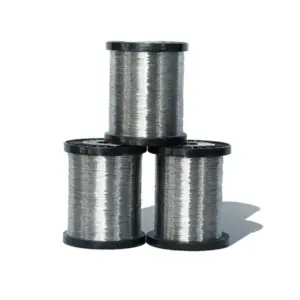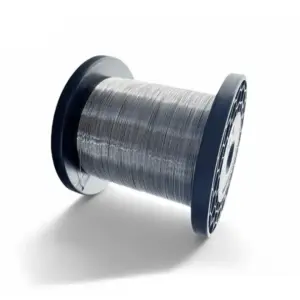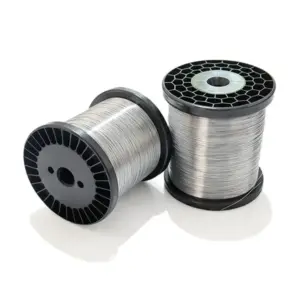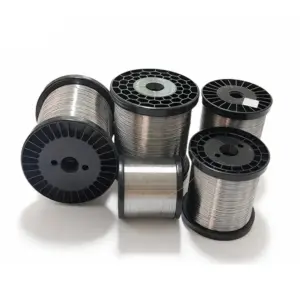
For glass tempering furnaces, choosing the right heating element is one of the most consequential purchasing decisions a plant can make. The elements must survive prolonged exposure to high temperatures, hold their shape under repeated thermal cycling, and — perhaps most importantly — avoid contaminating the glass surface they are meant to heat. Balancing these demands against cost is rarely straightforward, which is why so many furnace operators find themselves weighing two competing material families: low-nickel alloys and high-nickel alloys. Understanding the difference between the two is the first step toward a decision that protects both product quality and the bottom line.
Understanding Electric Heating Alloys
Before comparing low-nickel and high-nickel options, it helps to understand what a heating alloy wire actually does and why its composition matters so much.
How Resistance Heating Works
A resistance heating wire converts electrical energy into heat through the Joule effect. When current passes through a material with a known resistivity, the material resists the flow and releases that energy as heat. This principle is the foundation of nearly every industrial furnace, kiln, and tempering line in use today. The reliability of the process depends entirely on one thing: a material whose resistance and physical properties remain stable across thousands of hours of operation. For demanding, high-temperature production environments, this is where the quality of the industrial heating wire becomes the difference between a smooth-running line and constant downtime.
The Three Main Alloy Families
Heating alloys generally fall into three broad groups, each with a distinct cost-performance profile.
The first is nickel-chromium alloy. A nickel chromium alloy wire typically contains a high proportion of nickel, which gives it excellent high-temperature strength and superior oxidation resistance. It resists deformation well and lasts a long time in harsh conditions. The trade-off is cost — nickel is an expensive commodity, and its price can swing sharply with global markets, which directly inflates the cost of these elements.
The second is iron-chromium-aluminum alloy, commonly abbreviated as FeCrAl. It offers a high maximum service temperature and a low raw-material cost, which makes it attractive for budget-conscious operations. Its weaknesses, however, are equally well known: the oxide layer it forms tends to peel away during use, and its mechanical strength at high temperature is comparatively limited.
The third family — low-nickel alloys — occupies the space between the two. By carefully adjusting the proportions of chromium, aluminum, and a reduced amount of nickel, these materials aim to deliver much of the high-temperature performance of nickel-chromium alloys at a price point closer to FeCrAl. It is this balancing act that makes them worth a closer look for glass applications.
What Glass Furnaces Actually Demand from a Heating Element
Glass tempering is one of the most unforgiving applications for electric heating elements. Every high temperature heating wire installed in a furnace must withstand conditions that would quickly degrade an ordinary alloy, and the demands this places on materials explain why composition carries so much weight.
Extreme Thermal Cycles
A tempering furnace does not hold a single steady temperature. It rapidly heats flat or curved glass, then subjects it to rapid cooling during quenching — all repeated continuously across every shift. The heating elements are exposed to constant expansion and contraction, and any material that cannot maintain its dimensional stability under these cycles will gradually sag, deform, or fracture. Long-term shape retention is therefore not a luxury in this industry; it is a prerequisite for consistent production.
The Problem of Oxide Scale Contamination
There is one issue unique to glass that rarely matters in other industries: oxide scale. When a heating element oxidizes at high temperature, it forms a surface layer. In many conventional FeCrAl elements, this layer tends to flake off during medium- and low-temperature operation. Those loose particles can then fall onto the glass below, leaving visible defects on the finished surface. For a glassmaker, that is a direct hit to yield and reputation. A clean, stable heating environment — one where the element forms an oxide layer that stays firmly attached — is exactly what furnace operators are looking for.
Taken together, these demands point to a clear set of priorities: high-temperature strength, low creep, dimensional stability, resistance to scale peeling, and — because every plant watches its margins — controlled cost.
Low-Nickel vs. High-Nickel: A Cost-Effectiveness Comparison
Where Each Alloy Excels
High-nickel alloys are the benchmark for reliability. Their nickel content delivers outstanding oxidation resistance and high-temperature strength, and they hold up well over extended service life. The penalty is economic: because nickel is a high-cost, volatile commodity, high-nickel elements carry a substantial upfront price, and that cost is passed directly into the furnace’s operating budget.
Low-nickel alloys take a different route to a similar destination. By optimizing the composition — raising chromium, adding aluminum, and reducing the nickel content — engineers can reproduce much of the performance of a high-nickel alloy while keeping the material cost significantly lower. The result is a material that approaches high-nickel performance in oxidation resistance and strength, at a fraction of the raw-material expense.
The key dimensions, summarized:
| Dimension | High-Nickel Alloy | Low-Nickel Alloy |
| High-temperature strength | Excellent | Strong, approaching high-nickel |
| Oxidation resistance | Excellent | Good, with a stable oxide layer |
| Creep / dimensional stability | Good | Good |
| Raw material cost | High, nickel-driven | Low |
What “Cost-Effective” Really Means
A common misunderstanding is that cost-effectiveness means simply buying the cheapest option. In furnace engineering, the real question is different: which material delivers the required performance at the lowest cost per unit of useful life? A cheaper element that deforms, breaks, or contaminates the glass is ultimately the most expensive choice, because it costs money in downtime, rejects, and replacement labor.
For glass tempering in particular, the equation is especially favorable to low-nickel alloys. If a low-nickel element can form a stable, non-peeling oxide layer during medium- and low-temperature use, deliver adequate high-temperature strength, and resist creep over long runs, then it satisfies the industry’s core requirements at a materially lower cost than a high-nickel equivalent. In those conditions, the lower-nickel option frequently offers the stronger return on investment.
The practical takeaway is a selection approach rather than a single answer: define your furnace type, operating temperature range, and cleanliness requirements first, then judge each alloy against those specific conditions. Chasing the highest nickel content by default often means paying for capability you do not actually need.
A Low-Nickel Solution Built for Glass Tempering
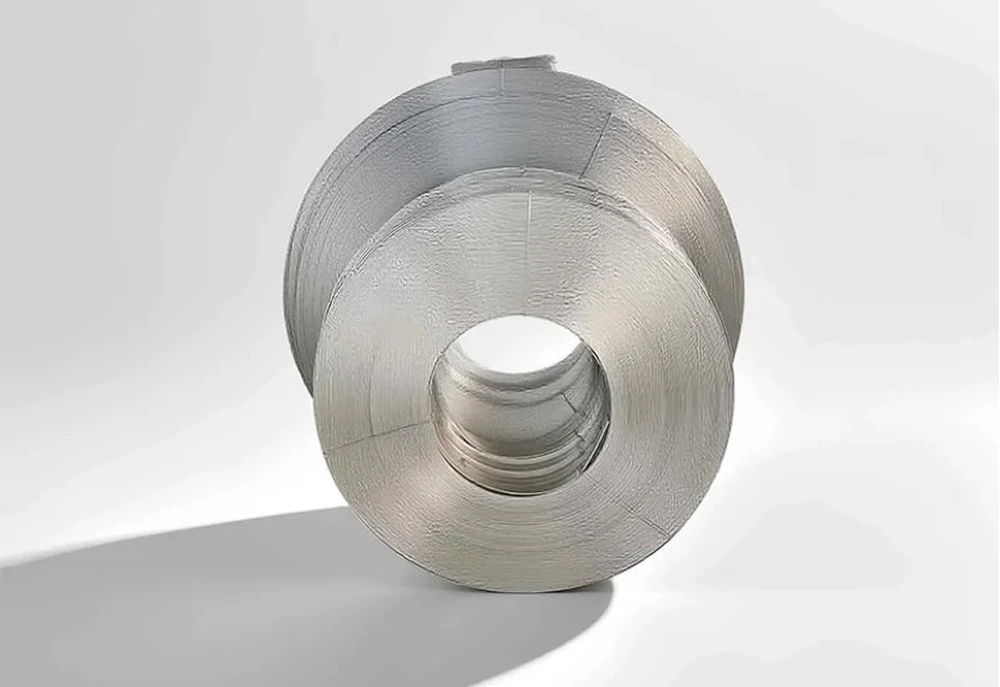
It is one thing to describe the theory of low-nickel alloys; it is another to see one engineered specifically for the glass industry. The SG140 High-Performance Electric Heating Alloy Wire for Glass Tempering Furnaces is a proprietary new alloy developed by Beijing Shougang Gitane New Materials Corporation to fill precisely the gap described above — the space between traditional FeCrAl and expensive high-nickel alloys.
Core Features
SG140 was designed around a single, well-known pain point in the glass industry: oxide scale peeling and the surface contamination it causes. By optimizing the composition of a low-nickel alloy, it addresses this problem directly.
Non-peeling black oxide scale. Unlike traditional FeCrAl, SG140 forms a stable black oxide scale that does not peel off during medium- and low-temperature use, helping to keep the heating environment clean and protecting glass surface quality.
Superior high-temperature strength. The alloy exhibits excellent mechanical strength at elevated temperatures, which significantly reduces the risk of heating elements sagging or breaking during operation.
Low creep and minimal deformation. Designed for high dimensional stability, SG140 keeps heating elements holding their intended shape over long-term service.
Enhanced cost-effectiveness. It delivers performance comparable to high-nickel alloys at a significantly lower cost, giving glass manufacturers a higher return on investment.
High heating efficiency. Stable resistivity supports uniform heat distribution and lower energy consumption across the tempering process.
Technical Parameters
The alloy’s composition and measured properties are summarized below.
| Element | C | Si | Mn | Cr | Ni | Al | Fe |
| SG140 | <0.06 | 1–3 | <0.7 | 18–23 | 33–35 | Add | Balance |
Oxidation weight gain rate at 900 °C: 0.129 g/m²·h.
Resistivity at 20 °C: 1.09 μΩ·m.
Resistance temperature correction coefficient (Ct):
| Temperature | 800 °C | 900 °C | 1000 °C | 1100 °C |
| Ct | 1.256 | 1.261 | 1.266 | 1.269 |
Applications and Support
SG140 is specifically optimized for thermal processing in the glass industry, including glass tempering furnaces for flat and curved glass, glass quenching systems, clean-environment heating where oxide contamination must be avoided, and high-stability heat treatment requiring low-creep elements.
For manufacturers making the transition, the company helps move from FeCrAl or high-nickel alloys to SG140 based on individual furnace design, custom coil winding of pre-wound spiral elements using SPARK-brand CNC technology, and pre-production samples for testing with final inspection on every batch. Production is carried out under an ISO9001 quality management system. Material is available in wire, strip, and spiral form, packaged in wooden cases with iron-plate reinforcement for long-distance export, with flexible payment and delivery terms.
Conclusion
For glass furnaces, heating alloy selection involves more than comparing nickel content or purchase prices. Manufacturers need to consider how well the material performs under high temperatures, whether it can maintain its shape during long-term operation, and whether its oxide scale could affect glass quality. These factors, along with the initial material cost and service life, determine the overall value of a heating alloy. On that measure, low-nickel alloys frequently come out ahead of their high-nickel counterparts, delivering near-equivalent performance without the nickel premium.
The SG140 electric heating alloy wire embodies this principle. It offers the high-temperature performance glass manufacturers need, while directly resolving the oxide-scale contamination that plagues conventional FeCrAl elements — all at a cost structure that makes sense for modern tempered-glass production. For furnace operators weighing their next heating element purchase, it is a comparison worth making before committing to a high-nickel alternative. Contact the Beijing Shougang Gitane team to learn more about SG140 heating alloy wire, discuss your furnace requirements, and explore a suitable heating element solution for your glass tempering line.
Frequently Asked Questions
1. What is the difference between low-nickel and high-nickel heating alloys?
High-nickel alloys offer excellent oxidation resistance and high-temperature strength but cost more due to their nickel content. Low-nickel alloys balance performance and material cost through optimized alloy composition.
2. Why is oxide scale resistance important in glass tempering furnaces?
Oxide scale can peel off heating elements and settle on glass surfaces, causing visible defects. A stable, non-peeling oxide layer helps maintain a clean heating environment and protect glass quality.
3. What makes SG140 suitable for glass tempering furnaces?
SG140 offers a stable black oxide scale, good high-temperature strength, low creep, and dimensional stability. It also provides performance comparable to high-nickel alloys at a significantly lower cost.