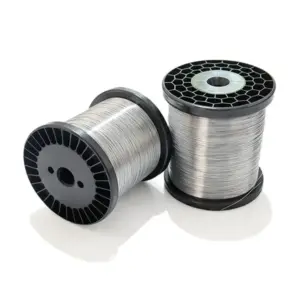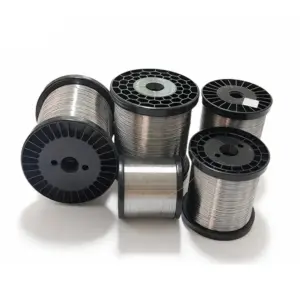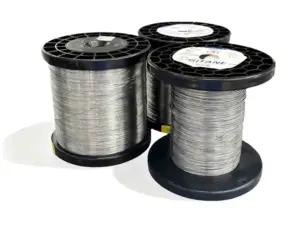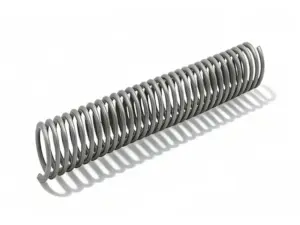
Select FeCrAl wire diameter by checking the named material, electrical target, required conductor length and installed conditions together. A thicker wire changes the calculation; it does not independently guarantee a cooler or longer-lasting element.
The first question is what stays fixed. If the length stays unchanged, a larger section lowers ideal resistance. If the target resistance stays unchanged, the larger section needs a different length.
This guide follows those two comparisons and connects them to geometric surface area. It uses a clearly labelled reference example, then shows which conditions still need review. The arithmetic helps define a specification rather than approve a finished heater.
Key Takeaways
- Wire diameter and coil diameter describe different dimensions.
- State the grade and reference temperature before using a resistivity value.
- Doubling round-wire diameter increases area fourfold, not twofold.
- At fixed resistance and material, a larger diameter also changes conductor length.
- A surface-area calculation does not establish an acceptable operating surface load.
What Does FeCrAl Wire Diameter Specify?
Separate Wire Diameter From Coil Diameter
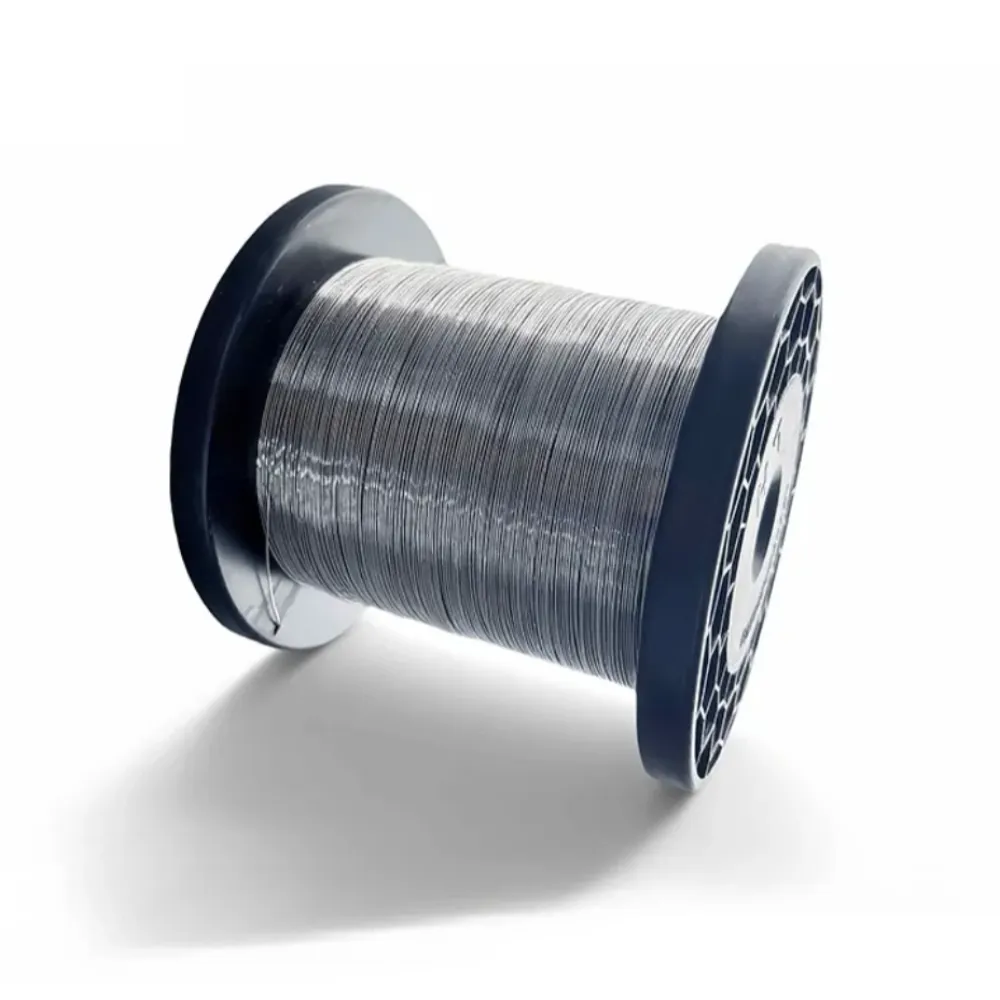
Wire diameter describes the conductor’s section. Coil diameter describes the formed element. Use different symbols, such as lower-case d for wire and upper-case D for coil, and define how each dimension is measured on the drawing.
A FeCrAl wire diameter enquiry should not contain only the finished coil’s outside size. The conductor section and active length are separate inputs. Without them, the reviewer cannot reproduce the electrical comparison.
A drawing should also distinguish round wire from ribbon or another form. A flat conductor needs width, thickness and an appropriate section definition. Calling every form “wire” does not remove those differences.
Identify the Material and Supplied Condition
FeCrAl is an iron-chromium-aluminum alloy family containing different named materials. Use the data for the grade being considered. A family label alone does not define resistivity, a dimensional tolerance or a complete supply specification.
The SPARK FeCrAl alloy range provides a starting point for identifying material options. Confirm the offered grade and form for the actual requirement. Do not assume that a general category description guarantees every possible diameter.
Illustrative Scenario: One Diameter Is Missing
A buyer sends a hypothetical coil drawing with an outside diameter and overall length. The wire section is not identified. The reviewer asks for the conductor diameter and the electrical requirement before comparing material offers.
The enquiry now separates the finished shape from the raw conductor. It does not establish which size is suitable. This example shows why a FeCrAl wire diameter request needs a defined drawing and scope.
If you are reviewing FeCrAl wire diameter, send SPARK the grade request, section and electrical target. Include the drawing revision and relevant service conditions so the offered material can be confirmed.
Use Units Instead of an Unexplained Gauge Label
If a gauge designation appears on a drawing, state the gauge system and the required dimensional basis. Do not mix different gauge systems or assume that the gauge identifies the alloy. An explicit diameter in millimetres makes the calculation inputs clear.
For FeCrAl wire diameter comparisons, keep the unit beside the value in every table. Record the required tolerance separately. Extra decimal places are not a substitute for an agreed acceptance range.
Calculate the Effect of FeCrAl Wire Diameter
Start With Cross-Sectional Area
For an ideal round conductor, cross-sectional area is A = πd²/4. Use d in millimetres to obtain A in mm². The diameter is squared, so changing it affects more than one dimension in the electrical model.
The uniform-conductor resistance model is R = ρL/A. With resistivity ρ in Ω mm²/m, length L in metres and area A in mm², resistance R is in ohms. Use inputs for the same material and reference condition.
A FeCrAl wire diameter calculation should identify its reference temperature. Do not mix a cold resistance target with an operating material correction that has not been defined. Keep the source and purpose of each value in the worksheet.
Comparison One: Hold Length Constant
If material, temperature and conductor length stay fixed, doubling round-wire diameter increases cross-sectional area by a factor of four. Ideal resistance therefore becomes one quarter of its original value. It does not become one half.
This is a geometric comparison, not a replacement recommendation. A different resistance changes the electrical behavior of the load. The supply and operating conditions must be reviewed before a conductor is changed.
Comparison Two: Hold Resistance Constant
If material and reference resistance stay fixed, a larger section requires a longer conductor. Rearrange the model as L = RA/ρ. Doubling diameter then requires four times the length in this ideal comparison.
For FeCrAl wire diameter selection, these two cases must not be mixed. A statement about equal lengths does not describe equal-resistance elements. Write the fixed variables above the table before comparing the results.
Illustrative Scenario: Two Trial Sections
Consider two hypothetical round conductors with the same target resistance of 10 Ω at 20°C. Use the central resistivity of 1.45 Ω mm²/m published for the named SPARK 0Cr21Al6Nb product. Its listed range is 1.45 ± 0.07 Ω mm²/m at 20°C, checked November 3, 2026.
| Teaching Input or Result | Trial A | Trial B |
|---|---|---|
| Hypothetical diameter | 1.0 mm | 2.0 mm |
| Ideal cross-sectional area | 0.7854 mm² | 3.1416 mm² |
| Reference resistance target | 10 Ω | 10 Ω |
| Central reference resistivity | 1.45 Ω mm²/m | 1.45 Ω mm²/m |
| Calculated conductor length | About 5.4165 m | About 21.6662 m |
These are calculated reference geometries. They are not qualified SPARK stock items, accepted heater designs or measured test results. The example holds nominal geometry and central resistivity fixed within each calculation; actual tolerances need separate treatment.
This FeCrAl wire diameter example explains why selecting a section cannot be separated from length. It does not select an operating voltage, temperature or allowable load. Those inputs remain part of the application review.
Connect Diameter With Surface Load
Distinguish Cross-Sectional and Lateral Area
Cross-sectional area is used in the resistance model. Lateral surface area describes the side surface along the conductor. They are different quantities even though both use the word “area.”
For an ideal round conductor, lateral area is Sw = πdL when d and L use the same length unit. If d is in mm and L is in m, Sw = 10πdL gives area in cm². State which convention is being used before calculating.
For the two trial sections above, the ideal lateral areas are about 170.2 cm² and 1361.3 cm². The second is eight times the first because diameter doubled and required length increased fourfold. This is a geometric result under the stated fixed-resistance assumptions.
Define the Power and Area Basis
Surface load is commonly expressed as power divided by a defined surface area. Kanthal’s design calculations for heating elements connects electrical inputs, surface load and element geometry. It also distinguishes element types and their conditions.
Use that concept carefully in a FeCrAl wire diameter review. Identify whether the area belongs to the energized wire, a tube or another element surface. Compare loads only when they use the same area basis.
At equal assigned power, the larger geometric area in the teaching example would produce a lower value of P/Sw. That statement does not establish the actual operating temperature. It also does not show that either trial is acceptable for a particular installation.
Do Not Invent a Universal Load Limit
An acceptable working load needs an appropriate application basis. Element type, surrounding conditions and heat transfer must be considered. A material family name does not supply a universal W/cm² limit.
A FeCrAl wire diameter calculation can therefore produce a trial geometry while leaving the allowable load unresolved. Record that open item clearly. Do not fill it with a number from an unrelated heater or a different manufacturer’s example.
Check Operating Resistance Separately
The example starts from a stated 20°C resistance target. An operating electrical calculation may need a defined grade-specific correction. Do not silently treat cold resistance as the operating value or borrow a temperature factor from another material.
For FeCrAl wire diameter selection, keep the cold geometry comparison separate from the operating-load check. The first helps explain what changes with section. The second needs the relevant electrical and thermal conditions.
Check the Installed Element Conditions
Heat Transfer Is Part of the Task
Nominal power and surface area alone do not determine wire temperature. The surrounding temperature, heat dissipation and nearby elements matter. Supports and the way the element is mounted also belong in the review.
For FeCrAl wire diameter selection, provide the relevant layout rather than only a material size. A geometric area calculation does not account for every contact or shielding effect. It is one input to the design record.
The FeCrAl temperature guide explains the difference between process setpoints, element temperature and material limits. Do not infer the working temperature from the diameter alone.
A Coil Needs More Than a Wire Section
Coil diameter, pitch, active length, supports and connections describe the formed element. A different conductor section may change the layout needed to meet the electrical target. Keep the drawing and calculation together.
The furnace heating coil selection guide addresses that broader layout task. This article focuses on FeCrAl wire diameter and its coupled electrical geometry. It does not provide a universal coil-to-wire ratio or forming instruction.
Keep Special Element Types Outside the Simple Model
The ideal round-wire example does not describe every manufacturing process. Forming, embedding or other assembly steps may require a different calculation basis. Kanthal’s design guidance treats metal-sheathed tubular elements separately for this reason.
For FeCrAl wire diameter changes in an existing assembly, identify the element type before reusing a calculation. Do not apply an open-wire teaching result as a universal rule. Ask which model and conditions apply to the actual design.
Prepare a Diameter and Electrical Specification
Record the Requirement Clearly
A useful FeCrAl wire diameter enquiry links the named material to the section, length and electrical target. State units and drawing revision consistently. List reference properties and agreed acceptance limits separately.
| Requirement Field | Information to Record |
|---|---|
| Material | Requested grade and applicable source revision |
| Wire section | Diameter, units and required tolerance |
| Electrical basis | Reference temperature, resistance target and conductor boundaries |
| Length | Active or supplied length and its relationship to the target |
| Layout | Coil dimensions, supports and connection details where applicable |
| Service | Element type, atmosphere and temperature basis |
| Acceptance | Required test conditions, records and agreed limits |
| Open questions | Missing information and the party responsible for confirming it |
For a FeCrAl wire diameter requirement, contact SPARK with the drawing and completed inputs. Ask which material, condition and documents are offered. This guide does not establish stock, a minimum order or a delivery commitment.
Illustrative Scenario: A Proposed Thicker Replacement
An engineer reviews a hypothetical replacement with a larger conductor diameter. The proposal retains the old length but does not include a revised electrical calculation. The engineer asks for that comparison before reviewing the installed layout.
The review does not declare the new section unsuitable. It identifies a missing design step. Matching an available space or selecting a thicker wire does not establish an equivalent electrical element.
Keep Trial Geometry and Approved Requirements Separate
A FeCrAl wire diameter worksheet can contain several trial sections. Label them as candidates until the electrical, thermal and mechanical requirements have been reviewed. Do not let a teaching example become an approved drawing by omission.
Save the material reference, calculations and unresolved questions with each revision. If the offered grade or section changes, review the affected inputs. This makes the next discussion easier to follow without pretending that the calculation answers every service question.
Review the Worksheet Before Sending It
Read the FeCrAl wire diameter worksheet from left to right. Can another person find the material source, units and fixed target without asking you? If not, add those labels before requesting a quotation. A clear input record makes the comparison easier to reproduce.
Next, check whether the listed length includes terminals or only the active conductor. Use the same boundaries in the resistance model and drawing. A FeCrAl wire diameter entry cannot resolve an unclear length definition. Mark that question for the design reviewer.
Finally, give each trial a revision number. Record why the FeCrAl wire diameter changed and which calculations were repeated. Keep any unresolved thermal or supply questions beside that trial, so they remain visible during the next review.
Confirm the Supply Specification
A catalogue size is a reference to an available product programme, not a universal design choice. For example, the Kanthal wire overview describes its own forms, sizes and resistance tolerances. Those details do not establish SPARK’s offered dimensions or acceptance limits.
For FeCrAl wire diameter enquiries, ask for confirmation of the actual section, condition and electrical requirement. The FeCrAl heating wire selection guide connects those material questions to the wider selection process. Keep the confirmed supply response with the drawing.
Questions About FeCrAl Wire Diameter
Does Thicker Wire Always Run Cooler?
No temperature conclusion follows from diameter alone. State what remains fixed and assess the electrical input and heat-transfer conditions. A larger section may require a different length to meet the same resistance target.
Is Wire Gauge the Same as Alloy Grade?
No. A gauge identifies a size within a defined system, while the alloy grade identifies the material. State both clearly and include the dimensional basis needed for the calculation.
Can I Keep the Old Length After Changing Diameter?
Check the electrical requirement first. At fixed material and temperature, changing area changes resistance for the same length. Do not assume that a physically fitting replacement has the same operating behavior.
Can I Use a Catalogue Current-Temperature Table?
Only assess it within the conditions stated by its source. A table for a particular material, geometry and environment is not a universal conductor rating. Confirm whether those conditions match the application.
Does Equal Cold Resistance Mean Equal Service Life?
No. Equal reference resistance does not establish equivalent material behavior, heat transfer or mechanical conditions. Service-life claims need their own evidence and a defined comparison.
A useful FeCrAl wire diameter decision connects section, resistance and length before reviewing surface load and the installed element. Keep the assumptions visible and confirm the actual material and supply conditions. Then send SPARK your specification and remaining questions to review the available options.