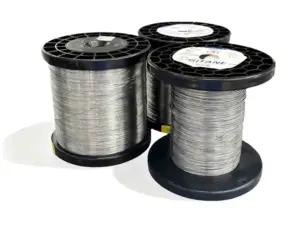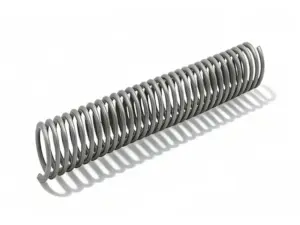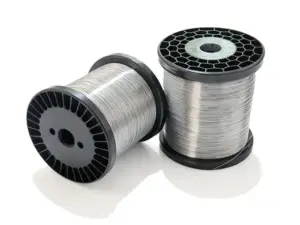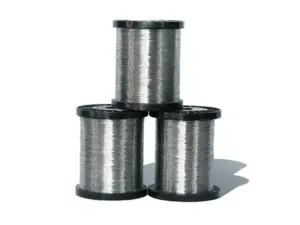
FeCrAl wire grades identify named materials within the iron-chromium-aluminum resistance-alloy family. To compare them, use the applicable composition reference, property conditions, product form and supply specification rather than treating similar names or numbers as proof of equivalence.
Two offers can look alike while describing different requirements. One may quote a reference resistivity, while another states an electrical acceptance range for a supplied wire. A clear comparison explains what each document actually confirms.
This guide shows how to read designations, compare grade data and prepare a traceable material enquiry. It focuses on material identity and specification records. Detailed element design and temperature selection remain separate tasks.
Key Takeaways
- A family name, a grade designation and a brand belong in separate fields.
- Keep every property attached to its source, unit and reference conditions.
- Similar central resistivity values do not qualify one material as a substitute for another.
- Product form, supplied condition and acceptance criteria must be stated separately.
- Mark missing evidence clearly instead of borrowing a value from a similar grade.
What Do FeCrAl Wire Grades Identify?
Start With the Material Family
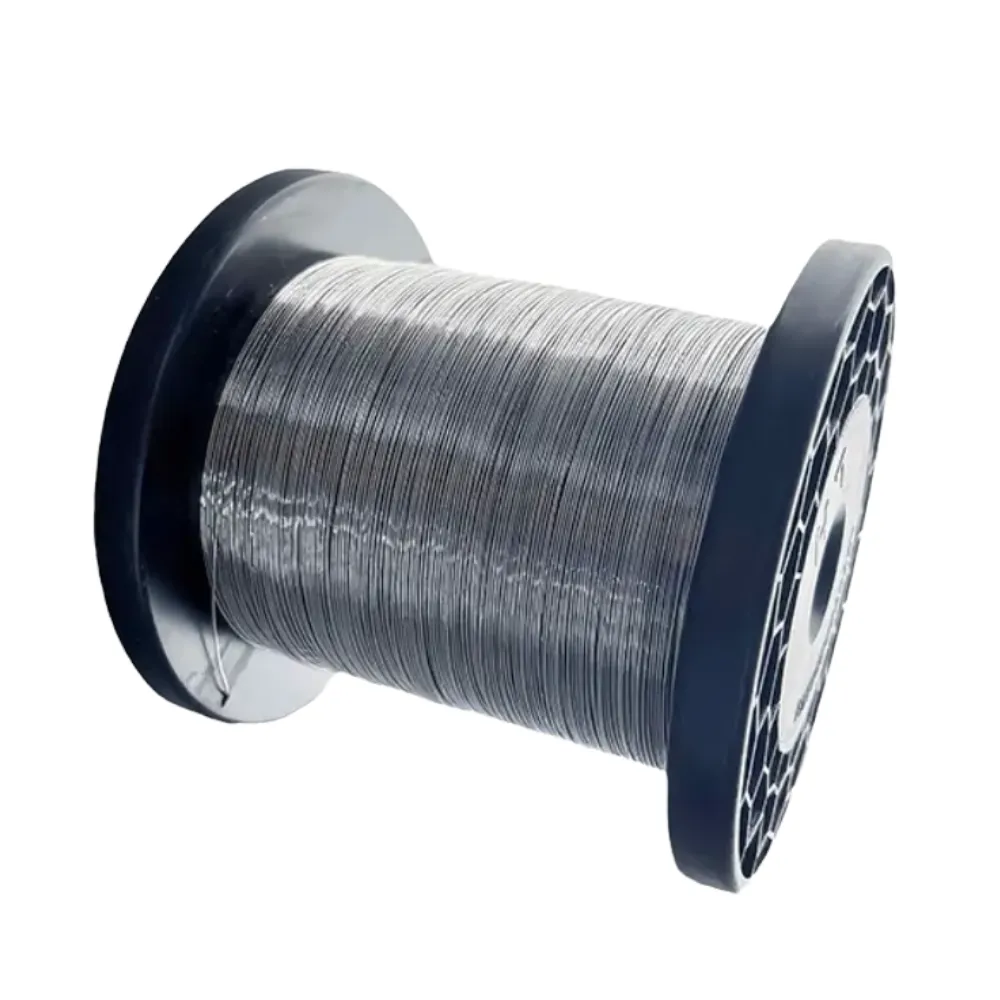
FeCrAl refers to iron-chromium-aluminum resistance alloys. The family contains different named materials. A family description therefore provides context, but it does not identify every property of the wire being offered.
For FeCrAl wire grades, record the exact designation shown on the supplier’s data sheet. Keep spelling and suffixes consistent across the enquiry, drawing and offer. Ask about any change in the designation rather than silently treating it as an alternative name.
The SPARK FeCrAl alloy range is a starting point for reviewing available material descriptions. The actual offer still needs to identify the grade and supply scope. A category page is not an acceptance specification for every listed material.
Separate Generic Designations and Brand Names
A designation such as 0Cr21Al6Nb and a branded name such as Kanthal A-1 are not the same kind of identification field. Each should lead to its own source data. A cross-reference in a supplier catalogue may be useful for discussion, but it does not complete a substitution review.
When comparing FeCrAl wire grades, ask which document defines the offered material. If a specification or standard is cited, record its identifier and revision. Do not assume that a similar-looking label confirms compliance with that document.
Illustrative Scenario: A Family Name on an Enquiry
A buyer requests hypothetical “FeCrAl resistance wire” without naming a grade. The supplier asks for the material designation and the electrical requirement. The buyer adds the drawing revision and identifies which details still need confirmation.
The revised enquiry gives both parties a clearer starting point. It does not establish which grade is suitable or which documents will be supplied. Those questions remain part of the actual offer.
If you are comparing FeCrAl wire grades, send SPARK your grade request, drawing and required records. Include the product form and relevant service conditions so the offered specification can be confirmed.
Do Not Read More Into a Label Than the Source Provides
Grade names can contain useful material information, but a name is not a complete composition certificate. Use the applicable source document to understand the stated chemistry. Do not apply a single decoding rule to every naming system.
For FeCrAl wire grades, this is especially important when sources use different commercial or regional terminology. Keep the original designation in the comparison table. Ask the supplier to explain a claimed cross-reference in writing.
Compare FeCrAl Wire Grades With Traceable Data
Build the Table Before Ranking the Materials
A useful FeCrAl wire grades comparison starts with the fields needed for the decision. Put each offered material in its own column and use the same property labels. Check missing conditions before ranking the values.
| Comparison Field | What to Record |
|---|---|
| Material identity | Exact designation, manufacturer and source revision |
| Composition | Applicable reference and whether values are nominal or specified ranges |
| Electrical property | Resistivity or resistance, with units and reference temperature |
| Thermal reference | Named rating and the conditions stated by the source |
| Product form | Round wire, ribbon or another section, with dimensions |
| Supplied condition | The condition actually offered, rather than an assumed catalogue option |
| Acceptance | Required limits, test basis and supporting documents |
| Open questions | Missing information and the party responsible for confirming it |
Use this structure for FeCrAl wire grades instead of a universal “equivalent materials” table. It helps the reader compare what is documented. It does not approve a material on the reader’s behalf.
A Named SPARK Example: 0Cr21Al6Nb
The SPARK 0Cr21Al6Nb product page publishes the following selected values. They describe that named product source, checked October 30, 2026. They are not batch-specific test results verified by this article.
| Published Property | Listed Value | Reading Note |
|---|---|---|
| Nominal chromium | 21% | Nominal composition entry |
| Nominal aluminum | 6% | Nominal composition entry |
| Resistivity at 20°C | 1.45 ± 0.07 Ω mm²/m | Material property at a stated reference temperature |
| Maximum continuous operating temperature | 1350°C | Named product rating requiring application confirmation |
| Density | 7.1 g/cm³ | Material mass property, not packed shipping weight |
These values provide a concrete example of how to organize FeCrAl wire grades. Keep the product identity beside the numbers. Confirm the applicable material data and acceptance requirements for the actual order.
The nominal chromium and aluminum entries do not replace a complete composition requirement. Nor does a published central resistivity establish the resistance of every supplied length. The drawing and purchasing specification need their own clear measurement basis.
Keep Branded References Separate
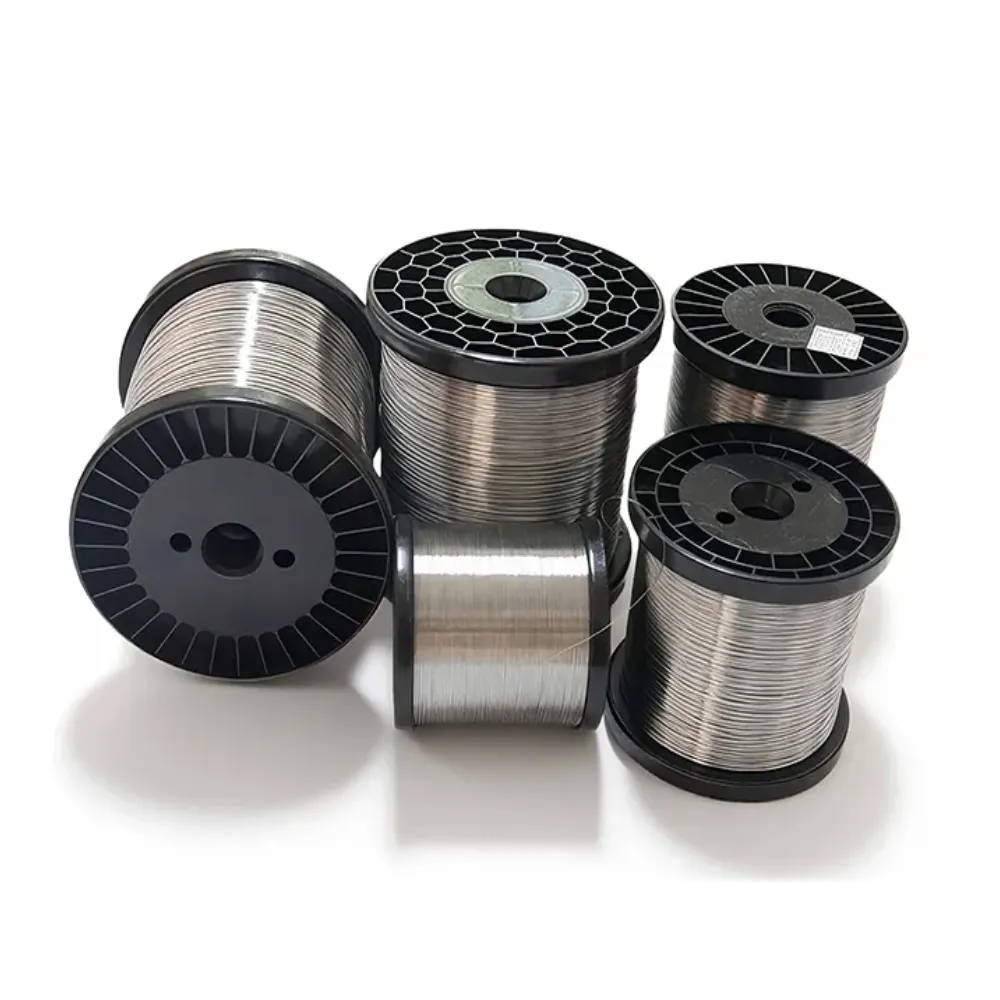
Kanthal’s resistance heating wire overview lists a reference resistivity of 1.45 Ω mm²/m at 20°C for Kanthal A-1 wire and 1.35 Ω mm²/m for Kanthal D wire. Those values belong to the named manufacturer grades.
A central value matching another product’s reference number does not establish equivalent chemistry, processing or mechanical behavior. For FeCrAl wire grades, compare the full requirement rather than selecting one matching column. Keep brand-specific size ranges and tolerances attached to their own source as well.
Treat Other Supplier Tables as Source-Specific Records
Supplier overviews can help identify designations worth investigating. For example, the Ipace FeCrAl grade overview groups several named materials in a property table. Such a table is a source to examine, not a universal standard for every supplier’s wire.
When two sources differ, record the difference and ask what conditions each value describes. Do not average the figures to create a new specification. A disagreement is a question to resolve, not a reason to hide the source.
Read Electrical and Mechanical Properties Correctly
Resistivity Is Not the Resistance of a Spool
Resistivity is a material property at stated conditions. Resistance also depends on conductor length and cross-sectional area. For a uniform conductor, the basic model is R = ρL/A.
When resistivity is in Ω mm²/m, use length in metres and area in mm² to obtain resistance in ohms. State the reference temperature and the conductor boundaries used. A wire’s nominal diameter alone does not define its total resistance.
For FeCrAl wire grades, this distinction prevents a material number from being mistaken for a finished electrical requirement. If resistance per metre or total resistance is critical, specify it clearly. Ask how it will be checked and what length the test covers.
Keep Reference Temperature With the Value
A data table may provide room-temperature properties and separate operating-temperature corrections. Keep those entries distinct. Do not use a correction factor from one grade for another without an applicable basis.
For FeCrAl wire grades, the same care applies when comparing values from different sources. Match the units and reference conditions before drawing a conclusion. A missing condition should remain an open item in the record.
Strength and Creep Answer Different Questions
A tensile-strength value needs its test temperature and material condition. A creep comparison also needs information about deformation over time under load. A single strength number cannot answer every high-temperature mechanical question.
When comparing FeCrAl wire grades, preserve the source’s original property label. Ask for test conditions relevant to the actual requirement. Do not relabel room-temperature strength as proof of hot support performance.
Can One FeCrAl Grade Replace Another?
Matching a Number Does Not Qualify a Substitute
A material substitution changes more than the text on a purchase order. Review the properties and conditions that matter to the requirement. A comparable reference number may support that review without completing it.
For FeCrAl wire grades, ask whether the offered material meets the required composition, electrical and dimensional criteria. Identify any different supplied condition or product form. Keep deviations visible beside the offer.
A temperature rating also needs its source conditions. The FeCrAl temperature guide explains why material limits, element temperature and test results are different quantities. Do not use a family maximum as a replacement approval.
Illustrative Scenario: Similar Central Values
A buyer compares two hypothetical offers with the same central resistivity value. One includes a stated range and reference temperature; the other does not explain its conditions. The buyer requests the missing information before judging the electrical comparison.
Even after that gap is closed, other requirements may remain. The example does not establish that either offer is better or equivalent. It shows why a matching number is only one piece of evidence.
Ask Who Approves the Change
The material supplier can confirm what is being offered. The equipment designer or responsible reviewer determines whether the change meets the assembly requirement. Keep those responsibilities clear in the record.
For FeCrAl wire grades, a catalogue cross-reference is not the same as that approval. Ask what evidence supports the claimed relationship and which differences remain. Do not turn a commercial suggestion into an undocumented engineering conclusion.
Keep Full Element Design in Its Own Record
This guide focuses on grade identity and specification reading. Detailed power, geometry and support design need the broader application context. The FeCrAl heating wire selection guide provides that next step.
A clear boundary helps the material comparison stay useful. It also prevents a brief grade table from being read as a complete design method. Record the application review separately when it is required.
Build a FeCrAl Material Specification
State What Must Be Supplied
A useful FeCrAl wire grades enquiry links the exact material request to a measurable product requirement. State the form, section, supplied condition and quantity. Keep the drawing revision and units consistent throughout the documents.
For FeCrAl wire grades, specify the electrical acceptance basis where it matters. A general material resistivity and a required resistance per length are different fields. Do not assume that the supplier will infer the intended limit from a drawing’s decimal places.
| Specification Item | Information Needed |
|---|---|
| Grade | Exact requested designation and applicable document |
| Form and section | Diameter or width × thickness, units and required tolerances |
| Electrical requirement | Resistance basis, reference temperature and acceptance range |
| Condition | Requested supply or surface condition |
| Quantity | Required length or net material mass and packaging needs |
| Documentation | Records required for material identification and acceptance |
| Service context | Application conditions relevant to material review |
| Commercial scope | Destination and requested timing, subject to confirmation |
For a FeCrAl wire grades enquiry, contact SPARK with the completed requirement. Ask which material, documents and supply conditions can be offered. This article does not establish stock, a minimum order or a quotation deadline.
Distinguish Reference Data From Order Records
A data sheet can describe a material’s published properties. A supplied inspection or material record may address the product delivered for an order. Ask what each document actually confirms rather than assuming every document proves every requirement.
For FeCrAl wire grades, request the records needed by the purchasing and acceptance process. Identify the required test basis where applicable. A public webpage is not a reviewed certificate.
Illustrative Scenario: An Open Documentation Item
A buyer receives a hypothetical material offer but the requested acceptance document is not listed. The buyer marks that item as pending and asks for clarification. The offer is not treated as complete until the documentation scope is clear.
The example does not imply a defect in the material or a failure by a supplier. It shows how to prevent an assumption from becoming part of the order. No customer outcome or financial saving is claimed.
Keep Changes Traceable
If the offered grade, section or condition changes, identify the affected requirement. Ask for a revised response and keep it with the drawing revision. Use that record for a repeat order. Do not rely on a remembered trade name.
For FeCrAl wire grades, traceability is a practical comparison method. It gives the next reviewer a clear source for each value and decision. It does not remove the need for application-specific approval.
Questions About FeCrAl Wire Grades
Does a Grade Name Define Exact Composition?
Use the applicable material document to determine the stated composition requirements. A label alone should not be treated as a complete certificate. Keep nominal values and specified ranges clearly distinguished.
Is 0Cr25Al5 Automatically Equivalent to a Branded Material?
No automatic equivalence is established by a cross-reference label. Ask for the relevant property comparison, source conditions and approval basis. The offered material must still meet the requirement.
Why Do Suppliers Publish Different Values?
Check the named material, property definition, units and reference conditions first. Then ask the sources to clarify any remaining difference. Do not create a new acceptance value by averaging the tables.
Does More Aluminum Mean Longer Element Life?
A composition entry alone does not establish installed life. The material, process and service conditions need an appropriate evidence basis. Avoid ranking FeCrAl wire grades by one element percentage without that context.
Does a Grade Define Every Available Size?
No size range should be assumed from the designation alone. Confirm the form, section, tolerance and supplied condition for the actual offer. A manufacturer’s catalogue range is not automatically another supplier’s capability.
What Is the Best Starting Point for an Enquiry?
Send the exact grade request, drawing, electrical requirement, supplied condition and required documents. Mark unknowns clearly. A complete starting record makes the technical discussion easier to review.
Comparing FeCrAl wire grades means keeping names, data and acceptance requirements connected. Use the applicable source for each value, resolve missing conditions and record any proposed changes. Then send SPARK your specification and remaining questions to confirm the available material and supply options.