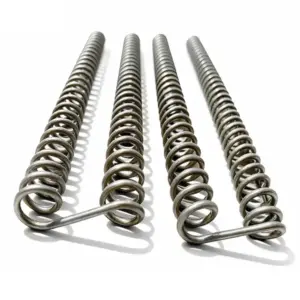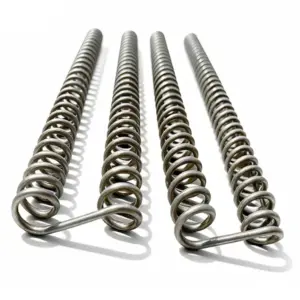
A tubular heating element contains resistance wire electrically insulated from a metal sheath by compacted magnesium oxide (MgO). Choosing a higher-temperature wire alloy alone does not raise the finished heater’s temperature rating.
That distinction matters when two heaters look alike and carry the same wattage. One may suit a moving air stream; another may need continuous immersion in a specified liquid. The sheath, heated length, end seals, and heat transfer all affect the choice.
For engineers and buyers, the useful starting point is the duty the heater must perform. Identify what needs heating, how heat leaves the surface, and which conditions the assembly must withstand. Then compare electrical and mechanical details against a drawing and an approved specification, or spec.
This guide explains construction, common forms, surface-load calculations, and replacement checks. The goal is a clear request that a heater maker can assess. It uses published guidance and labeled worked examples. You still need design approval for your heater and its use.
Key Takeaways
- A tubular heating element combines resistance wire, MgO electrical insulation, and a protective metal sheath; each has a different job.
- Calculate plain-sheath watt density from active heated length. Overall length and the envelope of a bent heater can give misleading results.
- Match the sheath to the medium and surface temperature; an alloy’s wire rating is not a finished-heater rating.
- Matching watts and shape does not establish replacement compatibility. Check voltage, terminals, seals, mounting, and protection as well.
How a Tubular Heating Element Works
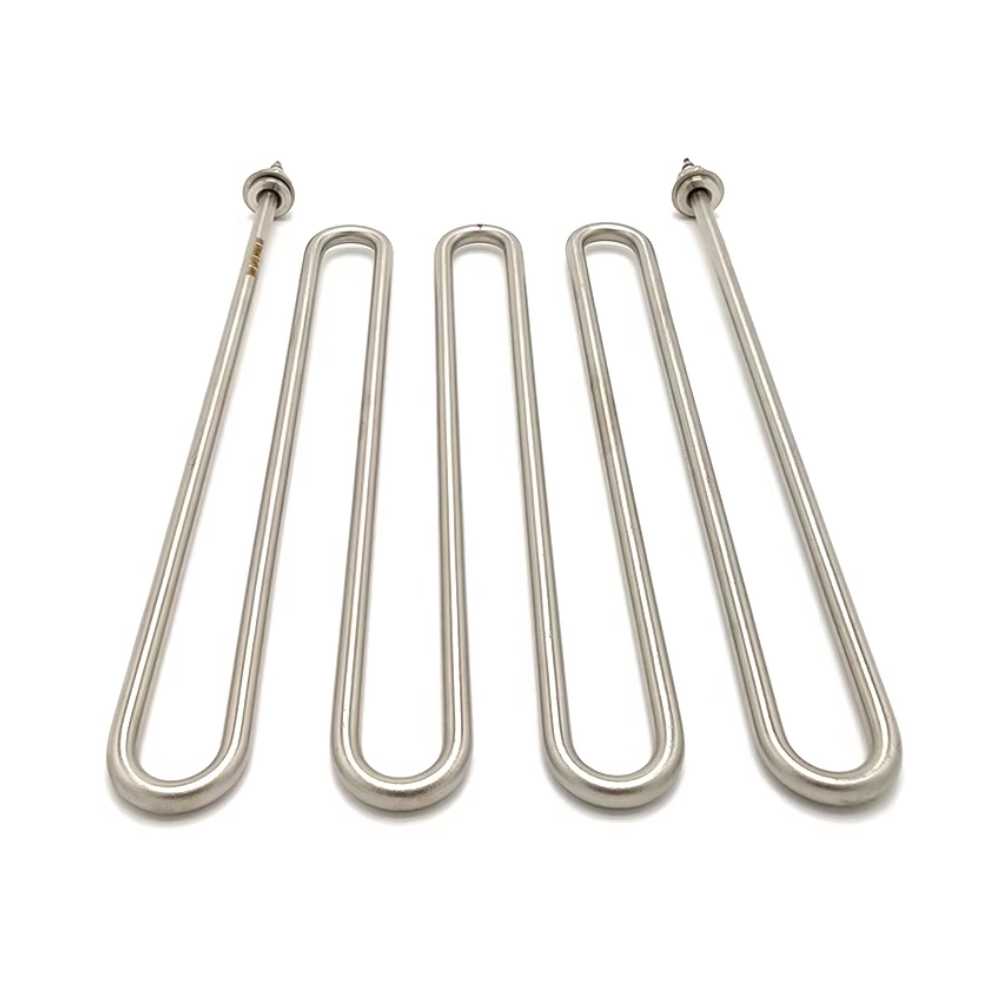
Current flowing through the resistance wire produces heat. That heat passes through the compacted MgO to the sheath, then into the liquid, air, or solid being heated. The MgO provides electrical insulation while allowing heat to move outward.
In a conventional tubular heating element, the wire stays separated from the sheath. The metal tube provides a physical barrier between the conductor and the process medium. End seals and terminal arrangements complete the assembly, with their own limits for heat and moisture.
Cold ends are portions designed without active resistance heating near the connections. They still receive some conducted heat, so their length and the temperature around the terminals matter. A cold end is not a promise that a terminal remains at room temperature.
For element manufacturing, compare NiCr resistance alloys against your required wire resistance, dimensions, and forming process. Confirm the selected material within the finished heater design.
Nickel-chromium (NiCr) is a common conductor choice. Tempco’s construction guide describes an 80% nickel, 20% chromium coil connected to terminal cold pins, surrounded by MgO, and compacted inside a sheath. Those details describe its construction example, rather than a universal bill of materials.
A tubular heating element needs more than an alloy spec. The coil, MgO fill, sheath, seals, and circuit must work together. Buying wire and buying an approved heater assembly call for different checks.
Choose a Tubular Heating Element for the Medium
Start with the heat-transfer conditions. A liquid, a moving air stream, and a metal tool remove heat in different ways. A tubular heating element chosen for one duty may run too hot or corrode in another.
| Form or Arrangement | Typical Duty | Check Before Selection |
|---|---|---|
| Plain straight or formed element | Ovens, radiant heating, or an engineered assembly | Sheath temperature, spacing, supports, and approved operating medium |
| Finned tubular heater | Air heating with added heat-transfer surface | Required airflow, fin material, fouling, and temperature limits |
| Immersion heating element | Direct heating of a specified liquid | Chemistry, liquid level, deposits, pressure, and dry-fire protection |
| Contact or cast-in arrangement | Heat transfer into a solid part | Contact conditions, mounting, expansion, and assembly-specific design |
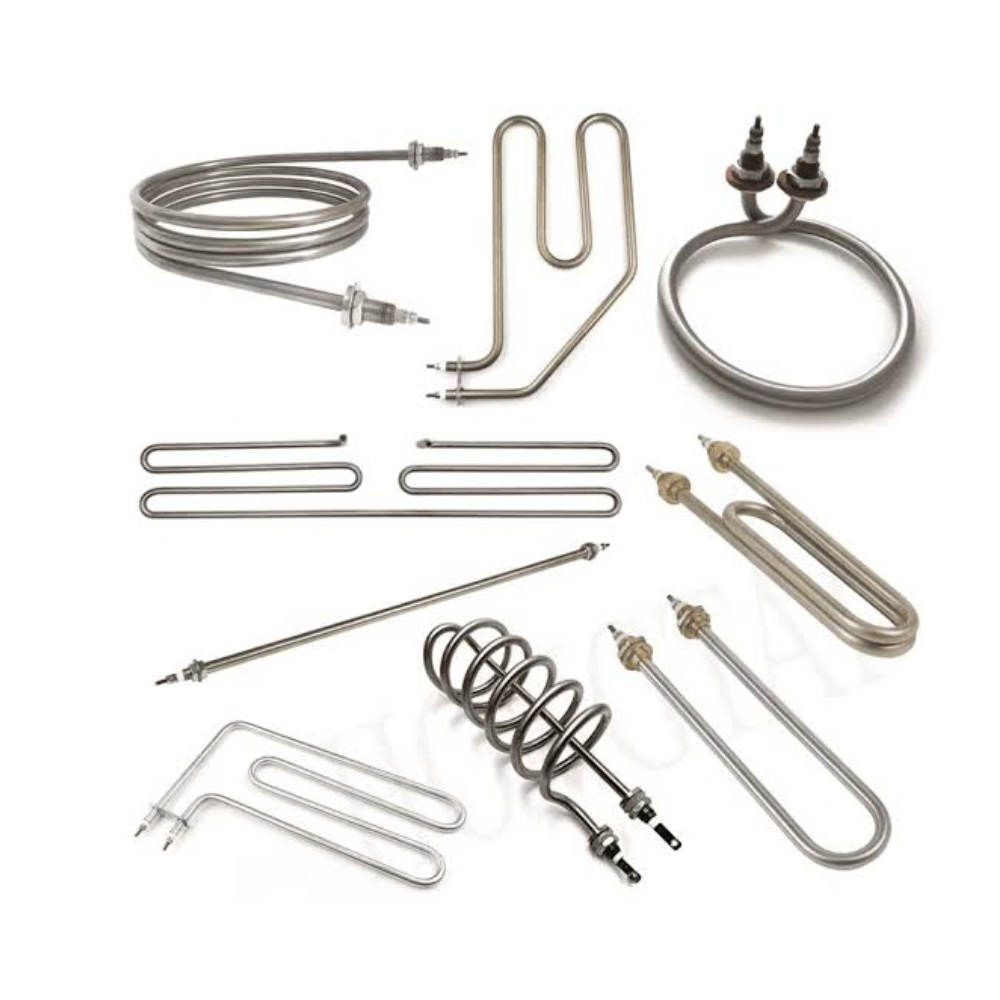
Single-ended and double-ended describe connection arrangements. They do not show whether the unit suits liquid, pressure, or a given enclosure. Check where the leads sit in relation to heat, splashes, washdown, and damp air.
Fictional selection scenario, not a customer case: Alex is specifying a heater for a duct with two fan speeds. A catalog option fits the available space and supply voltage. Before ordering, they add the lower airflow to the request and ask the heater maker to assess it.
The revised spec sets a minimum flow and calls for a shutdown if flow is lost. Fit alone is no longer the purchase rule.
For a finned tubular heater, the airflow belongs in the spec. Extra surface area does not make it safe to run when the fan stops. Likewise, an immersion heating element needs a defined liquid and level, not simply the label “water heater.”
Choose the tubular heating element form after defining these conditions. A sketch of the available space helps, but it cannot replace the process data.
Check Watt Density, Voltage, and Heated Length
Total watts state the power input. Watt density describes power per unit of heated surface area. Two heaters with equal input can have different surface loads and run at different temperatures.
Use Active Sheath Surface Area
For a plain round tubular heating element, the usual formula for the heated tube surface is:
q = P / (π × D × L_h)
Here, q is sheath watt density, P is element power, D is outside diameter, and L_h is total active heated length. Measure along the heated tube, including active bends where they form part of the hot zone. Exclude unheated cold ends.
Hypothetical arithmetic example: take 2,000 W, an 8 mm diameter, and 1,000 mm of active heated length. Convert the dimensions to 0.8 cm and 100 cm.
The active surface is about 251.33 cm², giving 7.96 W/cm².
Keep power and diameter unchanged, but reduce active length to 500 mm. The calculated load doubles to 15.92 W/cm². Neither value is an approved rating for a process. The example shows why active length matters.
For a bent tubular heating element, the distance between its ends is not the developed heated length. Ask for the hot and cold zones on the drawing. For fins or other tube shapes, ask how the maker defines surface area. Don’t extend this simple formula to those designs.
Match the Voltage Across Each Element
For one mainly resistive element at its rated hot condition, P = V²/R. In a hypothetical 230 V, 2,000 W design, hot resistance is 26.45 Ω. For an AC supply, V is the RMS voltage across that element.
This is not a pass value for a cold meter test. Wire resistance changes as it heats up. Ask for a cold resistance value, test temperature, and allowed range.
The circuit matters too. A label on the system supply may not state the voltage across each branch.
Size the tubular heating element for the heat duty as well. State the mass or flow, start and target temperatures, warm-up time, and heat losses. A setpoint alone cannot define the power or heated area you need.
Match Sheath, Resistance Wire, and End Seals
Check three temperatures: the process medium, the sheath surface, and the coil inside. A process sensor reads conditions where it sits. It does not show the hottest point inside a tubular heating element.
Copper, stainless steels, and nickel-alloy sheaths appear in commercial heater designs. Treat these as possible choices, not approvals. State the fluid or gas, its makeup, flow, cleaning agents, and expected surface temperature.
For water service, record hardness and relevant chloride information instead of requesting only “stainless steel.” For air heating, give the inlet temperature and lowest flow. For a liquid process, state whether deposits build up and how the unit is cleaned.
Choose the wire separately from the sheath. BALÇIK’s construction overview lists NiCr and iron-chromium-aluminum (FeCrAl) options for its tubular products. This does not mean you can swap one wire family for the other in an existing heater.
SPARK’s FeCrAl heating alloys are another resource for element designers. Check any proposed wire against the coil design, MgO fill, sheath, and production process. A bare-wire heat rating is not a rating for a tubular heating element assembly.
Fictional maintenance scenario, not a customer case: Morgan reviews a tank heater that has slowed after six months of service. The removed sheath carries visible deposits, and the log shows the same power input. They note the water conditions and past cleaning before asking for a new heater.
The team asks for a review of scale control and surface load. They hold the higher-wattage order until that review is done.
Deposits can slow heat transfer and make the wire run hotter. Low flow or a falling liquid level can also make parts of the heater run hotter. A stronger wire alloy alone will not fix those problems.
Review the assembly type before requesting fabrication: compare SPARK heating element configurations with your drawings. Furnace coils and radiant-tube assemblies differ from a finished MgO-filled tubular heating element; ask which assembly the supplier can provide.
Prevent Common Failures and Check Replacements
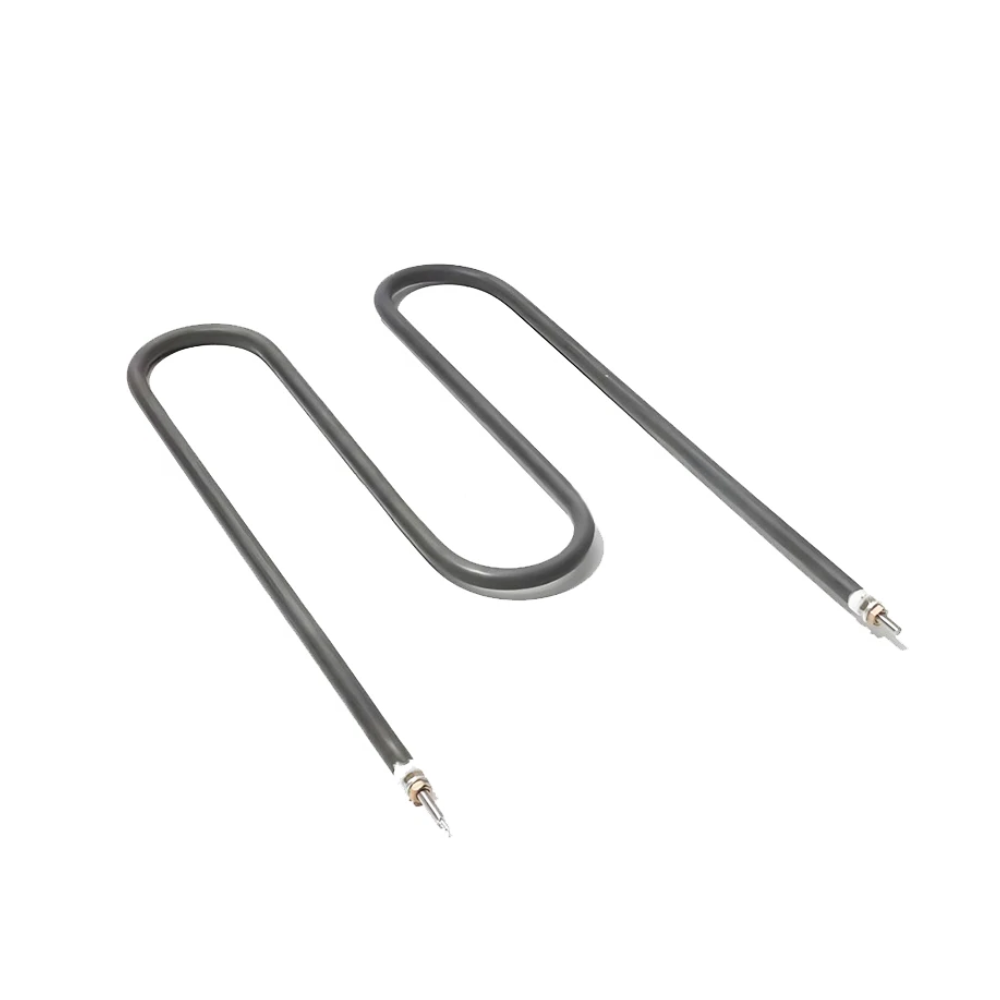
A continuity test checks for a conducting path through the wire. It does not prove the insulation is sound between wire and sheath. A tubular heating element can need more checks even if its wire resistance seems right.
Tempco’s guidance on heater moisture explains that MgO can absorb moisture, which can lower insulation resistance. Keep storage conditions and end seals in mind. A trip calls for a fault check. It does not prove moisture is the cause, and it is not a reason to keep turning the heater on.
Trained staff should follow the equipment maker’s test and inspection rules. Test voltage, pass limits, and any drying method depend on the assembly. Do not apply a generic bake-out schedule to unknown seals or connected equipment.
Before inspecting a tubular heating element, isolate the equipment, verify that the power is off, and let it cool. Check the sheath, leads, supports, deposits, flow records, and control history. Follow the manual and applicable electrical requirements, including the specified protective functions.
Record the Replacement Specification
Use these fields to compare a proposed heater with the old design and current process.
| Field | What to Record |
|---|---|
| Medium and heat duty | Composition, concentration, temperature rise, mass or flow, warm-up time, and duty cycle |
| Electrical design | Element voltage, rated power, phase/circuit arrangement, cold resistance, and tolerances |
| Heated geometry | Sheath outside diameter, developed active length, cold-end lengths, and hot-zone locations |
| Materials | Sheath grade, resistance-wire requirement, end seal, and known chemical exposure |
| Mechanical drawing | Bend geometry, terminal spacing, supports, fittings, insertion length, and mounting details |
| Pressure and environment | Required pressure rating, terminal enclosure, moisture exposure, and cleaning conditions |
| Controls and records | Temperature sensor arrangement, overtemperature protection, flow/level safeguards, and required test documents |
| Commercial inquiry | Quantity, destination, equipment identity, and whether a complete assembly or material is required |
Do not infer a pressure rating from tube thickness or a threaded fitting. Ask for records that cover the complete assembly. Component recognition alone does not approve the whole machine or every use condition.
A replacement tubular heating element should account for any use change. If the liquid, airflow, supply, or duty has changed, report that change for review before using the old drawing again.
Tubular Heating Element FAQs
What Is the Difference Between a Tubular and a Cartridge Heater?
A cartridge heater commonly fits into a bore to heat a solid tool or part. A tubular heating element is commonly formed for exposed, immersion, or contact duties. Designs can overlap. Choose by the mounting and heat path, not the product name alone.
Can an Immersion Heating Element Run in Air?
Only if the maker approves use in air. Without liquid, much less heat may leave the surface. The heater can then run too hot. An immersion heating element is not safe to test dry just because its volts and watts match the supply.
What Is the Maximum Tubular Heater Temperature?
There is no single maximum for every tubular heating element. The limit depends on the sheath, wire, MgO fill, seals, terminals, surface load, and surroundings. Ask whether a stated rating is for the process, the sheath, or another defined point.
Why Does a Heater Trip After Storage?
Damp MgO is one possible cause. Damage to the insulation or terminals, or a fault elsewhere in the unit, may also need checks. Have trained staff test the heater under its approved procedure. Do not bypass the trip or assume full-power heating is a safe way to dry the heater.
Can I Replace a Heater With One of the Same Wattage?
Matching watts alone is not enough. Confirm element voltage, heated length, diameter, sheath, cold ends, connections, mounting, and applicable operating conditions. Check the proposed tubular heating element against an approved spec. A photo is not enough.
Prepare a Specification for Your Next Inquiry
Start with the medium and heat duty. Then define the heated surface and power supply that must deliver it. Include a drawing that marks hot zones and cold ends. Make the operating limits visible alongside the dimensions so the supplier can assess the whole design.
For a replacement, add the make and model, known ratings, and notes on the fault. Explain changes in liquid chemistry, flow, cleaning, or heating cycles. These details show whether you need a matching part or a change in design. That difference affects the review and the questions a supplier must answer.
For SPARK alloy or element-manufacturing inquiries, send your alloy and element requirements with the required form, resistance, dimensions, and quantity. If you need a finished MgO-filled tubular heating element, first ask whether the supplier offers that type of assembly. Agree on the process limits, test records, and approved spec before you order. The alloy name alone cannot tell you whether the finished heater will suit your duty.