Industrial heater watt density is the power divided by the heater surface area that actually transfers the heat. Report it in watts per square centimeter (W/cm²) or watts per square inch (W/in²).
Two 6 kW heaters can share a rating and still run at sharply different surface temperatures. One may spread the same power over three times the area. This guide covers the calculation, the area basis, and the checks to run before approving a quotation.
A fictional purchasing engineer, Lena, receives two quotations for the same 12 kW duct heater. One states 28 W/in², the other 84 W/in².
Neither supplier is wrong. One number describes the sheath, the other the resistance wire inside it. Kanthal’s design guidance puts wire surface load at two to four times the tube surface load. Without the area basis, the sheets cannot be compared.
The formulas are simple geometry. The judgment comes from naming the surface, the medium and the control method first.
Key Takeaways
– Watt density is power ÷ active area. Name the basis first: wire surface, sheath, contact face, or furnace wall.
– A 1,200 W heater, 12 mm diameter and 250 mm active length, calculates to 12.73 W/cm²; 300 mm overall length gives 10.61 W/cm².
– 1 W/cm² equals 6.4516 W/in². A mixed-unit quotation hides errors in plain sight.
– At constant resistance, a 10% voltage rise raises power and watt density by 21%.
– No universal safe value exists. Medium, flow, fit, temperature and control set the limit.
The named scenarios in this article are illustrative and fictional. They are not customer case studies.
What Industrial Heater Watt Density Measures
Watt density answers one question: how hard is each square centimeter of surface working? The arithmetic is P ÷ A, with P in watts and A in square centimeters. Divide 1,200 W by 94.25 cm² and you get 12.73 W/cm².
However, the number is incomplete until you say which surface A describes. Four bases appear in industrial work, and they are not interchangeable.
| Area basis | What the area represents | Where it applies |
|---|---|---|
| Wire surface | π × wire diameter × developed wire length | Bare resistance wire and open coils |
| Sheath surface | π × sheath outside diameter × heated length | Tubular and cartridge heaters |
| Contact face | Clamped contact area minus cold zones | Band and strip heaters |
| Furnace wall or load | Chamber surface that receives the heat | Furnace power-per-area planning |
A wire surface loading of 9 W/cm² and a sheath watt density of 3 W/cm² can describe the same element. Kanthal notes that a sheathed tubular element normally carries a wire surface load two to four times the tube surface load. The compacted powder and the sheath spread the heat over a larger surface.
The unit carries the same risk. W/cm², W/in² and W/m² differ by factors of 6.4516 and 10,000. A supplier who quotes “45” without a unit has told you nothing you can check.
If you are preparing a specification, send the active dimensions and operating conditions to SPARK’s engineers. Ask for the area basis to be stated on the quotation. That single request removes most comparison errors.
How to Calculate Watt Density for Each Element Form
The formula stays the same; only the area term changes with the element form. Start with the geometry of the surface that transfers heat. Use one unit system throughout, and convert only after the area is fixed.
Round wire or sheath. The lateral area is:
A = π × d × L
Here d is the wire or sheath diameter and L is the active length, both in the same unit. With centimeters, the result is cm². If you measure in millimeters, divide the area by 100 before dividing power by area.
Bare ribbon. A rectangular conductor exposes four long faces, so its surface is about:
A = 2 × (w + t) × L
Here w is width and t is thickness. End faces are ignored. A strip heater is different: its rated area is the contact face that presses against the part, so use width × length and subtract terminal gaps and cut-outs.
Furnace wall loading belongs to a different calculation. It sets total installed power against chamber surface, and it does not describe the load on the element itself.
Worked Example: A Cylindrical Heater
A 1,200 W heater has a 12 mm outside diameter and a 250 mm active length.
- Convert: d = 1.2 cm, L = 25 cm.
- Area: π × 1.2 × 25 = 94.25 cm².
- Watt density: 1,200 ÷ 94.25 = 12.73 W/cm².
Now use the 300 mm overall length instead of the active length. The area becomes 113.10 cm², and the result falls to 10.61 W/cm². The second figure is about 17% below the true surface load. Cold ends and terminals are not transferring heat to the process, so including them understates the load.
Worked Example: A Bare Wire Element
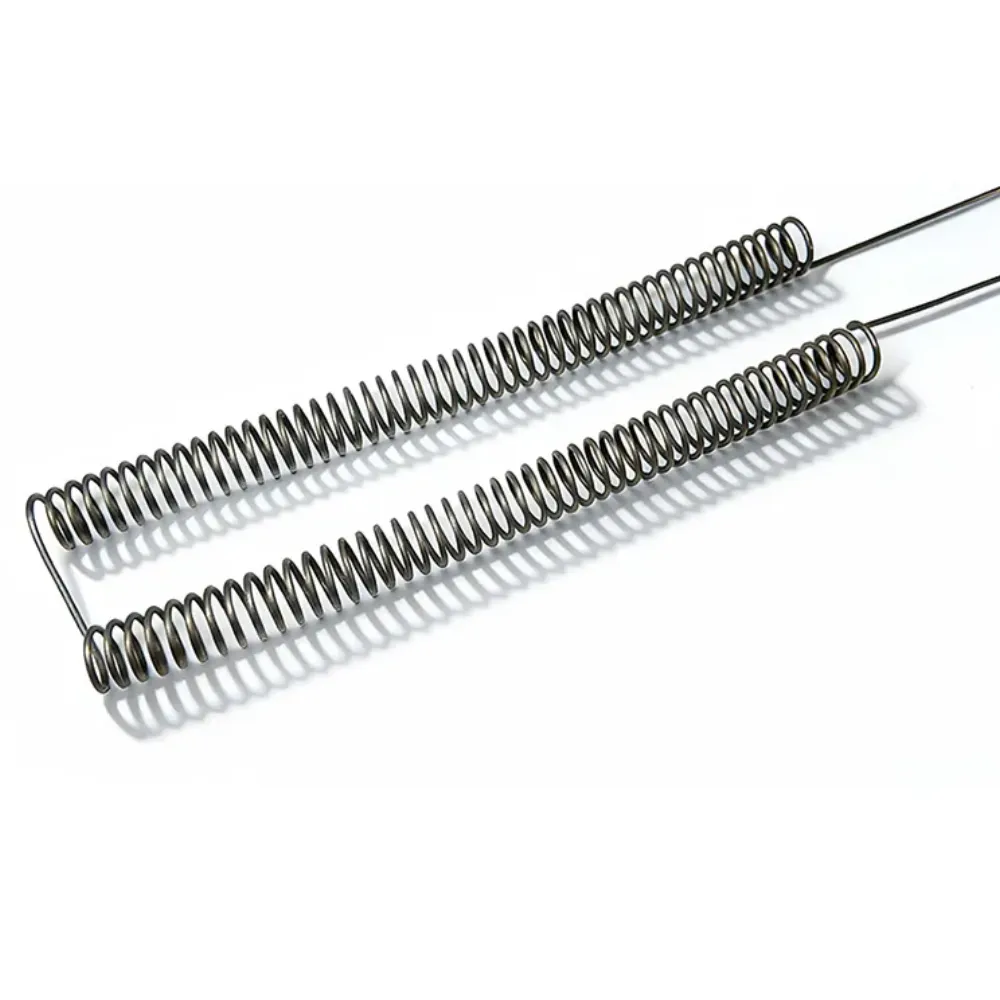
A 3,000 W element uses 2.0 mm wire with a 15 m developed length.
- Convert: d = 0.2 cm, L = 1,500 cm.
- Area: π × 0.2 × 1,500 = 942.48 cm².
- Watt density: 3,000 ÷ 942.48 = 3.18 W/cm².
Developed length means the length of wire after coiling, not the length of the finished coil. A coil that fits into 300 mm of furnace space may hold 3 m or more of wire. Using the coil length instead of the developed length overstates the calculated load by an order of magnitude.
Worked Example: A Band Heater
A 1,000 W band heater has a 100 mm inside diameter and a 50 mm width, with a 30 mm terminal gap.
- Heated arc: π × 100 = 314.16 mm, minus the 30 mm gap = 284.16 mm.
- Area: 284.16 × 50 = 14,208 mm², or 142.08 cm².
- Watt density: 1,000 ÷ 142.08 = 7.04 W/cm².
Ignoring the gap gives 157.08 cm² and 6.37 W/cm², about 10% low. The gap transfers no heat, so the real loading is higher than the simplified figure.
Converting Between Units
| From | To | Operation |
|---|---|---|
| W/cm² | W/in² | multiply by 6.4516 |
| W/in² | W/cm² | divide by 6.4516 |
| W/cm² | W/m² | multiply by 10,000 |
Write the conversion beside the supplier’s figure during quotation review. A decimal slip in this step survives all the way to the purchase order.
Why the Allowable Watt Density Depends on Heat Transfer
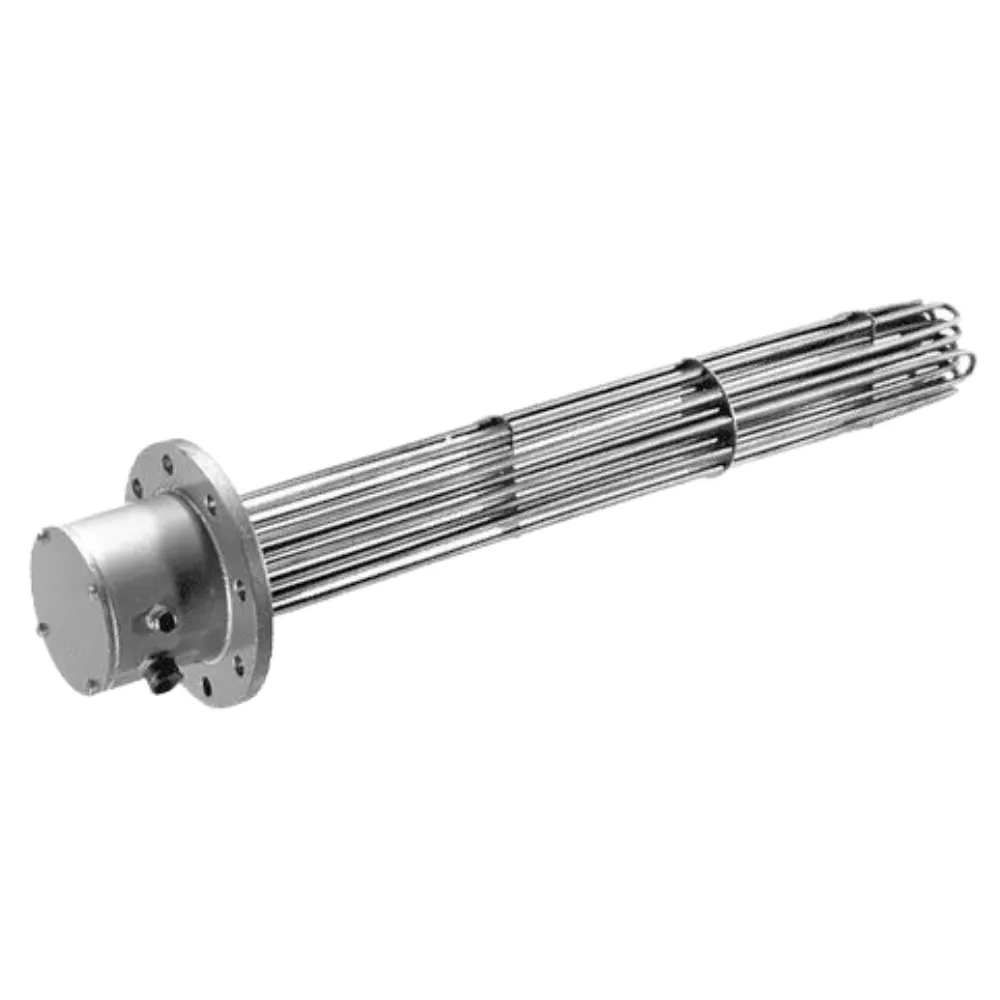
A calculated watt density is a design input, not a verdict. The same value can be conservative in one installation and destructive in another. The surface temperature needed to move that heat depends on what surrounds the element.
Conduction into metal. A cartridge heater in a machined block transfers heat through the contact between sheath and bore. A close fit and a clean bore remove heat efficiently. A worn or oversized bore leaves an air gap, and the sheath runs hotter at the same wattage. Hotset’s technical note makes the same point: fit, heated area and heat transfer all belong in the selection.
Convection into fluids. Flow and viscosity set the film temperature, the thin layer of fluid in contact with the sheath. Durex published a worked comparison for a 50/50 ethylene glycol and water mixture with a maximum film temperature near 191°C. At 50 gal/min and a 250°F outlet, a 30 W/in² design gave a film temperature near 149°C. Raising the load to 45 W/in² pushed the film to about 165°C and allowed a heater 2.5 ft shorter. Dropping the flow to 10 gal/min pushed the same design close to the 191°C limit, so its guidance fell to 23–25 W/in². Power stayed similar; flow changed the answer.
Radiation and form. In a furnace, the element radiates to the load and the wall. Kanthal’s design guidance ranks element forms by how freely they radiate: a rod-over-bend element carries a higher load than corrugated strip, which carries more than a spiral. A coil on a ceramic tube carries more than the same coil in a groove. The material and the mounting both matter.
Control method. Kanthal recommends about 20% lower surface load for on-off control than for thyristor control, because the element cycles between full power and off.
The spread is wide. Hotset’s published design maxima for its own heater families run from about 4.7 W/cm² for mica heaters to 38 W/cm² for high-watt cartridge heaters. That range describes different constructions, not a menu of safe values for any heater.
Marcus, a fictional maintenance engineer at an oil-processing site, inherited a tank heater selected at 16 W/in² for warm oil. It ran well in summer.
Winter startups, with oil near 0°C, pushed the sheath hotter because cold, viscous oil could not carry heat away. Durex’s guidance for the same oil duty recommends derating to 12 or even 8 W/in². Marcus did not need a different alloy. He needed more element area.
How Voltage and Geometry Change Industrial Heater Watt Density
Two design levers change watt density after the geometry is fixed: voltage and wire diameter.
Voltage. For a resistive element, P = V² ÷ R. A 10% voltage rise at constant resistance raises power by 21%, and watt density rises with it. A 10% drop cuts power by 19%. A 400 V element on a 440 V supply runs 21% above its design power.
Wire diameter. At fixed resistance, resistivity and power, the relationships are strict. Resistance depends on length divided by cross-section, so length scales with diameter squared. Surface area scales with diameter times length. Put together, a wire twice as thick must be four times as long and exposes eight times the surface. Its watt density at the same power falls to one eighth. This is why the same power can be safe in thick wire and marginal in thin wire. Kanthal’s appliance guidance calls for a lower wire surface load on thin wire for the same reason.
Duty cycle. A 25% duty cycle at 4 W/cm² energized gives a time average of 1 W/cm². The element still produces 4 W/cm² while it is on. Whether the average is meaningful depends on thermal mass, switching rate and control. Do not substitute the average for the manufacturer’s design basis without checking the thermal response.
Life. Kanthal states that element temperature is the major factor in element life. Lower surface load means a larger, more expensive element, and slower material consumption. Higher load means a smaller, cheaper element with a shorter life. The design task is to choose the balance, not to maximize either side.
Alloy and Element Form
Watt density decides how much surface you need. The alloy and form decide what that surface can survive.
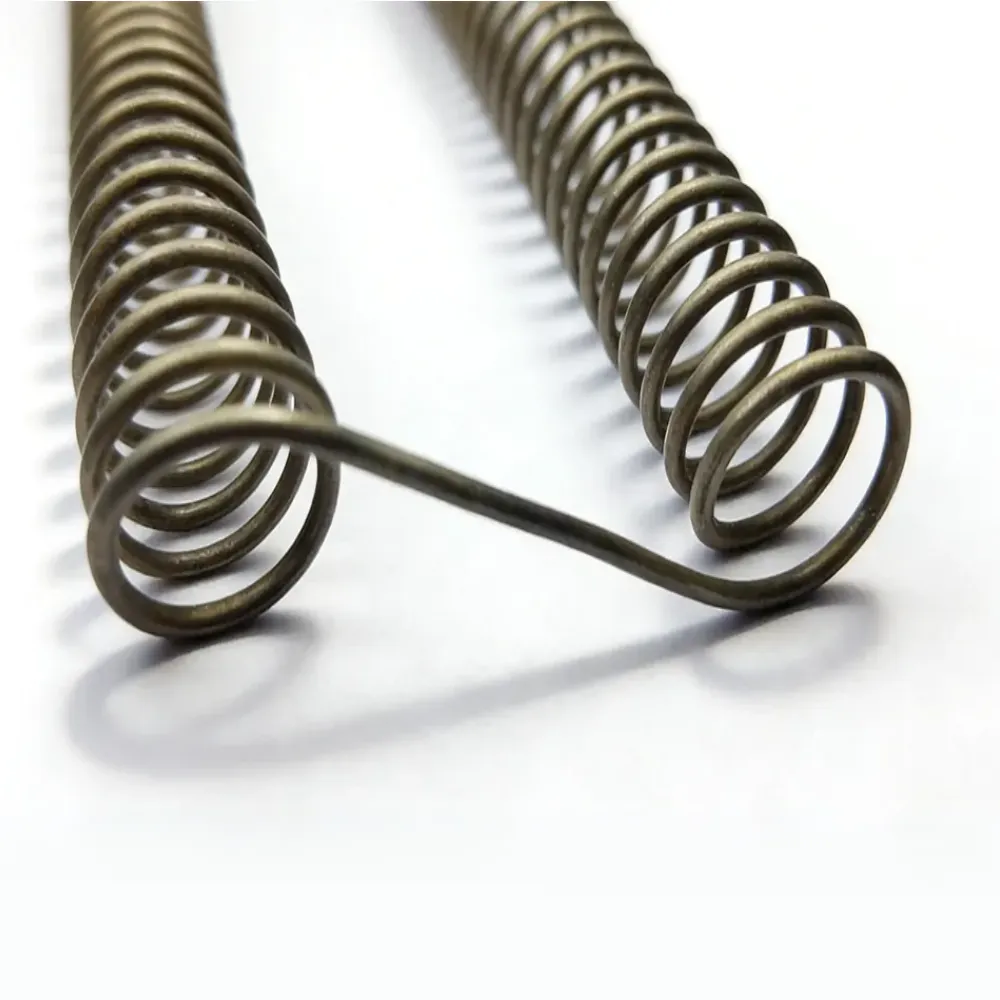
FeCrAl alloys form a protective alumina film in air and suit high-temperature furnace elements. NiCr alloys keep strength and ductility through thermal cycling. The choice changes the permissible element temperature, and therefore the permissible load at a given furnace temperature.
Form matters as much. SPARK supplies both FeCrAl heating alloys and NiCr resistance alloys in wire, ribbon and spiral coil form. When you compare electric heating elements, ask for the wire surface load and the element surface load separately.
A Specifier’s Checklist for Industrial Heater Watt Density
A complete inquiry lets a supplier calculate rather than guess. Include:
- Total power at operating temperature, not just the cold rating.
- Active dimensions: diameter, heated length, developed wire length or contact face.
- Voltage, phases and frequency.
- Medium, flow range and minimum flow.
- Operating temperature and required ramp time.
- Atmosphere: air, reducing, carburizing, vacuum, or products of combustion.
- Control method: on-off, thyristor, or other.
- Mounting and fit: bore size, clamping, support spacing.
- Required life and maintenance interval.
Then audit the reply:
- Does the quotation show the watt density calculation, with the area basis and the unit?
- Is the length the active length or the overall length?
- Is the power quoted at operating temperature or at 20°C?
- Are cold zones subtracted, and by what rule?
- Is the recommended load tied to the medium, flow and control method, or presented as a universal limit?
Ask for the dimensional drawing, the calculation sheet, the material certificate and the installation clearance requirement. A supplier who cannot show the area calculation cannot defend the number.
Priya, a fictional design engineer, rejected a quotation that used overall length for a 300 mm heater with a 250 mm active zone. The quoted density looked 17% lower than the real load. The corrected sheet led to a longer element and a different price, but the installation met its intended surface temperature on the first attempt.
If you would rather review the calculation with the manufacturer, discuss your specifications with SPARK and include the list above.
Frequently Asked Questions
What is a normal industrial heater watt density?
There is no normal value. A mica band heater and a high-watt cartridge heater from the same supplier can carry design maxima that differ by a factor of eight. Compare your calculated value with the allowance for that construction, medium, flow and control method.
What is the formula for industrial heater watt density?
The watt density formula is power divided by active area. For a round sheath or wire, the area is π × diameter × active length. Convert both dimensions to the same unit before dividing.
Is W/cm² the same as W/in²?
No. One square inch is 6.4516 square centimeters, so 1 W/cm² equals 6.4516 W/in². Multiply to convert from W/cm² to W/in², and divide for the reverse.
Should the heated length include cold ends?
It depends on the convention the supplier uses, and the convention must be stated. Design guidance for sheathed elements excludes unheated ends and terminals, but some cartridge suppliers quote a length that includes them. For bare wire, the developed wire length is the basis, not the coil length.
Does a higher watt density heat up faster?
Not by itself. At the same total power, a higher watt density means a smaller surface running hotter, not more heat. Heat-up speed comes from total power against the thermal load, losses and the allowable surface temperature.
Conclusion
Industrial heater watt density is a simple ratio with a demanding precondition: the area must be defined. A wire surface, a sheath surface, a contact face and a furnace wall are four different denominators. Mixing them turns a useful design check into a false comparison.
The working sequence is short. Calculate P ÷ A on the correct active geometry. Convert units explicitly.
Compare the result with an allowance that matches the medium, flow, fit, temperature and control method. Then check the quotation for the same basis, the same length definition and the same voltage.
Do this before the purchase order, and industrial heater watt density becomes what it should be: a number you can defend. Send your active dimensions, medium and operating conditions to SPARK’s engineers to start that review.