Introduction
In high-end manufacturing fields, such as photovoltaic, semiconductor and advanced glass production, the demand for reliable, durable and high-performance heating elements has never been so high. The core of these processes lies in a key component: high-temperature heating wire. However, all resistance wires are not the same. Usually, the working environment above 1000℃ requires special material properties, which are not provided by standard alloys. This is where the SPARK SGHYZ 1400℃ Ultra-High Temperature Electric Heating Wire steps in, redefining the benchmarks for extreme environment performance.
As a leading resistance wire manufacturer, Beijing Shougang Gitane New Materials Corporation, under its SPARK brand, has developed the SGHYZ series, a third-generation Iron-Chromium-Aluminum (FeCrAl) alloy engineered to outperform competitors, including the renowned Kanthal A1. This article will delve into the definition, unique advantages, specifications, and applications of SGHYZ, backed by authoritative data and practical case studies, to illustrate why it has become the preferred solution for ultra-high-temperature industrial heating.
What Is SPARK SGHYZ 1400℃ Ultra-High Temperature Electric Heating Wire?
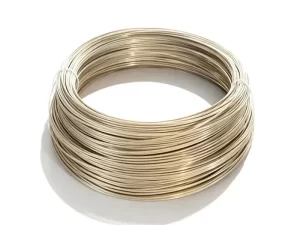
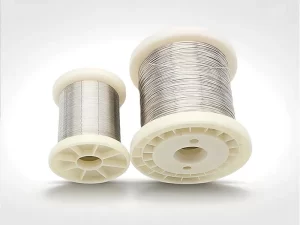
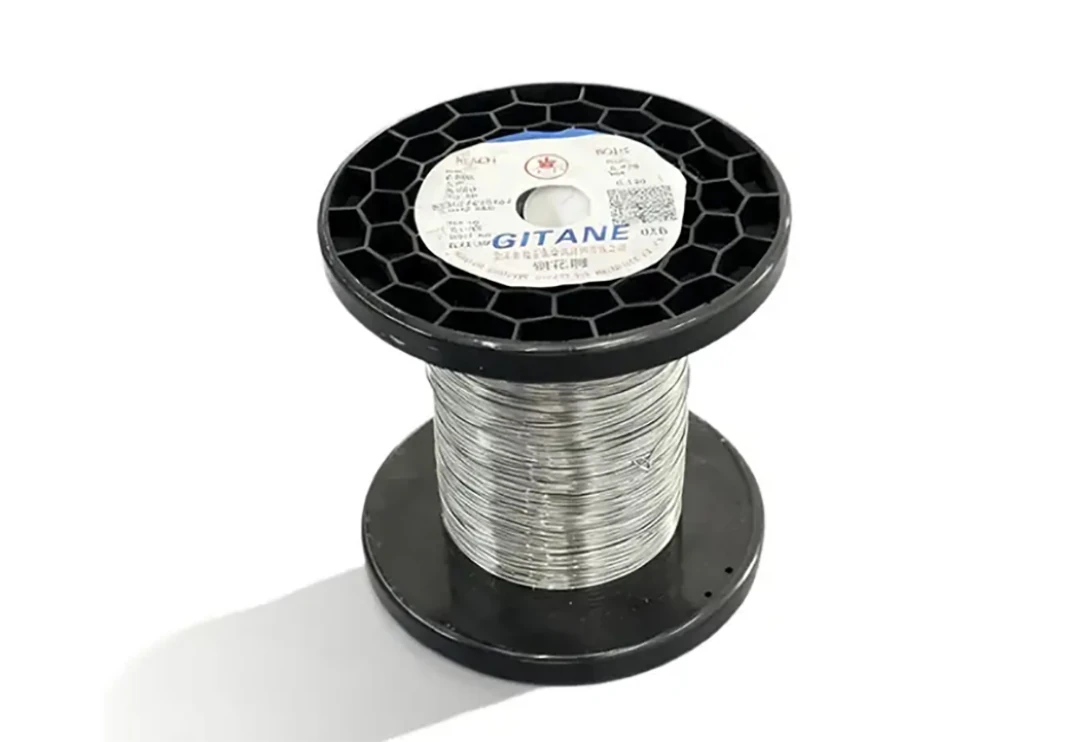
To understand the value of SGHYZ, we must first make clear its core identity. This is a kind of high-performance rare-earth microalloyed FeCrAl electric heating wire, which is an advanced improvement of traditional electric heating alloys. Its defining characteristic is the ability to operate continuously at an unprecedented 1400℃, a threshold that surpasses the limits of most standard FeCrAl and Nickel-Chromium (NiCr) alloys.
From the point of view of materials science, the function of the heating wire is to convert electric energy into heat energy through resistance. The efficiency, stability and service life of this process depend entirely on the composition of the alloy and the quality of manufacture. SGHYZ is made by refining vacuum melting and a proprietary rare earth element formula. This process forms a highly stable and adherent protective aluminum oxide (Al₂O₃) layer on the wire surface, which is the key to the excellent performance of the wire at extreme temperatures.
The Unique Advantage of SGHYZ: Redefining High Temperature Performance
The advantage of SGHYZ is not only theoretical; It has been proved by rigorous laboratory testing and real-world industrial application. Its advantages can be divided into three core pillars: extreme temperature ability, excellent oxidation resistance, and abnormal structural stability.
1. Unparalleled Extreme Operating Temperature
The most significant advantage of SGHYZ is its 1400℃ continuous operating temperature. For example, the maximum temperature of standard nickel-chromium heating wires is limited to 1250℃, while the maximum temperature of traditional FeCrAl heating wires is usually 1300℃. This 100-150℃ difference is transformative for high-end manufacturing, enabling more efficient processes and supporting next-generation technological advancements.
2. Excellent Purity and Oxidation Resistance
Oxidation is the main reason for heating wire failure at high temperatures. SGHYZ addresses this with its refined micro alloying technology. Independent tests showed that SGHYZ showed an oxidative weight gain rate of less than 10% when exposed to high temperature at 1050℃ for 200 hours. This is in line with the high-temperature oxidation resistance standards of Fecoral alloys recorded by the International Atomic Energy Agency (IAEA), which proves that advanced Fecoral alloys with stable alumina protective layers can effectively inhibit oxidation at extreme temperatures. In stark contrast, ordinary high-temperature heating wire has an oxidation rate exceeding 35% under the same conditions. This excellent resistance ensures a clean and stable thermal field and prevents sensitive products such as silicon wafers and precision glass from being polluted.
3. Improving Creep Resistance and High Temperature Strength
In the case of extreme heat, metal alloys will soften, deform or sag, which is called creep. SGHYZ is designed to solve this problem. It has a high temperature strength of 20 MPa at 1000℃, providing excellent deformation resistance. This structural integrity ensures that the heating elements maintain their shape and spacing over time, prevents hot spots, and ensures consistent heat distribution across the furnace.
4. Stable Electrical Performance & Long Service Life
Consistency is key to the industrial processes. SGHYZ is characterized by precise control of resistivity at 1.45 ± 0.07 μΩ·m, ensuring stable power output and energy efficiency throughout its life. As a result, the service life is significantly prolonged for this high-temperature heating wire. Under the conditions of industrial operation, the service life of SGHYZ is ≥ 10,000 hours, while the standard competitive products are only 4,000-6,000 hours.
Core Product Specifications and Certification
SPARK SGHYZ is a high-quality FeCrAl alloy that has been strictly controlled and internationally certified. The following table summarizes its main technical indexes.
| Parameter | SGHYZ Specification |
| Alloy Type | Iron-Chromium-Aluminum (FeCrAl) with rare earth additives |
| Max Continuous Temp | 1400℃ |
| Resistivity (20℃) | 1.45±0.07 μΩ·m |
| High-Temp Strength (1000℃) | 20 MPa |
| Certifications | CE (2014/35/EU), SGS REACH-ROHS/SVHC |
| Typical Diameter Range | 0.05mm – 10.0mm |
Major Application Occasions
SGHYZ’s performance makes it an ideal choice for the most demanding industrial applications.
1. Photovoltaic silicon wafer manufacturing (45%): used for diffusion furnaces, annealing furnaces and PECVD equipment for producing monocrystalline silicon and polycrystalline silicon.
2. Semiconductor chip manufacturing (30%): It is applied to wafer heat treatment, ion implantation, photoresist baking and ALD/CVD equipment.
3. High-end glass manufacturing (15%): used for pre-coating heat treatment of tempering furnaces, hot bending furnaces, automobile glass, display glass and photovoltaic glass.
SGHYZ vs. Competitors: Performance and cost Comparison
Choosing the right resistance wire needs to balance performance, life and total cost of ownership. In the following analysis, SGHYZ is compared with ordinary domestic wire rod and high-quality imported substitute products.
Differences in Function and Performance
- SGHYZ: the maximum temperature is 1400℃; Oxidation gain is less than 10% (1050℃/200 hours); Power fluctuation ≤ 2%.
- Ordinary FeCrAl/NiCr wire: the highest temperature is 1250-1300℃; Oxidation gain is greater than 35%; Power fluctuation > ± 8%. Slagging is easy, and the thermal field is unstable.
Overall Cost Efficiency
Although the initial purchase price of SGHYZ is about 15% higher than that of ordinary wire, it is 35-40% lower than that of high-quality imported brands. The real value is to save operating costs.
- Energy Efficiency: up to 98% efficiency, saving more than 15% energy compared to standard wire.
- Maintenance Costs: the replacement cycle of the furnace is 6-9 months, while that of competitors is only 3-4 months. This greatly reduces downtime and maintenance manpower costs.
- Delivery time: the domestic supply chain ensures delivery time of 2-4 weeks, while the import takes 8-12 weeks.
Comparison of service lifetime
- SGHYZ: ≥10000 hours (photovoltaic/glass); ≥ 12,000 hours (for semiconductor).
- Ordinary line: 4,000-5,000 hours.
- Nickel-chromium alloy Wire: about 6,000 hours.
Frequently Asked Questions
Q 1: What is the definition of the hotline?
A: According to the International Electrotechnical Vocabulary (IEV 841-23-14), an electric heating wire is a conductor that aims at converting electric energy into heat through its resistance. For high-temperature applications, alloys such as FeCrAl or NiCr are used because they have high melting points and oxidation resistance.
Q 2: What is the difference between SGHYZ and other FeCrAl wires?
A: SGHYZ is a third-generation FeCrAl alloy enhanced with a proprietary rare earth formulation. Different from the standard FeCrAl, it forms a more stable protective oxide layer, allowing it to work continuously at 1400℃, which is 100℃ higher than the traditional substitute.
Q 3: Is SGHYZ a cost-effective substitute for imported electric heating wire?
A: Absolutely. SGHYZ matches the performance of top-tier imported high-temperature heating wire but at a 35-40% lower purchase cost. It also avoids import duties and long delivery times, making it the first choice for high-end manufacturers who pay attention to costs.
Q 4: What are the certifications of SPARK SGHYZ?
A: SGHYZ has passed strict international tests and holds CE (2014/35/EU) and SGS REACH-ROHS/SVHC certifications, ensuring that it meets the EU standards for safety, health and environmental protection.
Conclusion
For industries that need an extremely hot environment, the selection of a heating element is very important. The SPARK SGHYZ 1400℃ Ultra-High Temperature Electric Heating Wire stands out as a game-changing solution. By providing performance at 1400℃, excellent oxidation resistance and long service life, it solves the limitations of ordinary domestic and expensive imported wires.
As a professional resistance wire manufacturer, Shougang Gitane is committed to providing high-quality and cost-effective materials and promoting innovation in global manufacturing. For photovoltaic, semiconductor and advanced glass manufacturers who want to optimize the processes and reduce the operating costs, SGHYZ is not only an option, but the ultimate choice.